Shopping for Authentic Fossil Shark Teeth
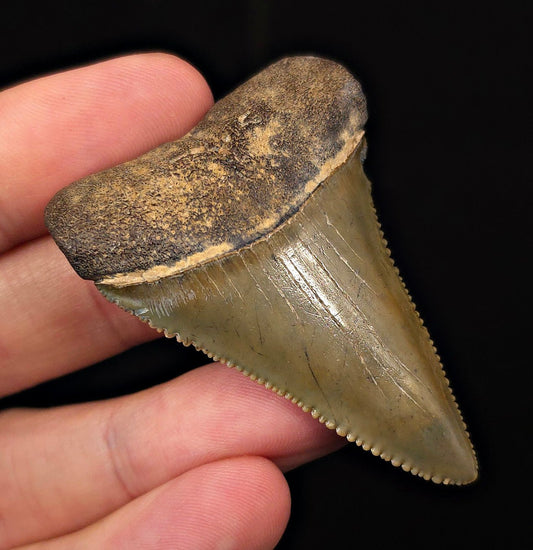
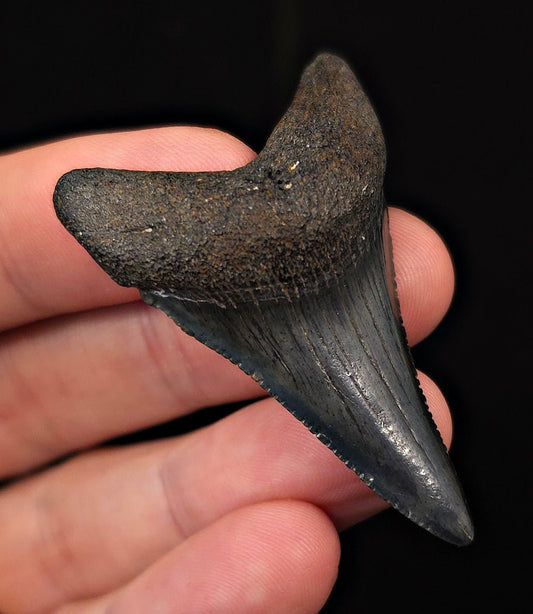
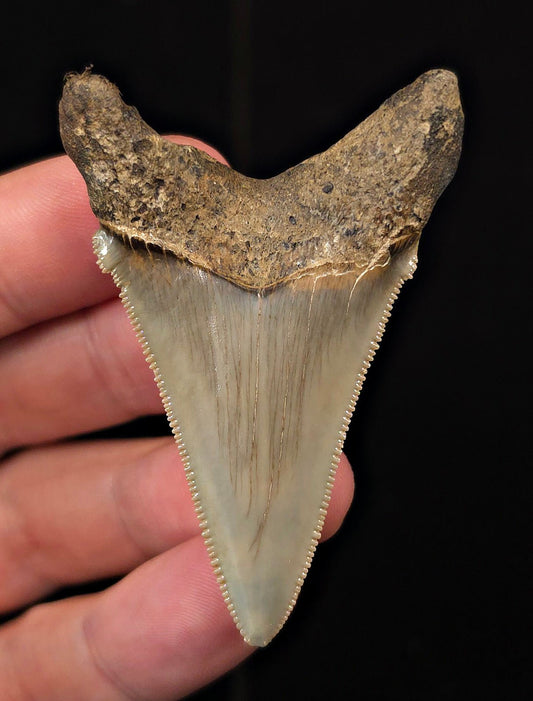
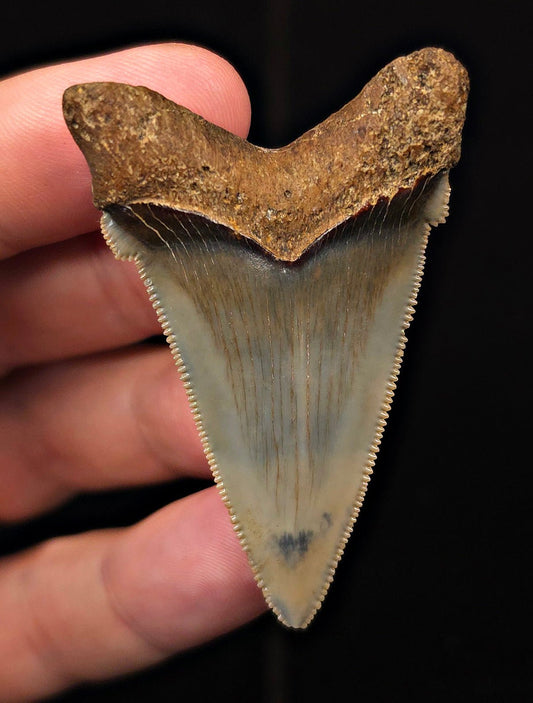
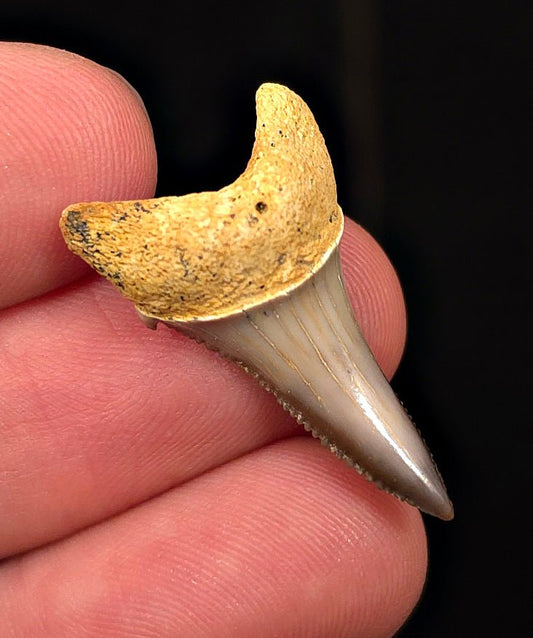
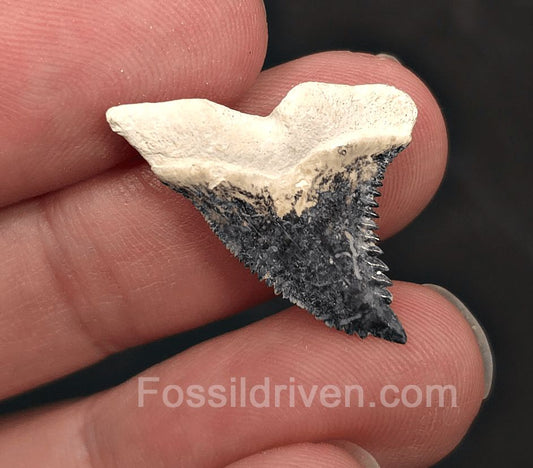
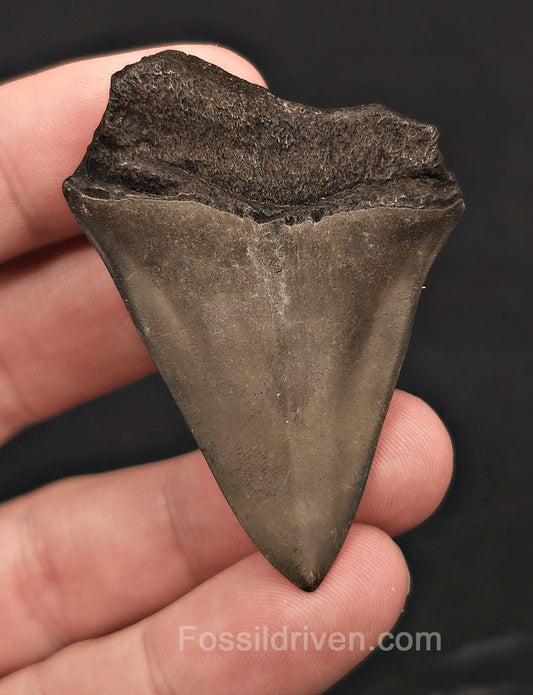
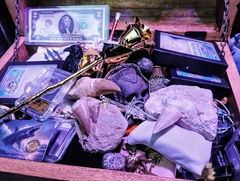
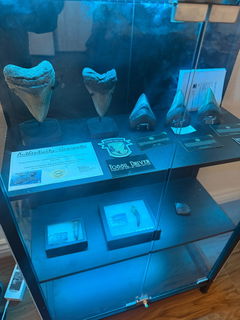
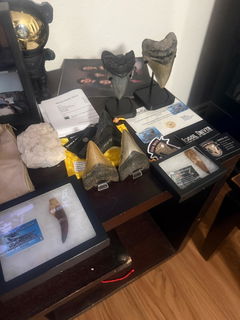
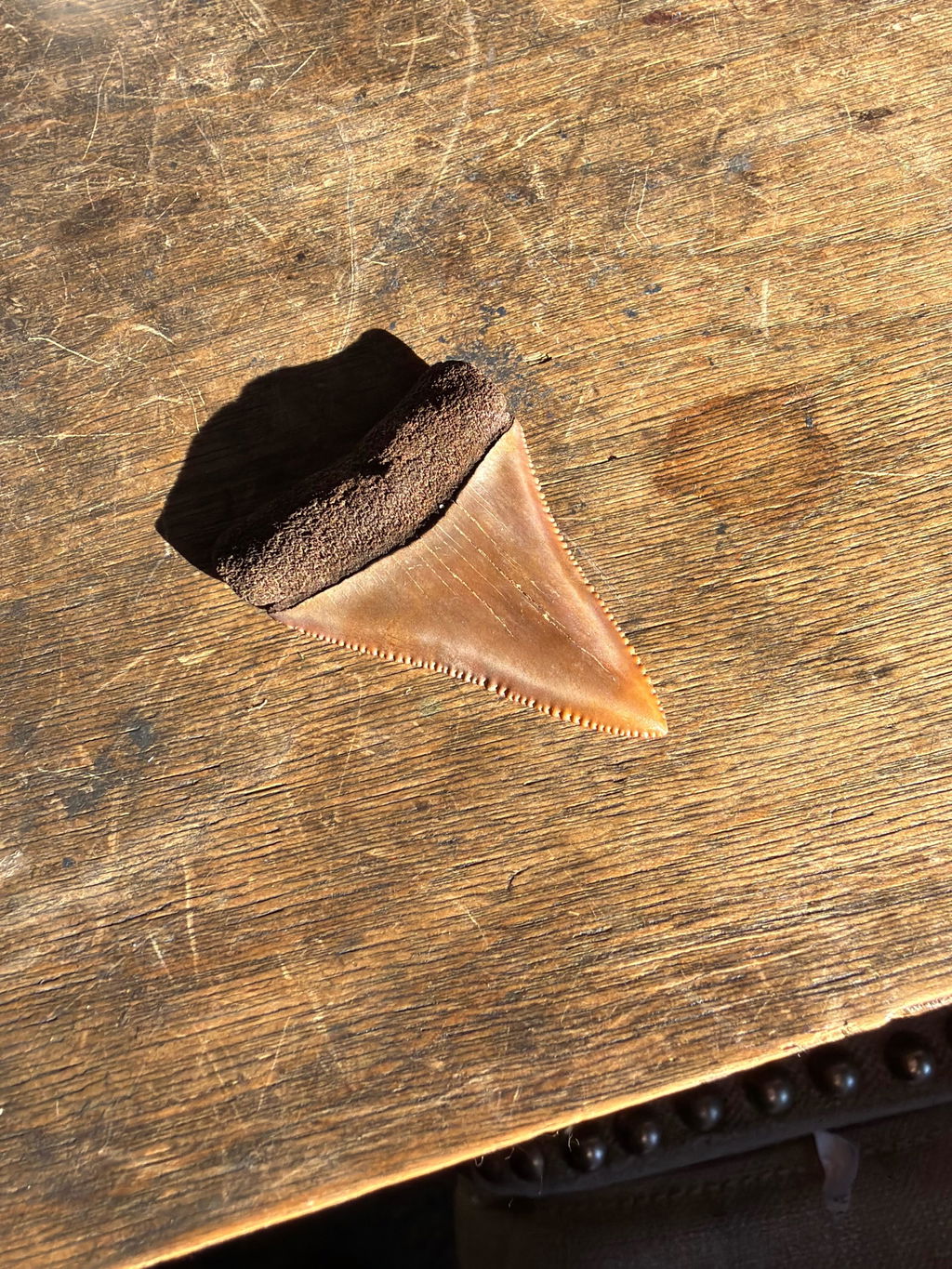
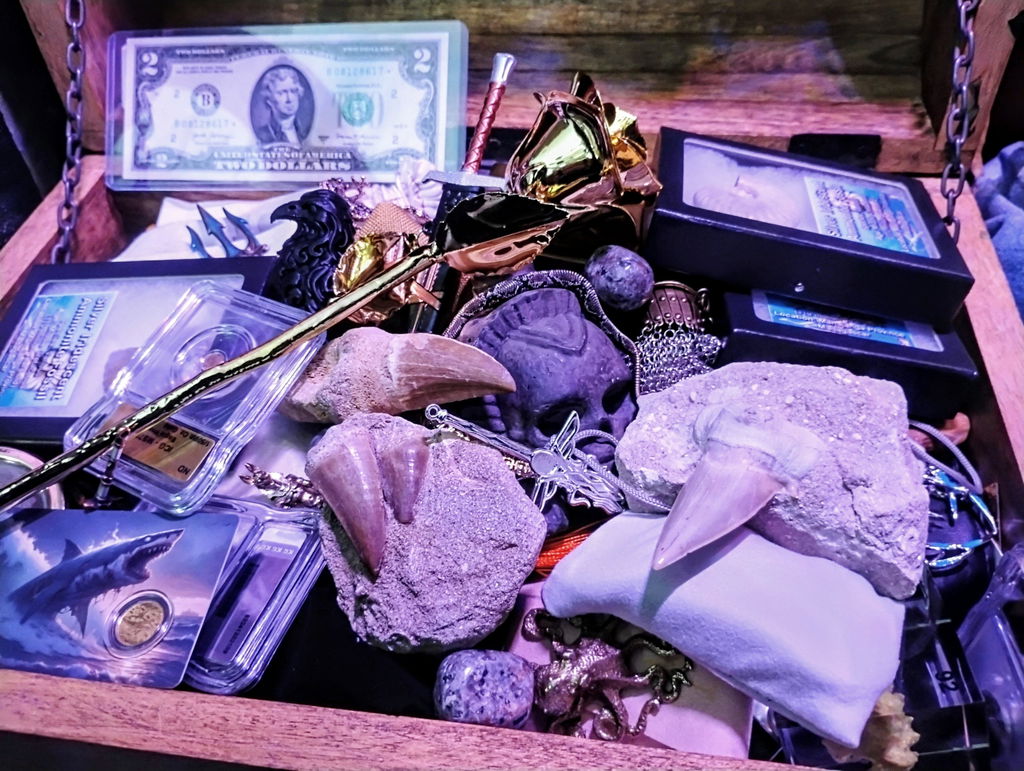
Sharks have been shedding teeth for hundreds of millions of years, and because a single shark can lose thousands of teeth in its lifetime, fossil shark teeth are one of the most accessible ways to own a real piece of prehistoric history. Each species in this collection represents a different chapter of shark evolution, and each tooth is a one-of-a-kind specimen, measured and photographed individually.
The Megatooth Lineage: The Road to Megalodon
Megalodon did not appear out of nowhere. Over tens of millions of years, its ancestors slowly grew larger, lost their side cusplets, and developed fine serrations. Collecting each species in order is one of the most popular ways to build a shark tooth collection.
Otodus obliquus
Paleocene to Eocene. The earliest member of the lineage, with a broad, smooth-edged crown and large side cusplets. Most specimens come from the phosphate deposits of Morocco.
Auriculatus
Eocene. Serrations appear alongside broad cusplets, giving these teeth their distinctive "eared" shape. Often sold today as Otodus sokolovi.
Angustidens
Oligocene to early Miocene. Fully serrated blades paired with sharp, prominent cusplets. South Carolina is one of the best-known sources.
Chubutensis
Early to middle Miocene. The direct predecessor of Megalodon, with large serrated teeth and small cusplets that were beginning to disappear.
Other Prehistoric Sharks
Lesser White Shark (Mako)
Miocene to Pliocene. Broad, smooth-edged cutting teeth from Carcharodon hastalis, long known to collectors as the broad-toothed mako and now classified as a close relative of the great white.
Great White
Pliocene to present. Triangular, coarsely serrated teeth from Carcharodon carcharias, one of the few prehistoric apex predators still alive today.
Hemipristis
Miocene to Pliocene. Known as the snaggletooth shark, with curved upper teeth and coarse serrations that stop just short of the tip. Large, sharp examples are highly prized.
Tiger Shark
Miocene to present. Compact, sideways-pointing teeth with a notched, cockscomb shape, built for cutting through shells and bone.
Parotodus benedeni
Oligocene to Pliocene. The rare false mako, recognized by its thick root and smooth, curved blade. One of the most sought-after fossil shark teeth for advanced collectors.
Megalodon
Miocene to Pliocene. The largest shark to ever live and the end of the megatooth lineage, with massive serrated teeth that can exceed 6 inches.
Honest Condition Disclosure
Repair and restoration show up across every fossil shark species, especially on larger and rarer teeth. With more than 13 years of fossil identification experience behind every listing, we state plainly whether a tooth is fully natural, repaired, or restored. Every tooth we sell is hand-selected from trusted divers and suppliers and backed by our authenticity guarantee and a 30-day return policy.
Helpful Buying Guides
Display it right. Show off your favorite tooth with one of our fossil tooth display stands, designed to hold teeth securely while showing off both the enamel and the root.