Shopping for Authentic Mammoth Teeth
Mammoths are among the most iconic animals of the Ice Age, and their massive molars are one of the most impressive fossils a collector can own. Whether you want the full weight and presence of a complete tooth or the striking natural patterns of a polished slice, every specimen in this collection is one of a kind, photographed individually so the piece you see is the piece you receive.
Whole Teeth and Polished Slices
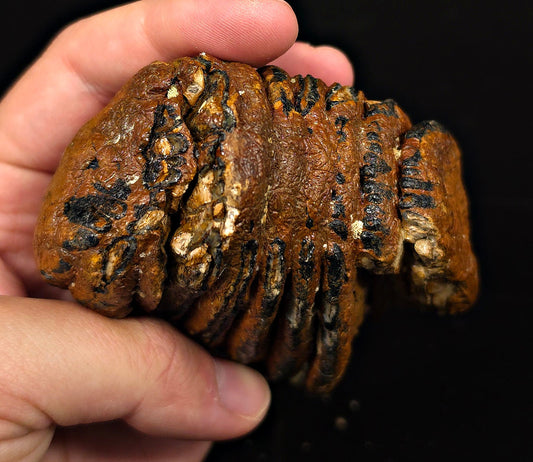
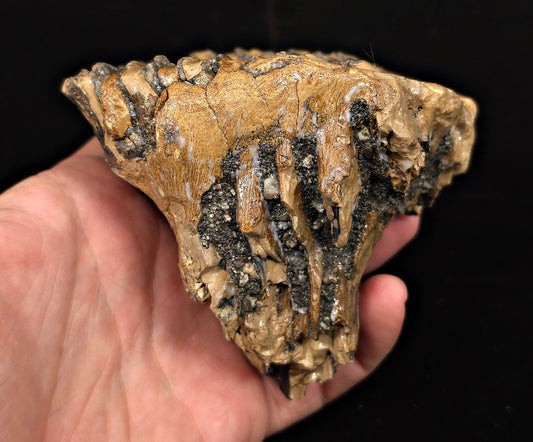
Whole Mammoth Teeth
Complete fossil molars that show the tooth as it was in life, with the ridged grinding surface the mammoth used to chew tough grasses. A single molar can weigh several pounds, making these true centerpiece fossils for any shelf or collection.
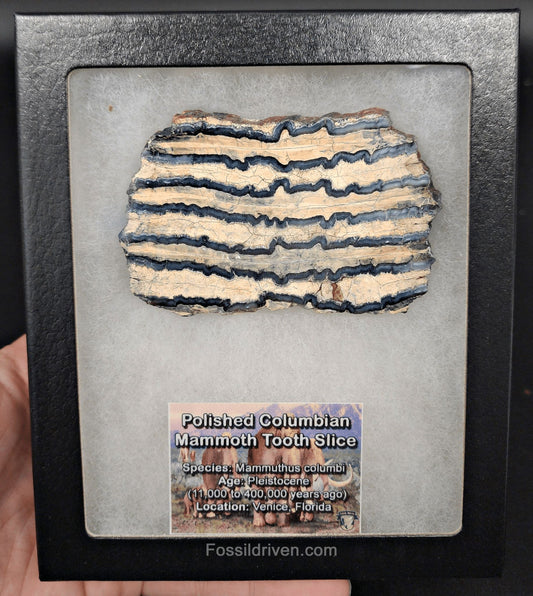
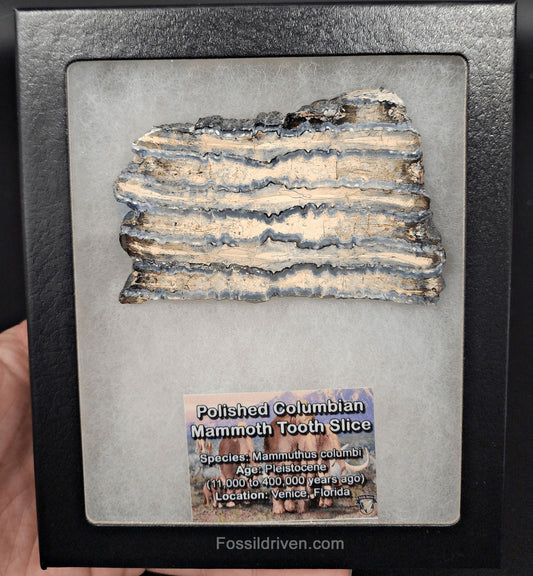
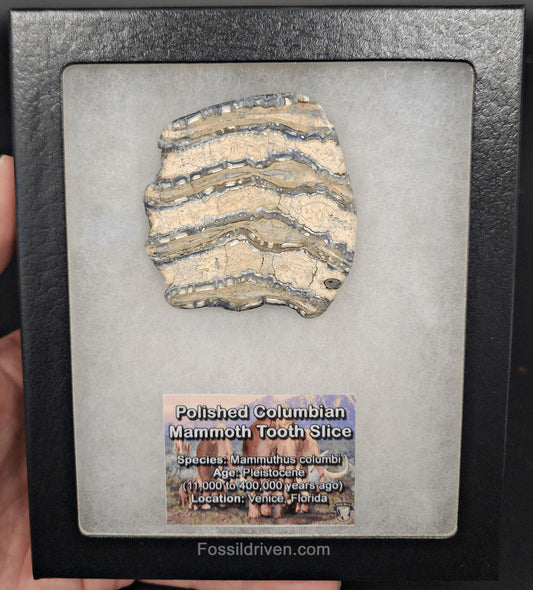
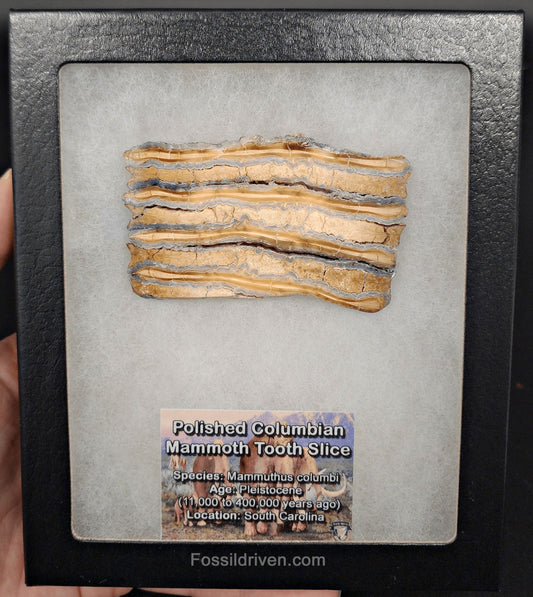
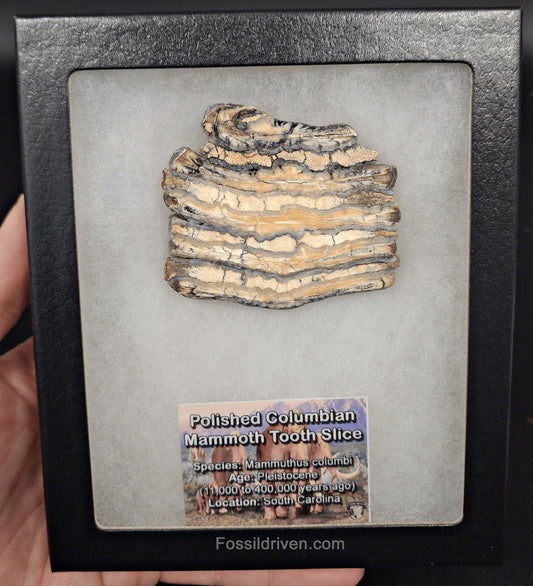
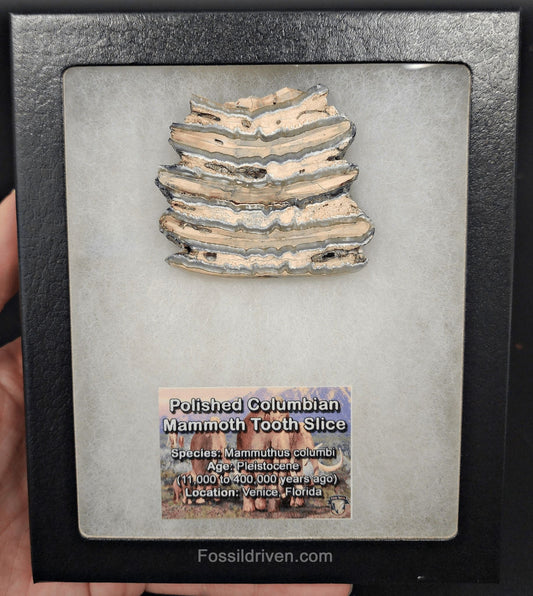
Polished Mammoth Tooth Slices
Thin sections cut through a molar and polished to reveal the alternating bands of enamel, dentin, and cementum inside. Each slice shows its own pattern in tones of cream, brown, gray, and occasional hints of blue, and makes an affordable, easy-to-display way to own a piece of a mammoth.
Woolly vs. Columbian Mammoths
Woolly Mammoth (Mammuthus primigenius)
The shaggy, cold-adapted mammoth of the northern steppes, about the size of a modern African elephant. Woolly mammoth teeth are commonly recovered from Siberian permafrost and the floor of the North Sea, which was dry land during the Ice Age.
Columbian Mammoth (Mammuthus columbi)
A larger, less hairy mammoth that ranged across much of North America, from the United States south into Mexico and Central America. Its teeth have fewer, more widely spaced enamel plates than a woolly mammoth's.
How a Mammoth Tooth Works
A mammoth molar is built from a series of enamel plates stacked side by side, bound together with dentin and cementum. As the mammoth chewed, the softer material wore down faster than the enamel, leaving hard ridges that worked like a grinding surface. Mammoths went through six sets of molars in their lifetime, with each new tooth moving forward to replace the one in front of it as it wore away. Those same stacked plates are what create the distinctive loops and bands you see in a polished slice.
Honest Condition Disclosure
Mammoth teeth are prone to cracking and separating along their plates as they dry out, so stabilization is a normal and necessary part of preparing them. Most polished slices and many whole teeth are stabilized with resin or a consolidant to keep them intact, and whole teeth sometimes have repaired cracks or filled sections. We state plainly how every specimen has been prepared, and every fossil we sell is backed by our authenticity guarantee and a 30-day return policy.
Caring for Your Mammoth Tooth
Keep your specimen out of direct sunlight and away from heaters, air vents, and damp areas. Sudden changes in temperature or humidity are the most common cause of new cracks, so a stable indoor spot on a shelf or in a display case is ideal.
Helpful Buying Guides
A gift from the Ice Age. Polished mammoth slices make a memorable present for any natural history lover. Not sure which piece to choose? A Fossil Driven gift card lets them pick their own.