Shopping for Authentic Marine Reptile Fossils
Mosasaurs and plesiosaurs are often grouped with dinosaurs, but they were actually separate lineages of reptiles that returned to the sea. While dinosaurs ruled the land, these animals sat at the top of the ocean food chain. Every fossil in this collection is a one-of-a-kind specimen, measured and photographed individually, so the piece you see in the listing is the piece that arrives at your door.
Where Our Marine Reptile Fossils Come From
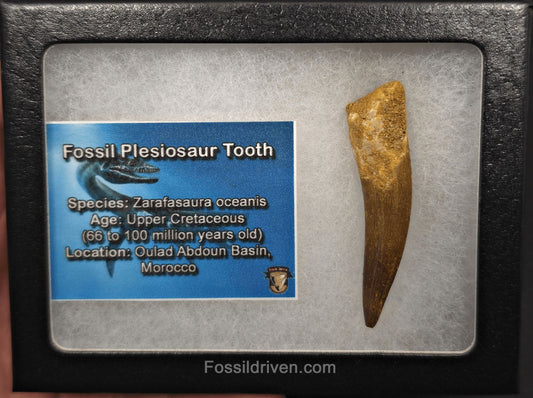
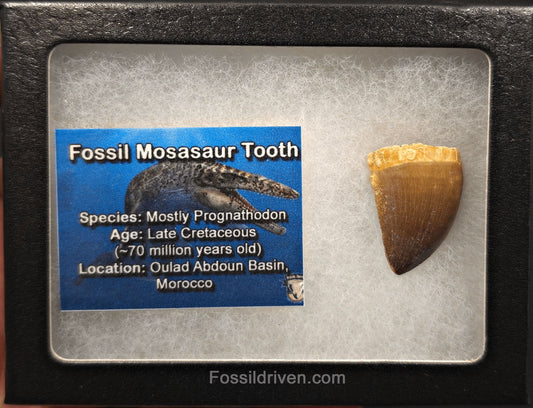
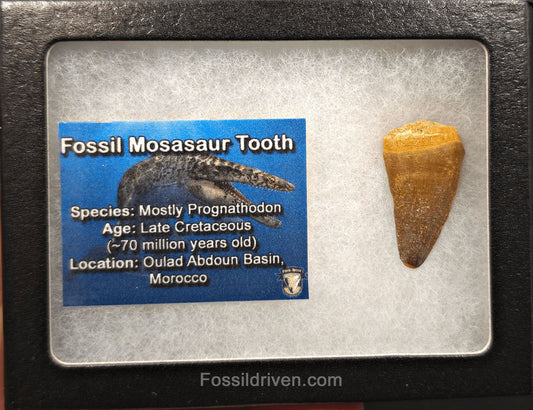
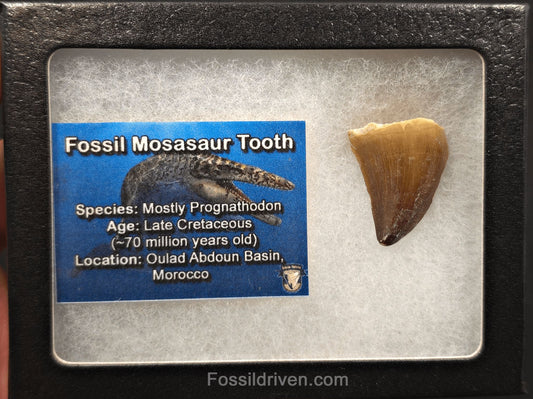
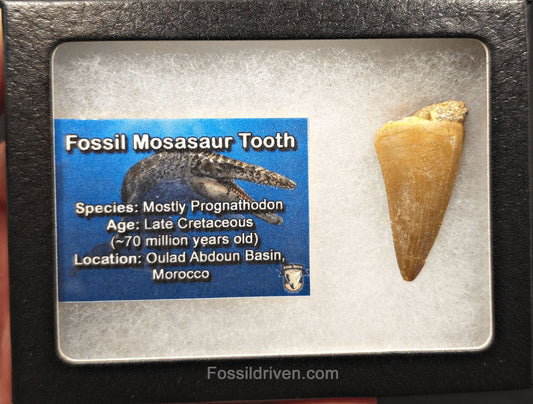
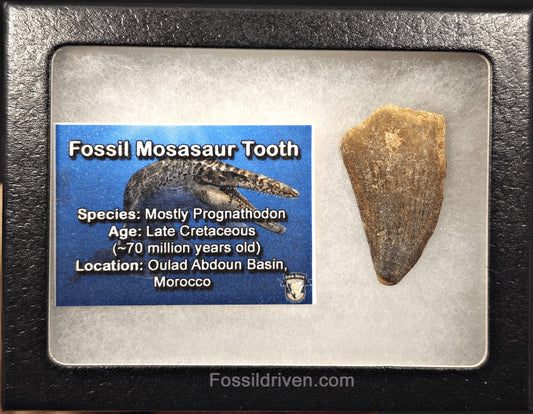
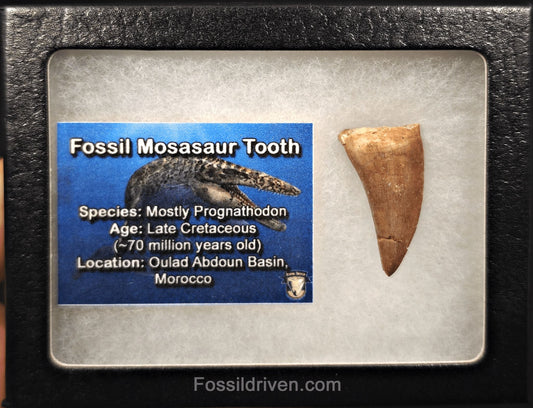
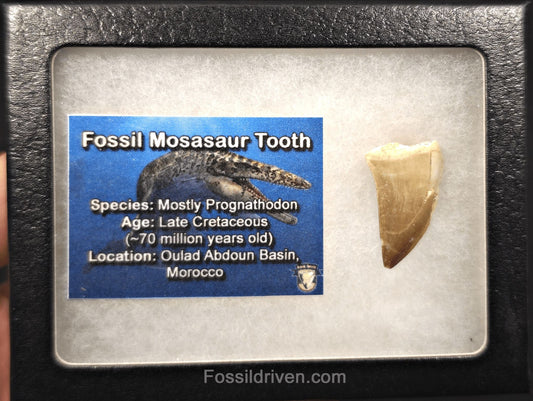
Most of the marine reptile fossils in this collection come from the Oulad Abdoun Basin near Khouribga, Morocco, one of the richest Late Cretaceous fossil localities in the world. Its phosphate deposits date to the very end of the Cretaceous, roughly 66 to 72 million years ago, and preserve an extraordinary record of the sea life that existed just before the mass extinction that ended the age of dinosaurs.
The Marine Reptiles in This Collection
Mosasaur
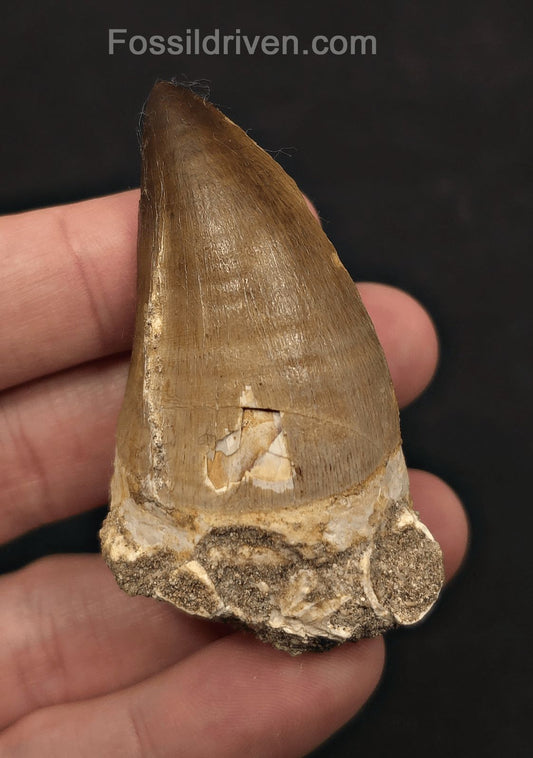
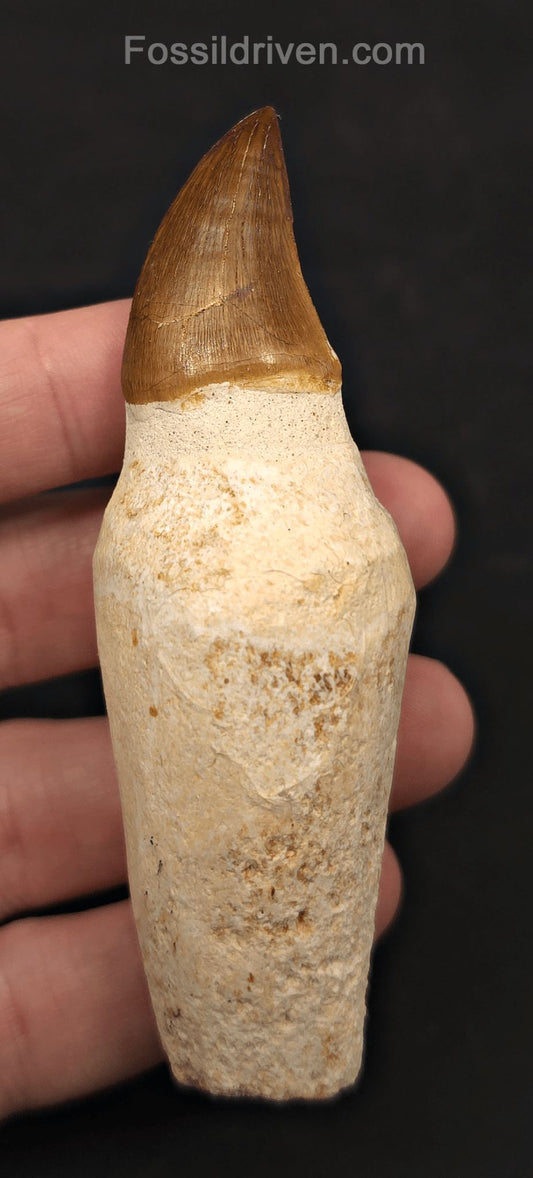
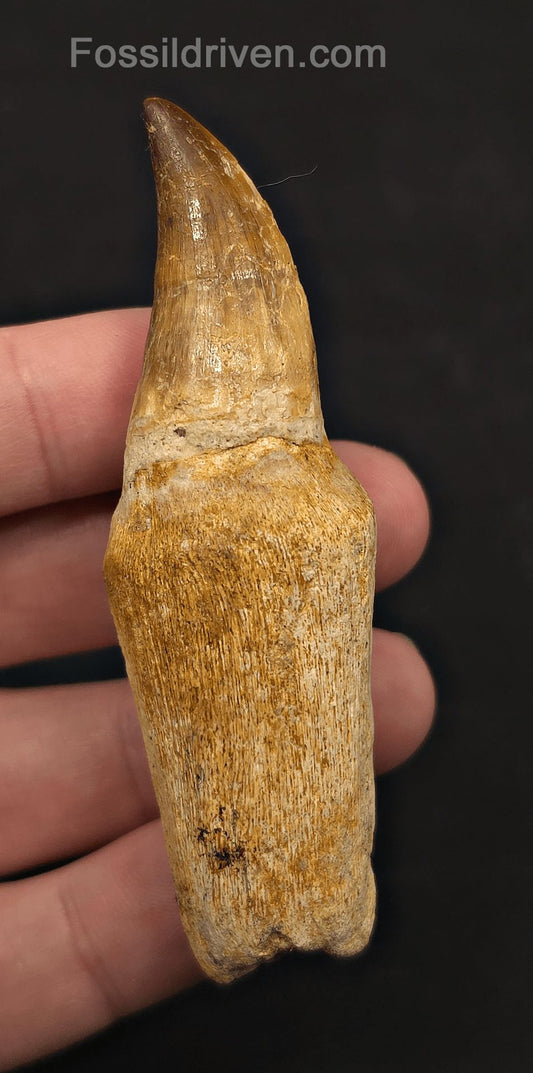
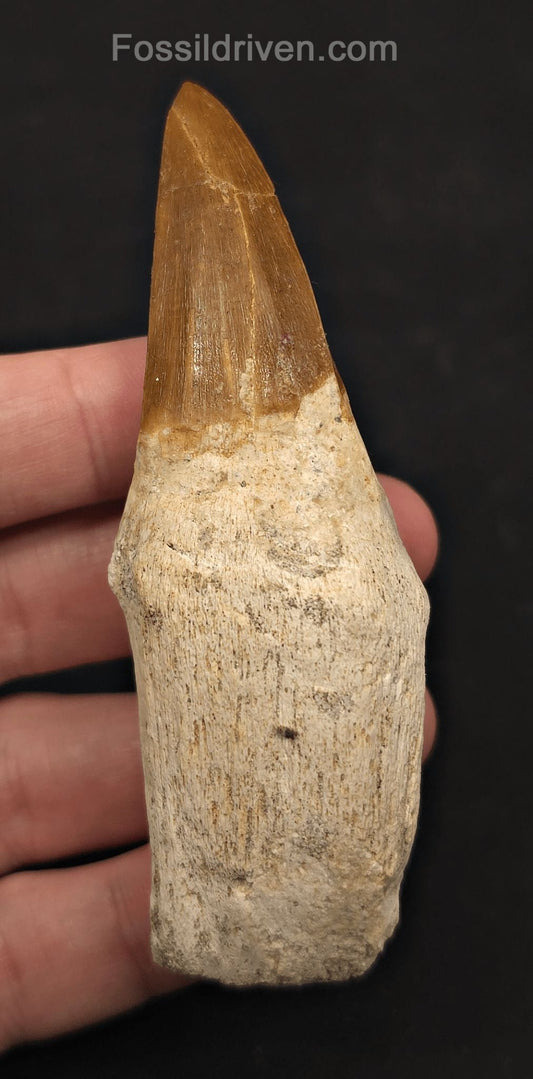
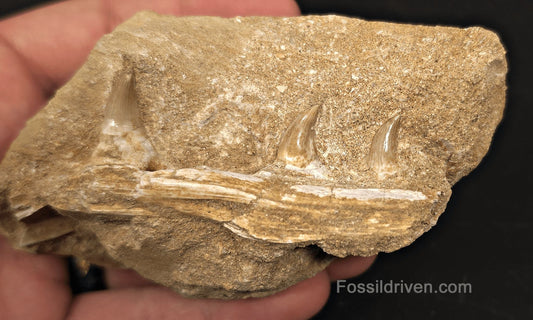
Giant marine lizards more closely related to today's monitor lizards and snakes than to dinosaurs. Their teeth are stout and conical, often with cutting edges on both sides, and many specimens are sold with the bony base of the root still attached. Moroccan genera include Prognathodon, Halisaurus, and Mosasaurus itself.
Plesiosaur
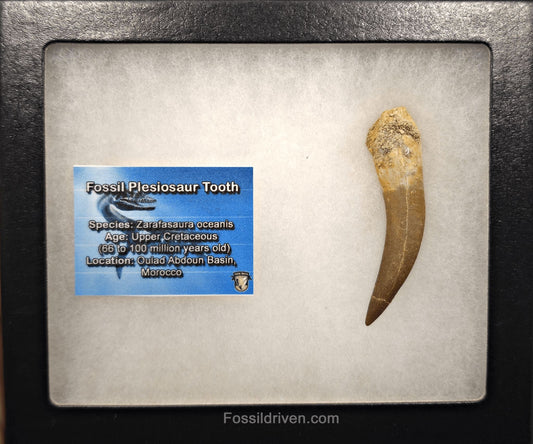
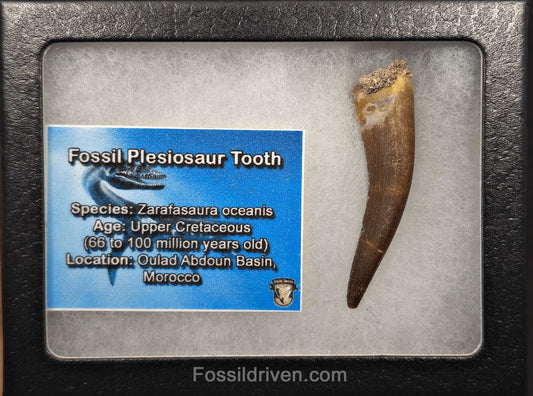
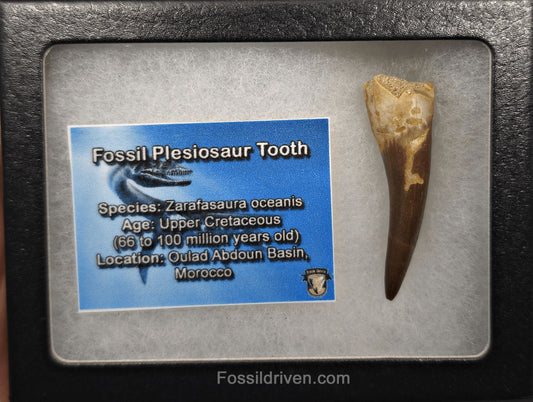
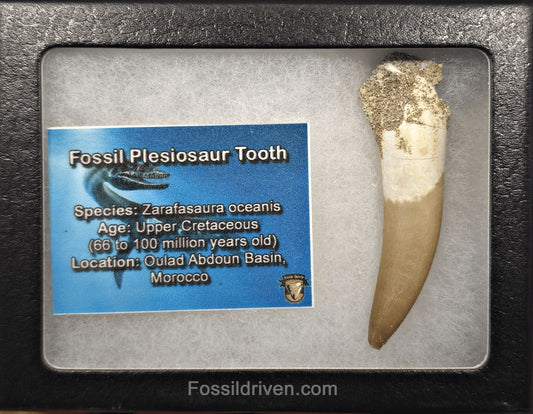
Long-necked marine reptiles with paddle-shaped flippers, built for hunting fish and squid. Their teeth are long, slender, and gently curved, with fine vertical ridges in the enamel and no serrations. Moroccan specimens are often attributed to the elasmosaur Zarafasaurus.
Honest Condition Disclosure
Moroccan marine reptile fossils are some of the most frequently restored fossils on the market. Teeth are commonly reset into matrix, and many jaw sections are composites, assembled from teeth and bone that did not originally belong together, then finished with filler and paint. With more than 13 years of fossil identification experience behind every listing, we state plainly whether a piece is fully natural, repaired, restored, or composite.
Every fossil we sell is backed by our authenticity guarantee and a 30-day return policy.
Helpful Buying Guides
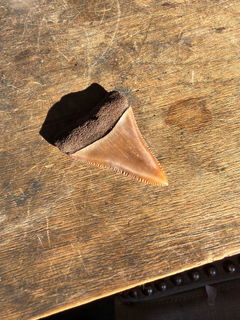
From the same Moroccan phosphates. The deposits of the Oulad Abdoun Basin also produce the teeth of Otodus obliquus, the earliest ancestor of Megalodon, from layers laid down just after the mass extinction.