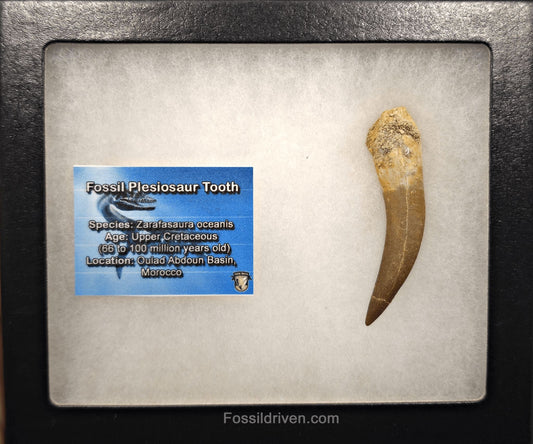
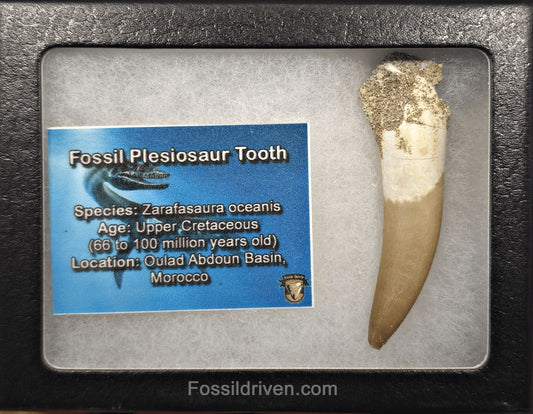
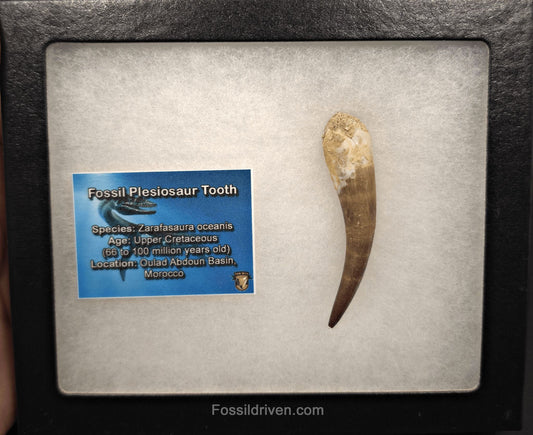
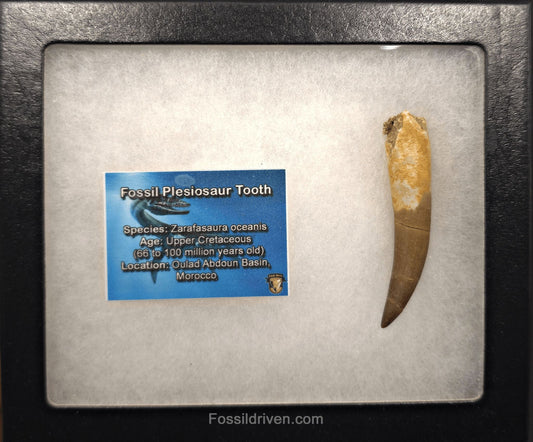
Shopping for Authentic Plesiosaur Teeth
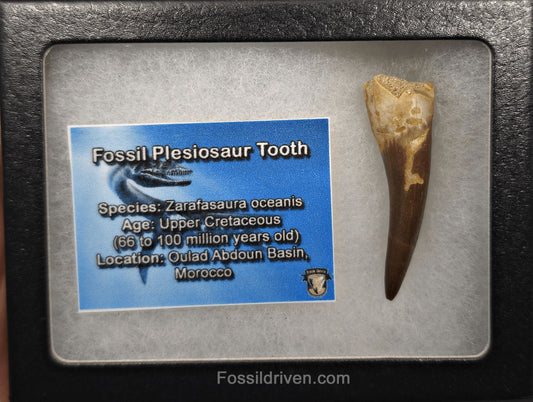
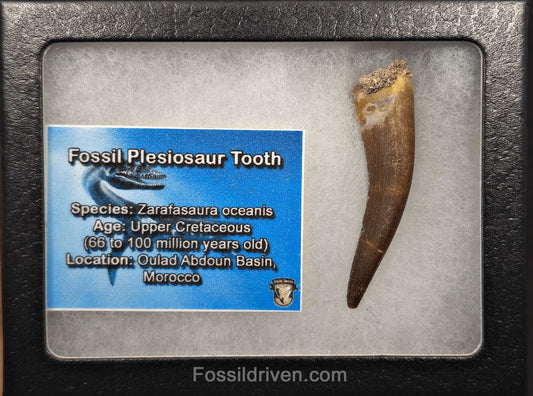
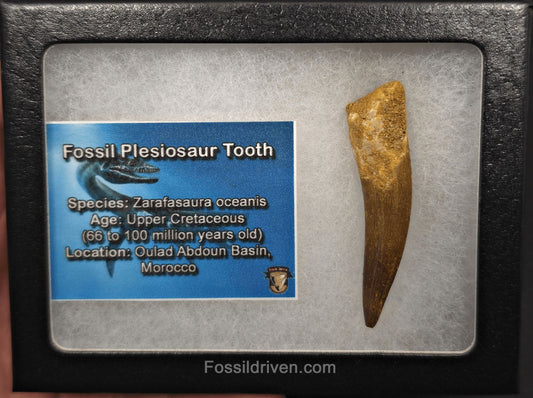
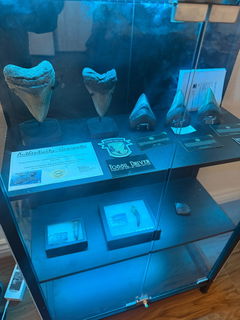
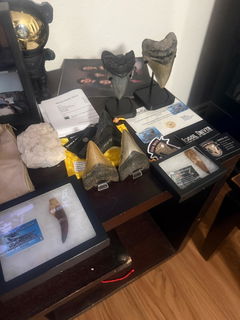
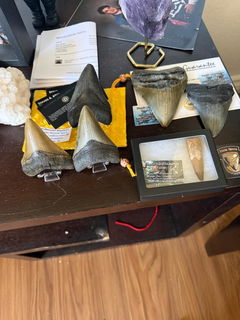
Plesiosaurs are some of the most recognizable animals of the prehistoric oceans, with their small heads, long necks, and four paddle-shaped flippers. Their teeth are a direct link to these graceful hunters. Every tooth in this collection is a one-of-a-kind specimen, measured and photographed individually, so the tooth you see is the tooth you receive.
Quick Plesiosaur Facts
What they were
Marine reptiles that "flew" through the water using four large flippers. Despite how they're often portrayed, plesiosaurs were not dinosaurs.
Those famous necks
The Moroccan plesiosaurs belong to the elasmosaurs, a group known for extremely long necks, some built from more than 70 vertebrae.
What they ate
Fish, squid, and other small prey, which they snared with long, interlocking teeth that worked like a trap.
When they lived
Plesiosaurs lived throughout the age of dinosaurs and disappeared in the same mass extinction 66 million years ago.
Where Our Plesiosaur Teeth Come From
The plesiosaur teeth in this collection come from the phosphate deposits of the Oulad Abdoun Basin near Khouribga, Morocco, roughly 66 to 72 million years old. These deposits preserve an extraordinary record of the last Cretaceous seas, and the plesiosaur teeth found there are often attributed to the elasmosaur Zarafasaurus.
How to Identify a Plesiosaur Tooth
Plesiosaur teeth are long, slender, and gently curved, with a round cross-section and fine vertical ridges running down the enamel. They have no serrations or cutting edges. That sets them apart from mosasaur teeth, which are stouter and usually show two cutting edges, and from the shark teeth found in the same deposits.
Honest Condition Disclosure
Plesiosaur teeth are thin and fragile, so tips and roots are often broken, and restored or filled tips are common on the market. Some teeth are also set into matrix they were not found in. With more than 13 years of fossil identification experience behind every listing, we state plainly whether a tooth is natural, repaired, or restored. Every fossil we sell is backed by our authenticity guarantee and a 30-day return policy.
Helpful Buying Guides
They shared the seas with mosasaurs. Complete your Cretaceous ocean collection with a tooth from one of the giant marine lizards that hunted alongside them in our Mosasaur Teeth collection.