
Real Dinosaur Fossils for Sale: What to Know Before You Buy
You don't need a museum budget to own a real piece of dinosaur history. A real dinosaur tooth can look simple at first glance: a point, a curve, a bit of enamel, maybe some worn serrations. Then you hold it and remember you are looking at a predator or herbivore that lived tens of millions of years ago. That is why interest in real dinosaur fossils for sale continues to grow. Buyers are not just shopping for décor. They are buying authenticity, rarity, and a tangible connection to prehistoric life.
The catch is that dinosaur fossils are not a category where you want to guess. A strong piece can become the centerpiece of a collection for years. A weak buy can leave you overpaying for heavy restoration, poor identification, or a specimen that simply does not display the way you hoped. If you want to buy with confidence, it helps to understand what separates a genuinely desirable fossil from one that only looks impressive in a quick photo.
What makes real dinosaur fossils worth buying?
The best dinosaur fossils combine three things: authenticity, visual appeal, and honest representation. Authenticity comes first. If a fossil is not real, nothing else matters. After that, collectors usually focus on preservation, species, rarity, and how the specimen presents both in hand and on display.
That balance matters because two authentic fossils can have very different values. A heavily worn tooth with repaired cracks may still be genuine, but it will not command the same attention as a well-preserved specimen with strong enamel, clean shape, and minimal restoration. Likewise, a common fragment can still make a great entry-level piece, while a more complete and visually impressive fossil may appeal to serious collectors or gift buyers looking for something unforgettable.
This is where expert curation makes a difference. Dinosaur fossils are not mass-produced products with predictable condition standards. Every piece is unique. Buyers benefit from working with a seller who can accurately identify material, explain condition honestly, and set expectations clearly.
The most common dinosaur fossils available to collectors
When most people begin shopping for real dinosaur fossils for sale, they quickly discover that complete skeletons are not the norm. Most collector-grade dinosaur fossils come in the form of teeth, bones, claws, eggshell fragments, or identifiable skeletal elements.
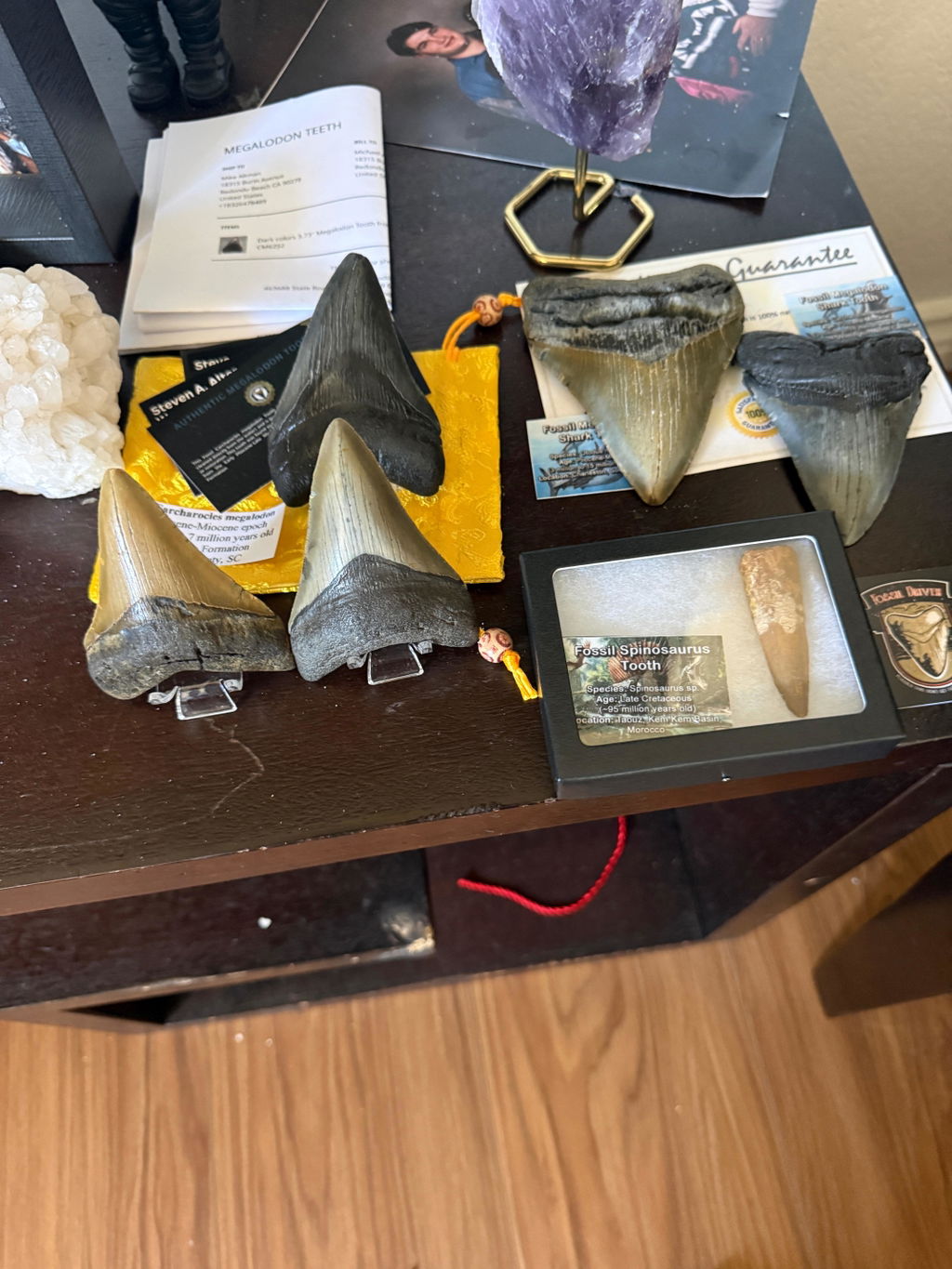
Spinosaurus teeth are among the most common dinosaur fossils on the market. Found primarily in Morocco's Kem Kem Beds, they are recognizable, durable, and available across a wide range of price points. For many collectors, a Spinosaurus tooth is the entry point into dinosaur fossil collecting.

Triceratops teeth are another popular option. While often smaller than predator teeth, they represent one of the most famous dinosaurs ever discovered and tend to be affordable for beginning collectors.
Hadrosaur teeth are frequently available as well. These fossils can offer excellent detail and provide an opportunity to own material from one of the most successful herbivorous dinosaur groups.
On the carnivore side, collectors often seek fossils from species such as Carcharodontosaurus, Dromaeosaurs (raptors), and various tyrannosaurids. Even worn or partial tyrannosaur teeth can generate significant interest because of the iconic reputation of the group.
Abelisaurus is a less commonly known but increasingly sought-after theropod, offering collectors a way to diversify beyond the more familiar names.

Other dinosaur fossils commonly offered for sale include bone fragments, vertebrae, claws, eggshell fragments, and occasionally portions of skull or frill material. The category is far broader than many new buyers realize.
One important note: fossils such as Mosasaur teeth are often sold alongside dinosaur fossils, but Mosasaurs were marine reptiles rather than dinosaurs. They are fascinating collectibles in their own right, but they belong to a different branch of prehistoric life.

How to judge authenticity and condition
When people shop for real dinosaur fossils for sale, the biggest concern is usually whether the piece is genuine. That is the right question, but it should be followed by another one: how much of the specimen is original?
Restoration is common in fossils. Small repairs, crack stabilization, and limited fill can be normal, especially in older or more fragile material. The issue is not restoration itself. The issue is whether it is disclosed and whether it overwhelms the original fossil. A professionally prepared specimen with minor, clearly stated repair can still be highly collectible. A heavily composited or aggressively rebuilt piece is a different story.
Look for sellers who describe restoration plainly. Terms like repaired crack, stabilization, fill, reattached tip, or restored root should not be hidden. Clear photographs are also essential. Good images show enamel texture, feeding wear, root condition if present, and any obvious repaired areas. If a listing uses vague language and avoids specifics, that is a reason to slow down.
Color can be another clue, though not a perfect one. Natural fossil teeth vary widely based on mineralization and locality. Deep browns, blacks, tans, reds, and grays can all be legitimate. Uniformly artificial-looking surfaces, suspiciously glossy coatings, or textures that seem inconsistent across the piece deserve closer inspection.
Why provenance matters in dinosaur collecting
Unlike many fossil shark teeth or ammonites, dinosaur fossils often come from regions with specific collection, export, and ownership regulations. Understanding where a specimen originated can be an important part of evaluating its legitimacy and long-term collectibility.
Provenance does not always need to be museum-level documentation, but reputable sellers should be able to explain where a fossil came from, how it was acquired, and whether it was legally collected and imported. Clear locality information also helps collectors better understand the fossil's scientific and historical context.
For higher-end purchases, provenance can become almost as important as the fossil itself. A well-documented specimen often carries greater collector confidence than an equally attractive fossil with an unclear history.
Rarity, size, and species all affect price
Pricing in dinosaur fossils is never just about size. A larger tooth will often cost more, but preservation and eye appeal matter just as much. A medium-sized tooth with clean enamel and strong shape can outperform a larger specimen with heavy damage or poor restoration.
Species attribution also affects value, though not always in the way buyers expect. Some names carry strong recognition and collector demand. Others are priced more modestly because the material is more available. The locality and formation can matter too, especially for experienced collectors who care about where and how a specimen fits into the fossil record.
Then there is rarity in the practical sense. A specimen may not be the rarest dinosaur fossil on paper, but if it has exceptional aesthetics, it may still be hard to replace. That is often what drives premium buying decisions. Collectors are not only paying for taxonomy. They are paying for standout quality.
Buying for display versus buying for a collection
Your goal should shape your purchase.
If you want a conversation piece for a shelf, office, or gift, visual impact may matter more than technical perfection. A large, attractive dinosaur tooth with honest restoration and strong display character can be the right choice.
If you are building a serious collection, you may care more about originality, species confidence, formation data, and condition details that casual buyers would overlook. In that case, a slightly smaller but cleaner specimen may be the better long-term addition.
Neither approach is wrong. The key is buying a fossil that fits its purpose. Problems start when a display-grade piece is marketed like an investment-grade specimen, or when a beginner pays a premium for a label instead of the fossil itself.
Red flags to watch for
Be cautious when a dinosaur fossil listing uses dramatic claims but provides very little information. Missing locality data, vague species identification, heavily edited photos, or no mention of restoration can all be signs that further questions are needed.
Terms such as "museum quality" or "investment grade" should be supported by actual details about condition, rarity, preparation quality, and authenticity. Marketing language alone should never replace documentation and honest disclosure.
The best dinosaur fossil listings explain exactly what the buyer is receiving. Transparency is one of the strongest indicators that a seller understands the material and respects the collector.
Questions to ask before you buy
Before purchasing, ask how the fossil was identified, whether there is any repair or restoration, and what condition issues are present. You should also consider whether the photos show the fossil from multiple angles and whether the seller is specific about what you are getting.
For higher-value pieces, provenance and locality details can add confidence and collector interest. For more affordable pieces, the main question is often simpler: Does this look like an honest example at a fair price?
You do not need to become a paleontologist to buy well. You just need a realistic view of the category. Authentic fossils vary. Restoration exists. Attribution can sometimes be more complex than a single species name on a tag. The best sellers explain those realities rather than hiding them.
Frequently asked questions
Are real dinosaur fossils legal to buy and own? Yes, in most cases. Dinosaur fossils legally collected and exported from their country of origin can be bought, sold, and owned privately. Reputable dealers should be able to speak to where and how a specimen was sourced.
How can I tell if a dinosaur tooth is real? Look for natural variation in color and texture, visible enamel, and root structure consistent with the species, and a seller who discloses any restoration. Be cautious of suspiciously uniform coloring or glossy, manufactured-looking surfaces.
What's the most affordable real dinosaur fossil to start collecting? Spinosaurus teeth are generally the most accessible entry point, with a wide range of sizes and price points. Smaller or more worn examples can be a budget-friendly way to start a collection.
Is restoration on a dinosaur fossil a bad thing? Not necessarily. Light, disclosed restoration like crack stabilization or a reattached tip is common and doesn't disqualify a specimen from being a strong collector piece. The concern is heavy, undisclosed restoration that significantly alters the original fossil.
Do dinosaur fossils come with documentation? It depends on the piece and seller. Higher-value specimens often come with locality and provenance information. For more common pieces, a clear, honest description from the seller is usually sufficient.
Buying with confidence from a specialist
A good dinosaur fossil should feel exciting before it ever reaches your display shelf. If the listing is clear, the specimen is authentic, and the quality matches the price, you are not just buying an object. You are choosing a piece of prehistory that still has the power to stop people in their tracks.
👉 Browse our current Dinosaur Fossils collection to find your next piece of prehistory.
Written by: Brandon Zulli - Owner of Fossil Driven