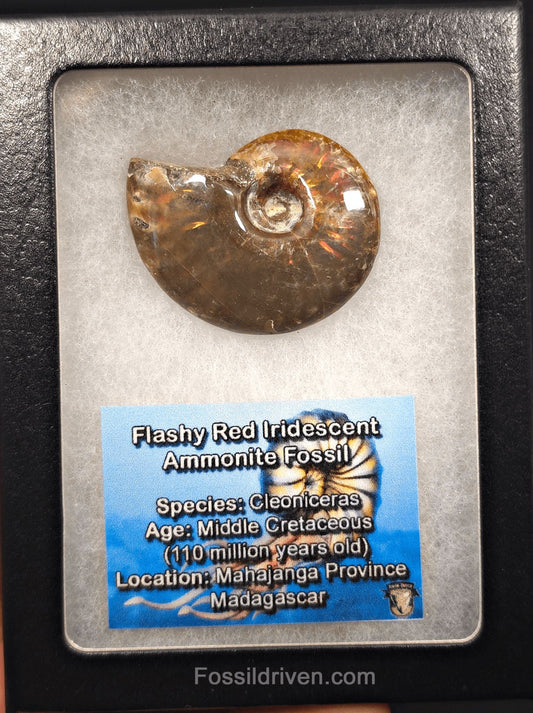
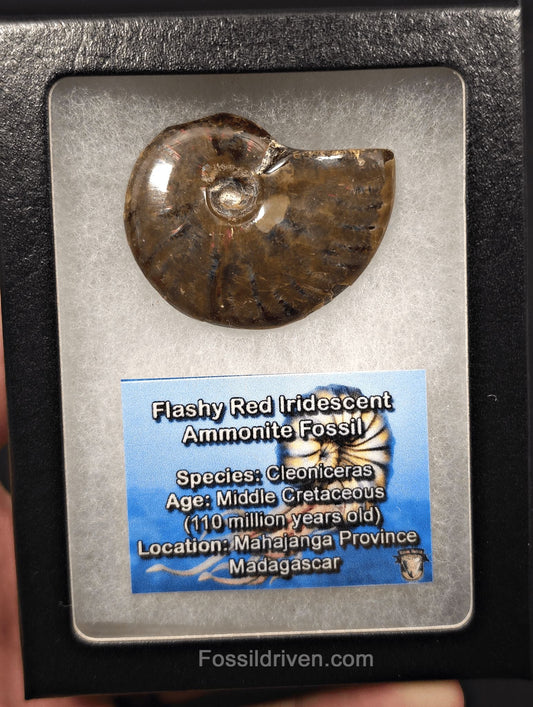
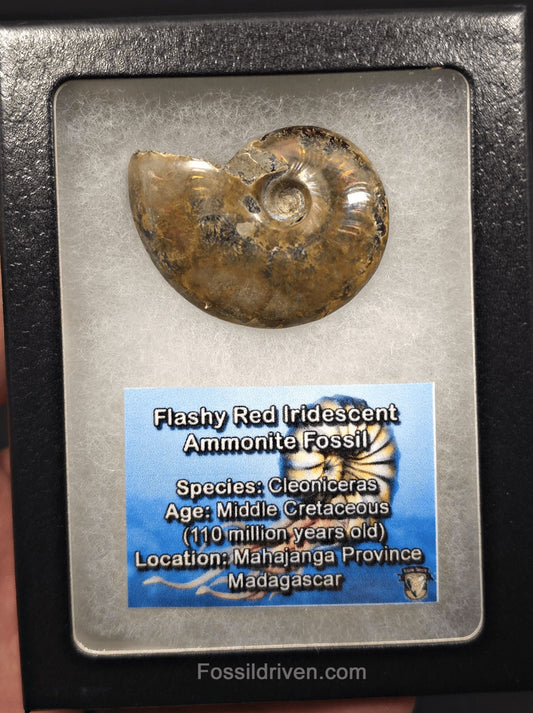
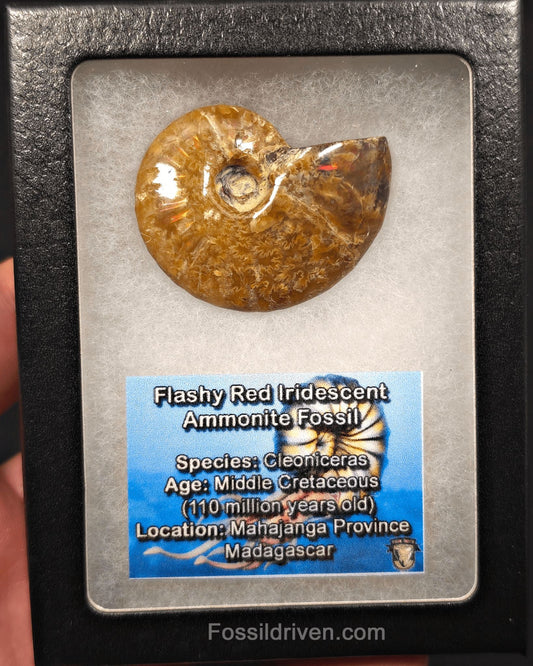
Shopping for Authentic Fossil Ammonites
Ammonites filled the world's oceans for hundreds of millions of years, and their spiral shells are one of the most recognizable shapes in the fossil record. Every ammonite in this collection is a one-of-a-kind specimen, photographed individually so the color, pattern, and shine you see in the listing are exactly what arrives at your door.
Quick Ammonite Facts
What they were
Marine cephalopods, relatives of today's octopus, squid, and nautilus, that lived inside a coiled, chambered shell and hunted in open water.
When they lived
From the Devonian, around 400 million years ago, until the same mass extinction that ended the age of dinosaurs 66 million years ago.
How the shell worked
The animal lived in the outermost chamber. The inner chambers held gas and fluid that it adjusted to control buoyancy, much like a submarine.
Suture patterns
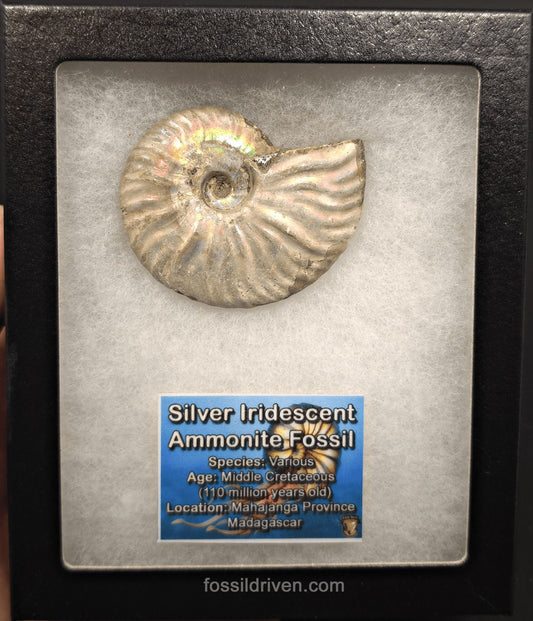
Where each chamber wall met the shell, ammonites formed intricate, fern-like suture lines. These patterns are a key feature collectors look for, especially on polished specimens.
Ammonite Types in This Collection
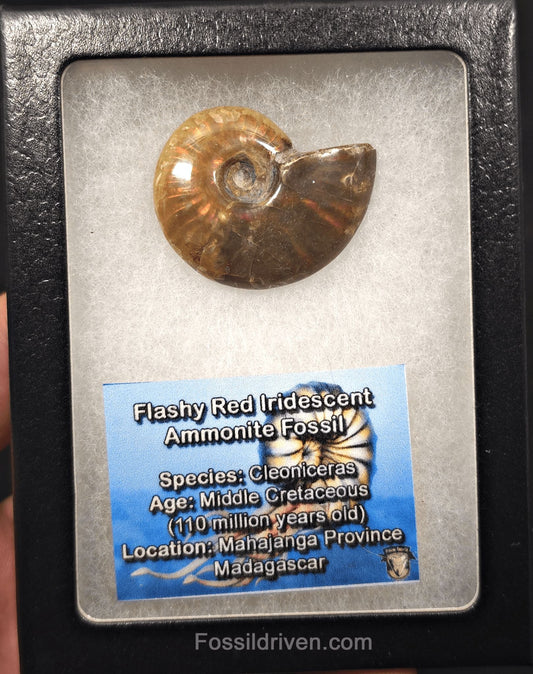
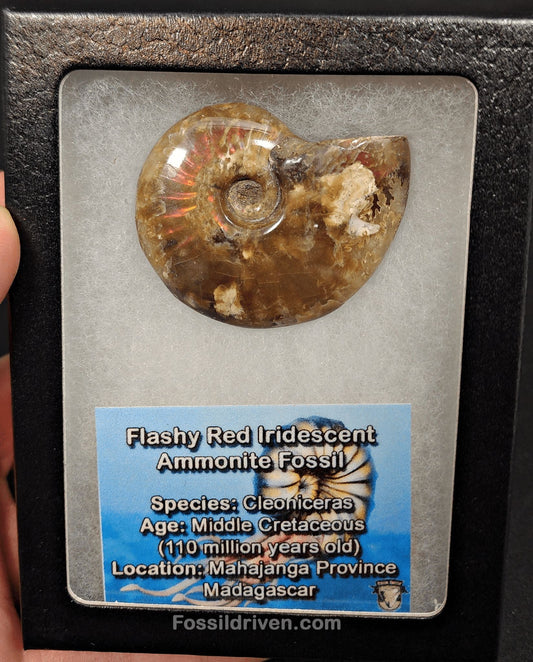
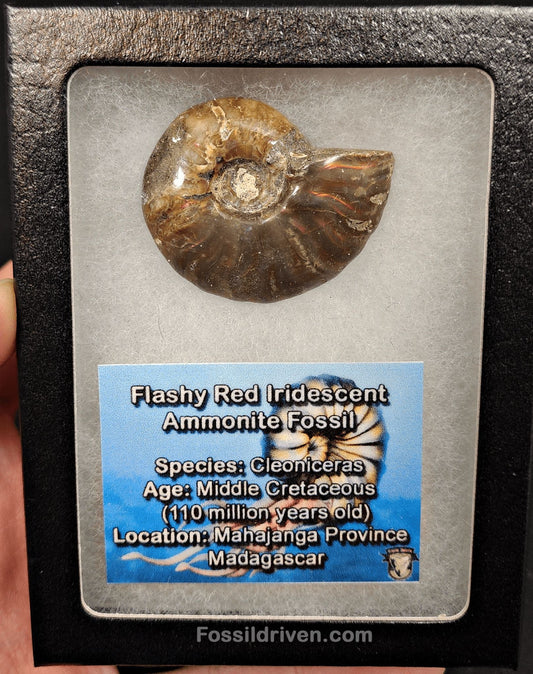
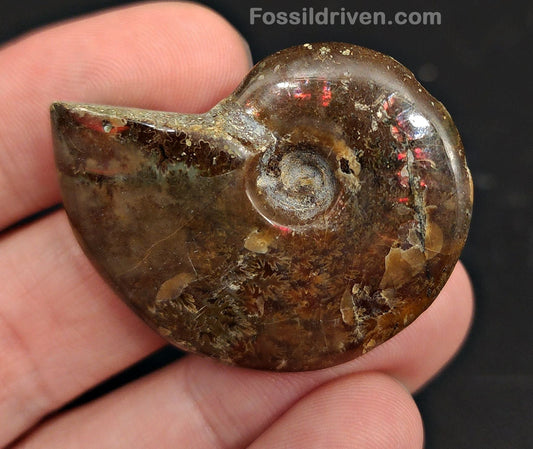
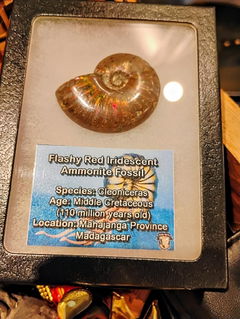
Red Flashy Iridescent
Ammonites that preserve their original nacre, the same material as mother-of-pearl, which flashes red, orange, and gold as the shell catches the light.
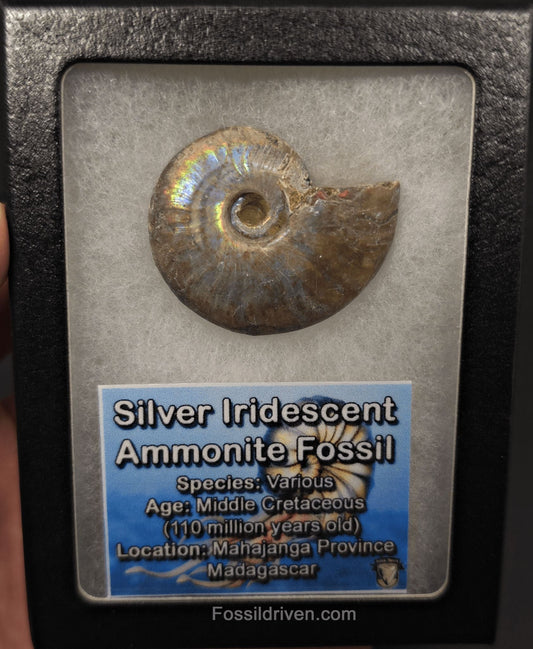
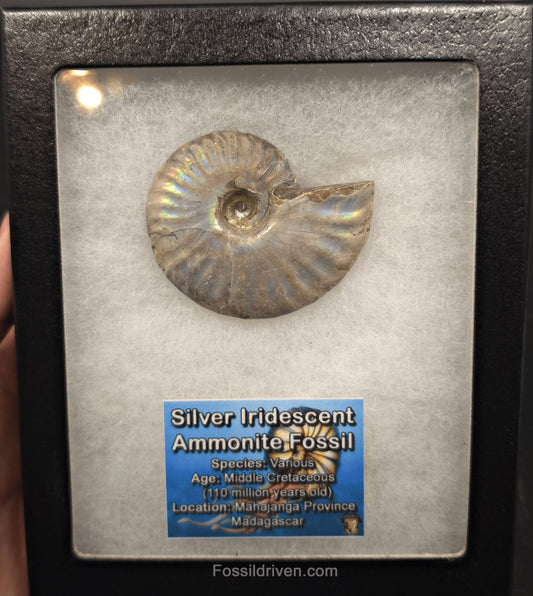
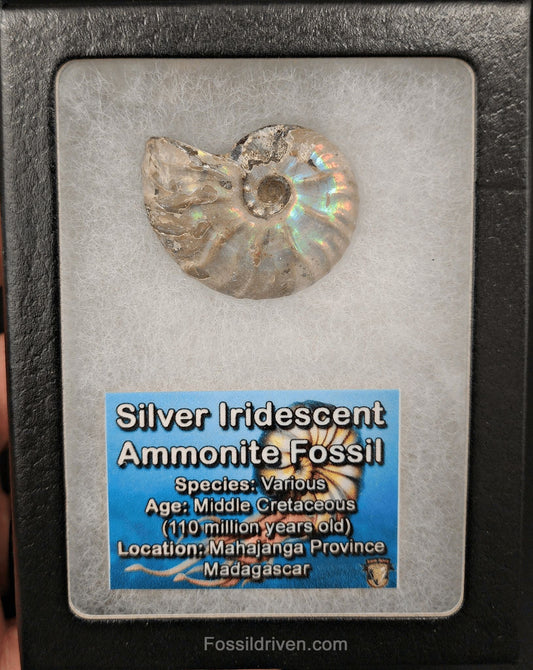
Silver Iridescent
A softer, pearly silver shimmer across the shell, with subtle hints of color that shift depending on the viewing angle.
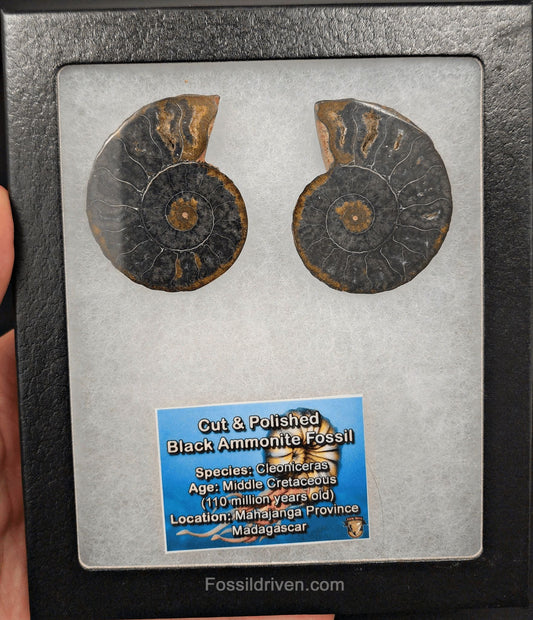
Black Polished
Mostly Cleoniceras from Madagascar, polished to a deep, glossy black finish that highlights the shell's coiling and suture patterns in sharp contrast.
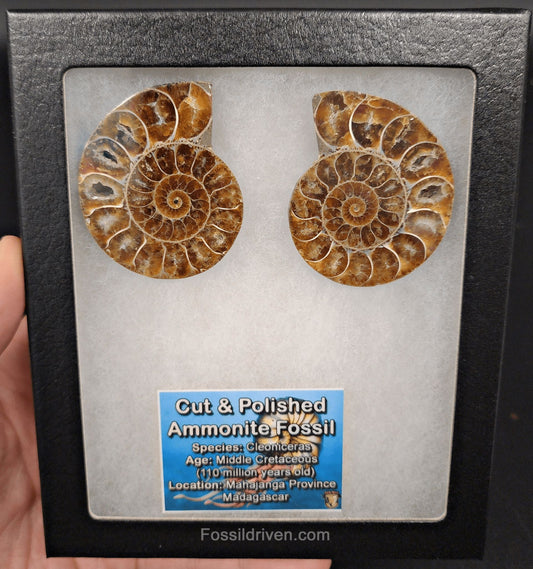
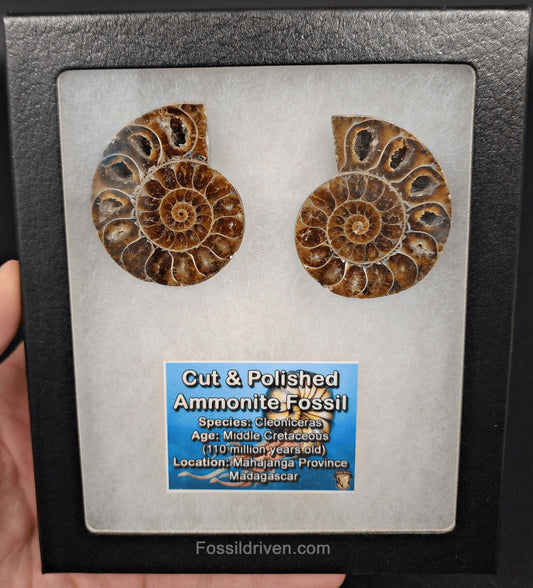
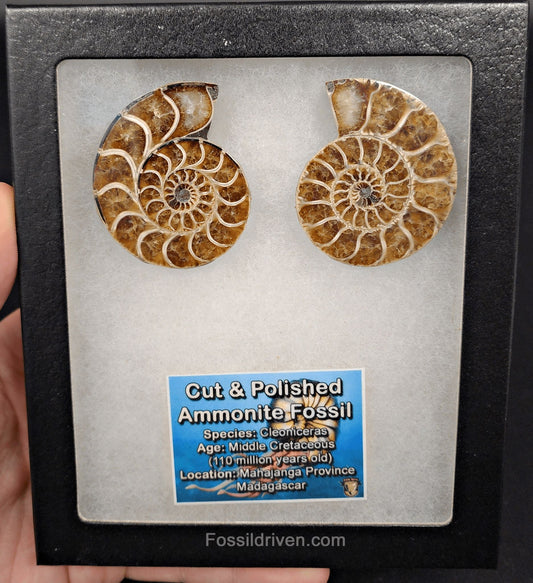
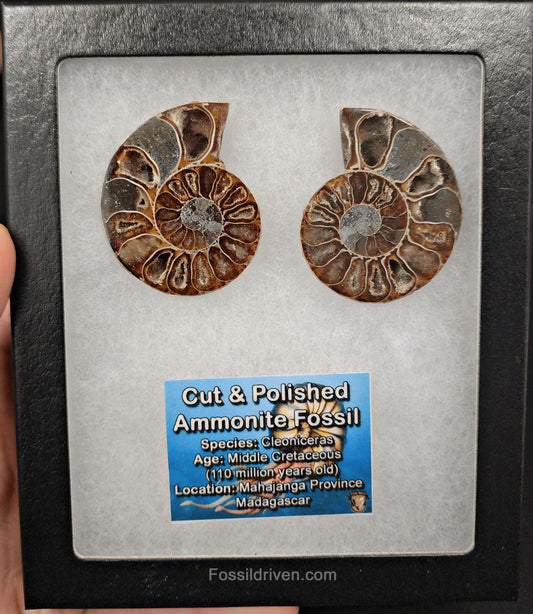
Cut & Polished Agatized
Ammonites sliced in half to reveal their internal chambers, which over time filled with minerals like calcite and agate, creating sparkling crystal-lined pockets.
Where Our Ammonites Come From
Most of the ammonites in this collection come from Cretaceous deposits in Madagascar's Mahajanga Province, roughly 110 million years old, and many belong to the genus Cleoniceras. Madagascar is world-famous for ammonites that preserve their original shell material, which is what produces the natural iridescence collectors prize. To learn more about the science behind that color, read our guide on why some fossil ammonites have natural iridescence.
What Affects the Value of an Ammonite
For iridescent ammonites, the strength and coverage of the color matter most. Vivid, multicolored flash across the entire shell is worth far more than faint or patchy shimmer. Collectors also look at size, how complete the shell is, the sharpness of the suture patterns, and for cut and polished pieces, the quality of the crystal pockets and how well the two halves match.
Honest Condition Disclosure
Polishing and cutting are a normal and expected part of preparing many ammonites, but some sellers go further, coating shells with lacquer or oil to fake extra shine, dyeing agatized specimens, or carving fake ammonites from stone. We state plainly how every ammonite has been prepared, and every fossil we sell is backed by our authenticity guarantee and a 30-day return policy.
Helpful Guides
They shared the seas with giants. Ammonites lived alongside mosasaurs, and some fossil ammonite shells even show damage interpreted as mosasaur bite marks. Explore our Marine Reptile Fossils collection.