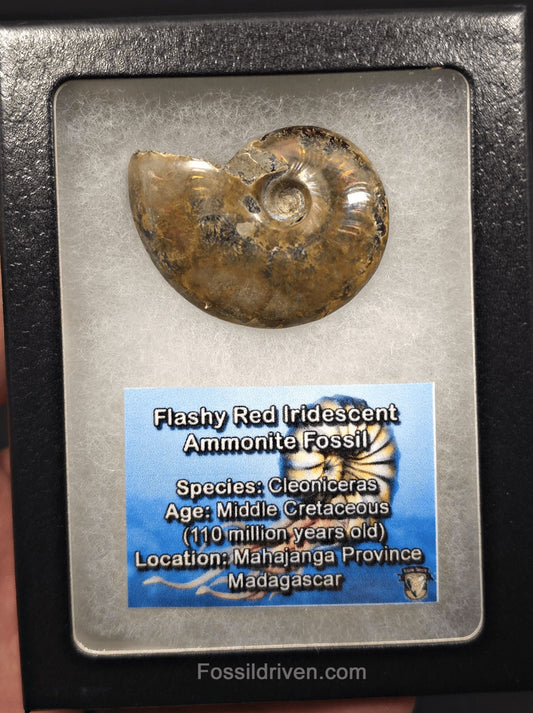
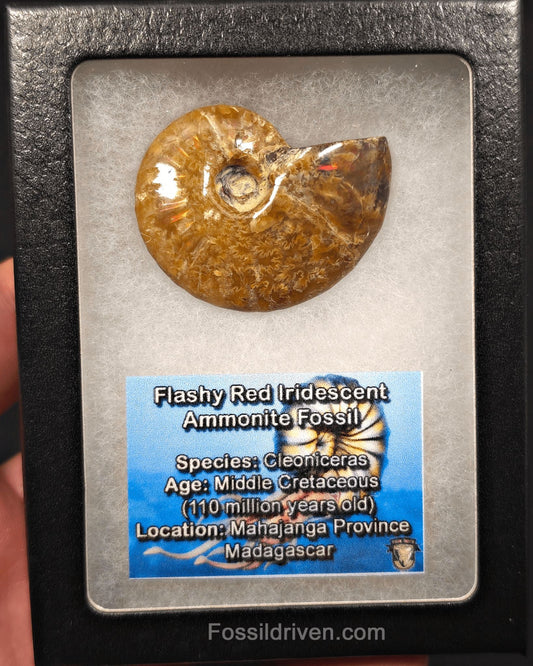
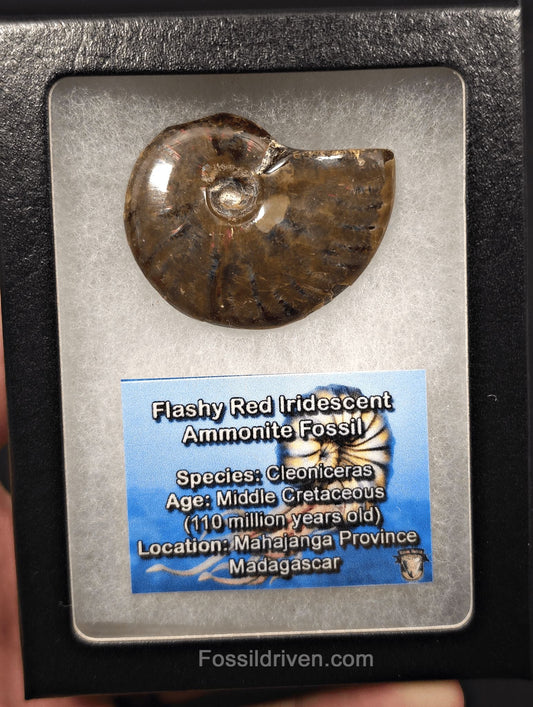
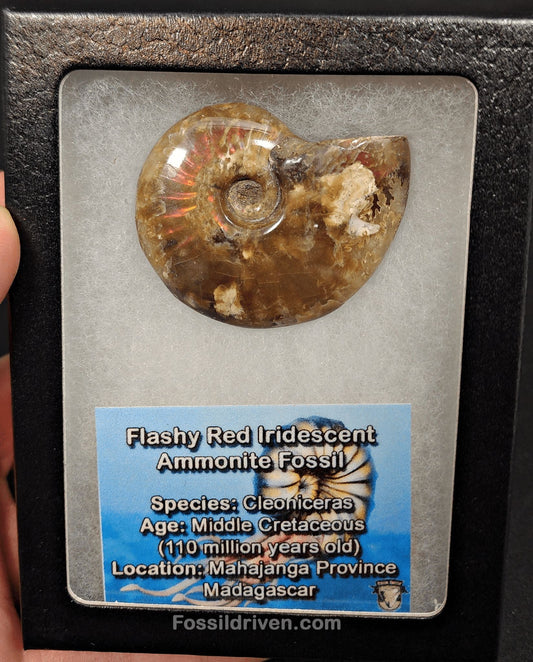
Shopping for Red Flashy Iridescent Ammonites
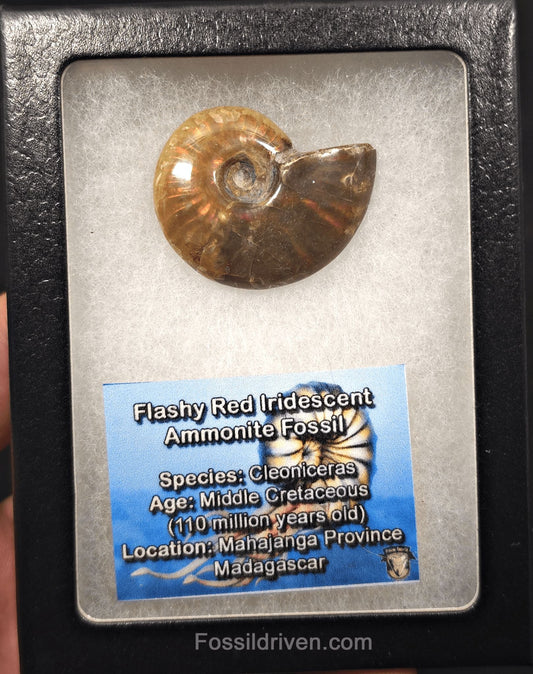
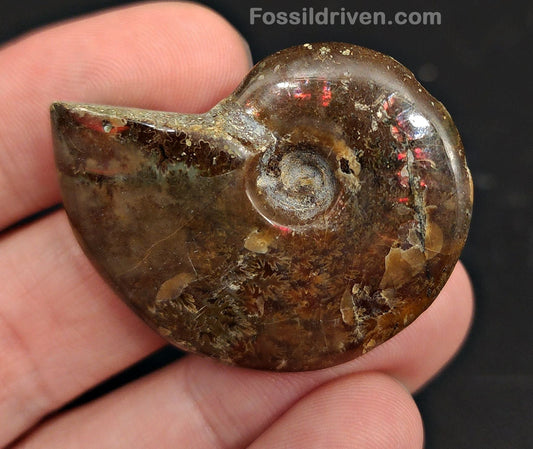
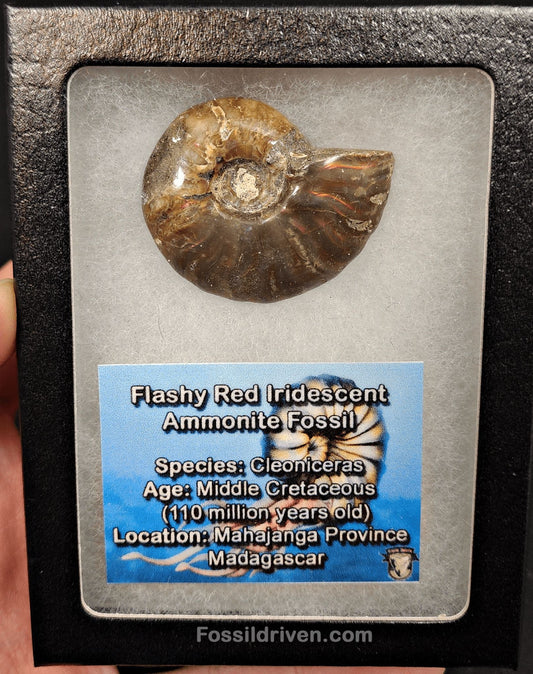
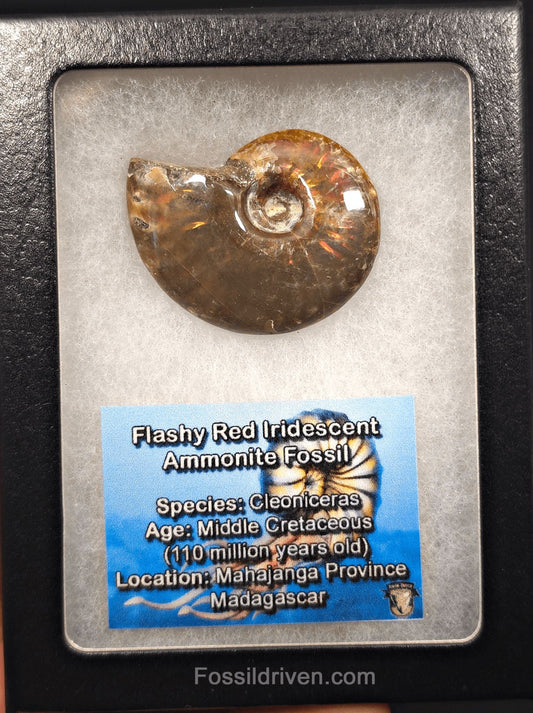
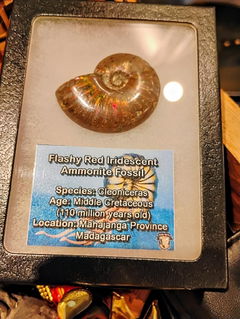
Most fossils have been completely replaced by minerals over time, but these ammonites still carry their original shell material. That rare survival is what gives them their shimmer. Every ammonite in this collection is a one-of-a-kind specimen, photographed individually so the shine and color you see are exactly what arrives at your door.
Where the Shimmer Comes From
Ammonite shells were built from nacre, the same material as mother-of-pearl, made of microscopic layers of aragonite. When light passes through those thin layers, it reflects and interferes with itself, producing the shifting colors we see. The thickness and spacing of the layers decide the color: some shells show a soft, even silver shimmer, while others, like the ones in this collection, flash bold reds, oranges, and golds that shift as you turn the shell. To learn more, read our guide on why some fossil ammonites have natural iridescence.
Red Flashy vs. Silver Ammonites
Silver Iridescent
A bright, metallic, pearly sheen that spreads evenly across the shell, with gentle hints of pink, blue, or green depending on the viewing angle. Elegant and understated.
Red Flashy Iridescent
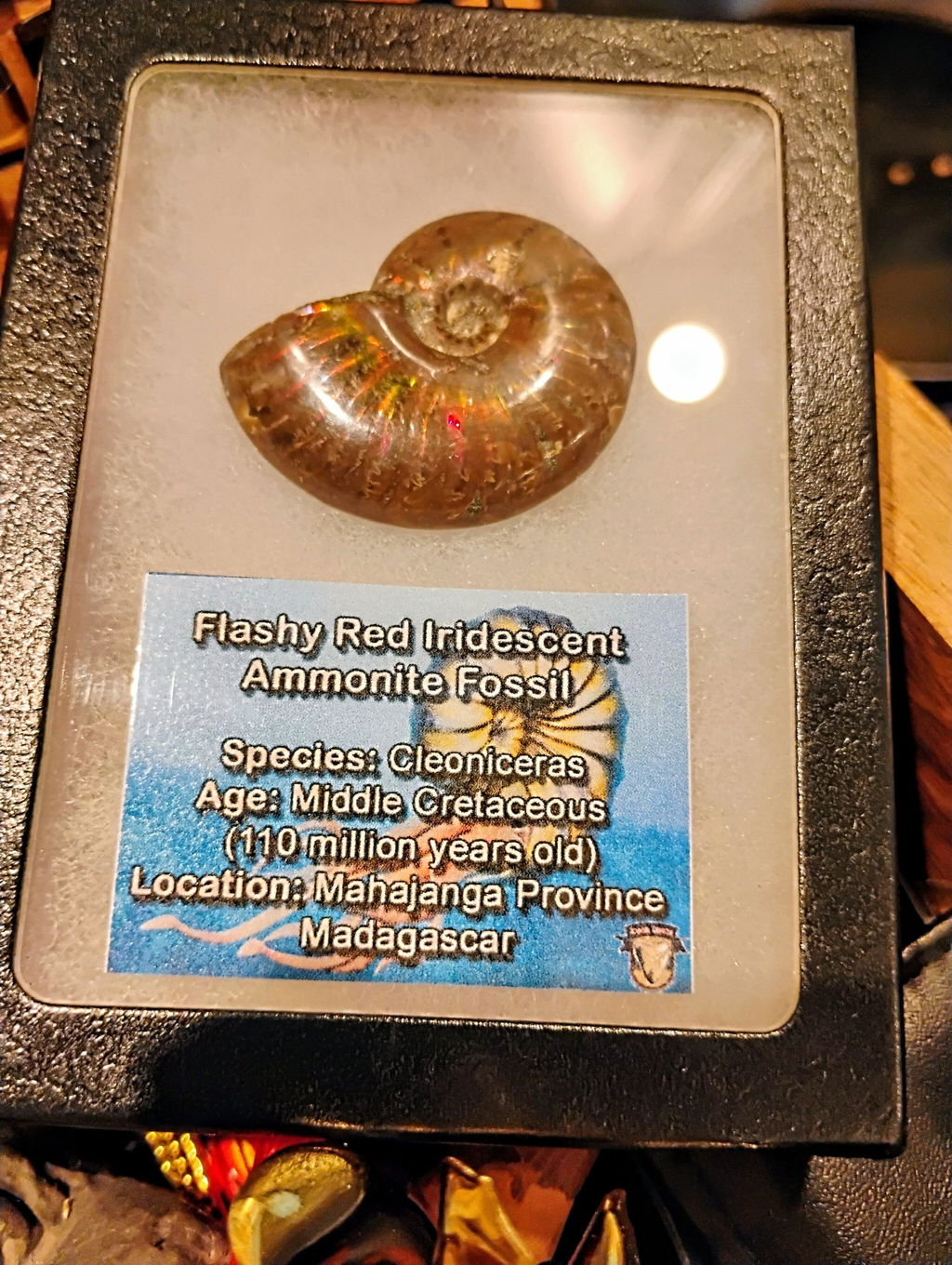
Bold, fiery flashes of red, orange, and gold that jump out as the shell catches the light. Dramatic and eye-catching.
Where Our Red Flashy Ammonites Come From
Our red flashy iridescent ammonites come from Cretaceous deposits in Madagascar's Mahajanga Province, roughly 110 million years old, and many belong to the genus Cleoniceras. Madagascar is the world's best-known source for iridescent ammonites, because its deposits preserved original shell nacre far better than most fossil sites.
What Affects the Value of an Iridescent Ammonite
The strength and coverage of the color matter most. Shells with vivid, multicolored flash across the entire surface are worth far more than those with faint or patchy color, and deep reds with green or blue mixed in are especially prized. Collectors also look for a complete and well-shaped spiral, an intact outer edge, and overall size.
Honest Condition Disclosure
Many iridescent ammonites are lightly polished to bring out their natural shine, which is a normal part of preparation. Some sellers go further, coating shells with lacquer or oil to fake extra brilliance. We state plainly how every ammonite has been prepared, and every fossil we sell is backed by our authenticity guarantee and a 30-day return policy.
Caring for Your Ammonite
Nacre is delicate. Dust with a soft, dry cloth, and keep your ammonite away from water, vinegar, cleaning products, and other acids, which can dull or damage the shimmer.
Helpful Guides