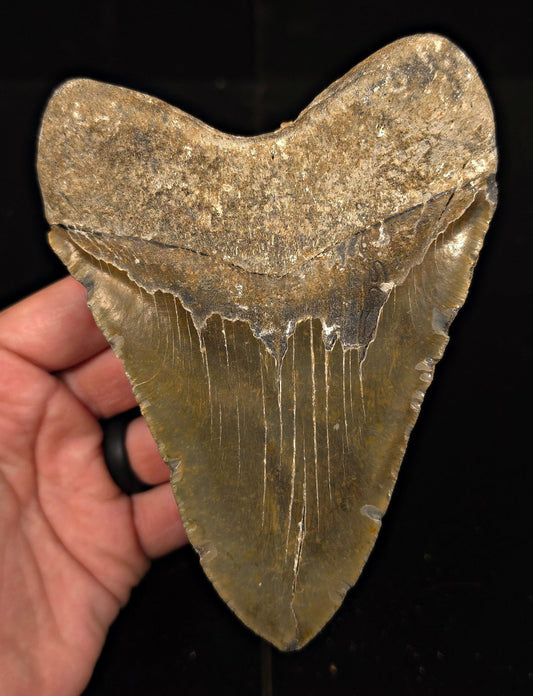
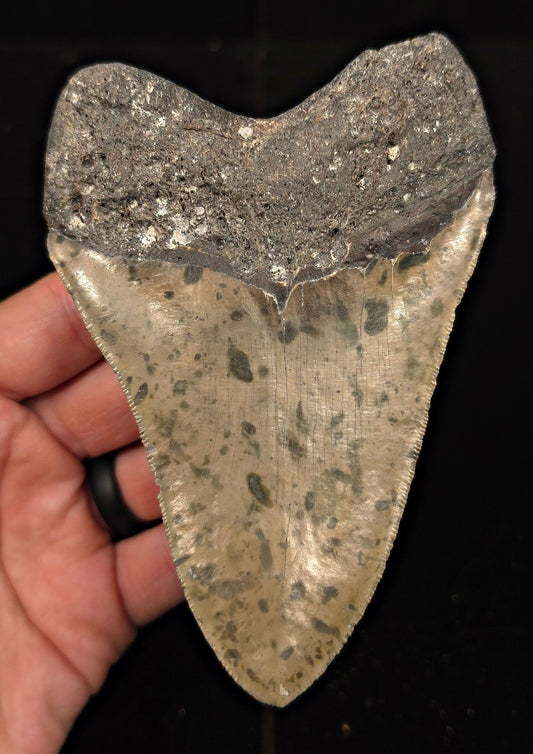
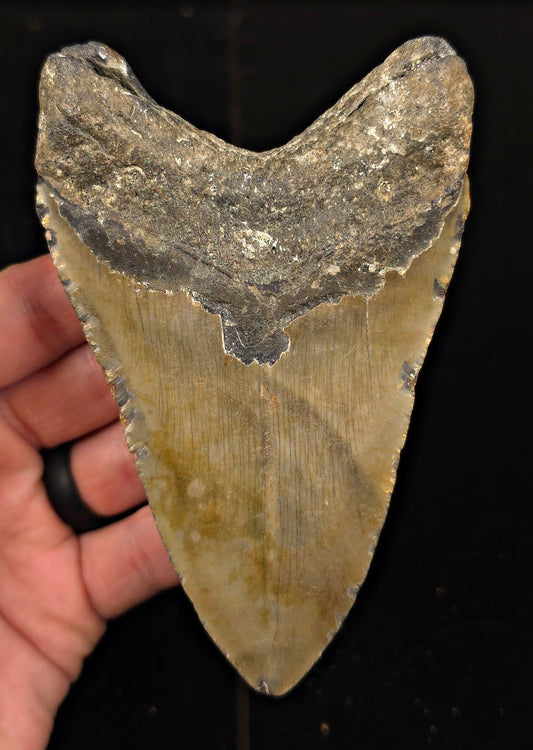
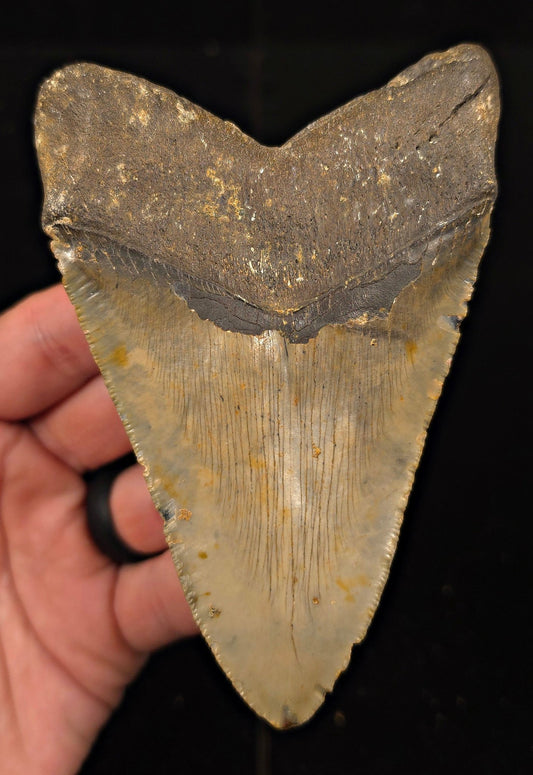
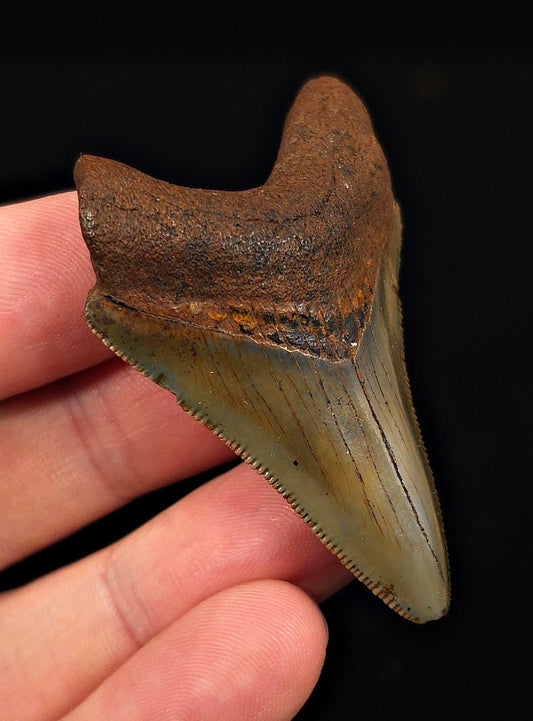
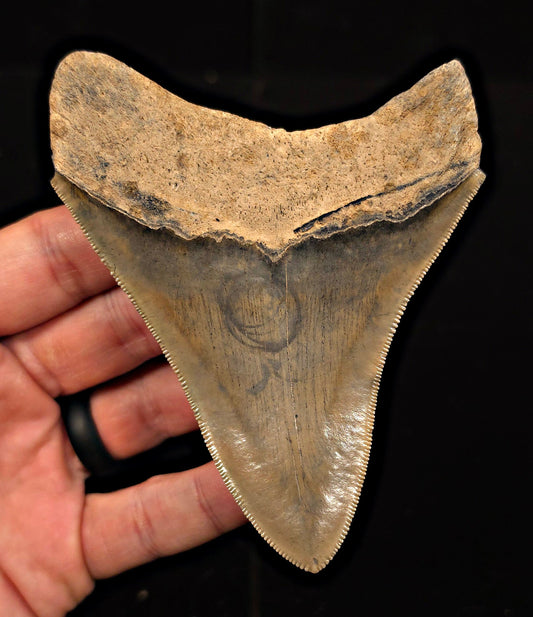
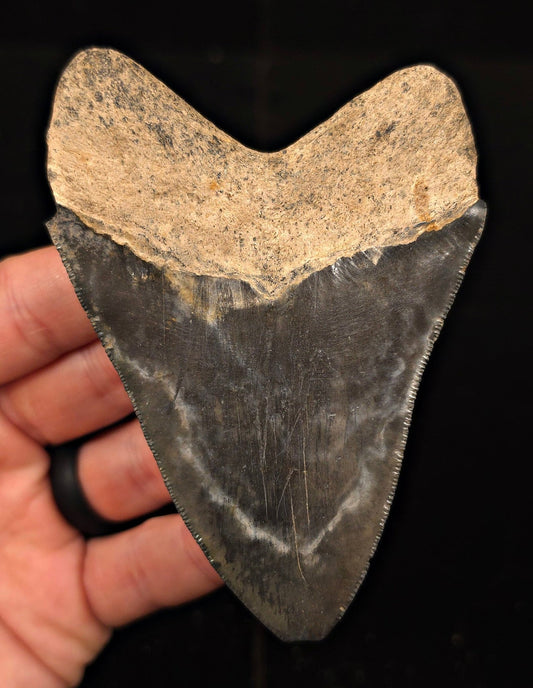
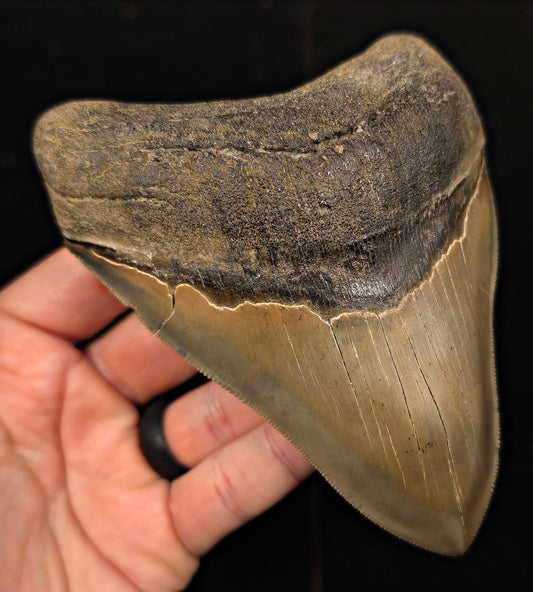
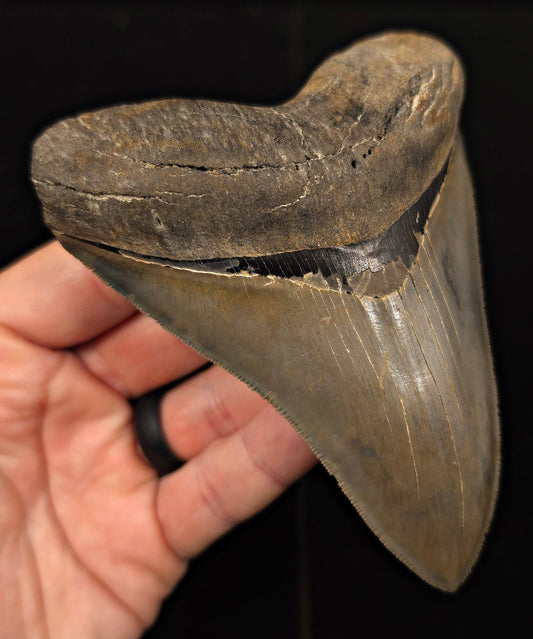
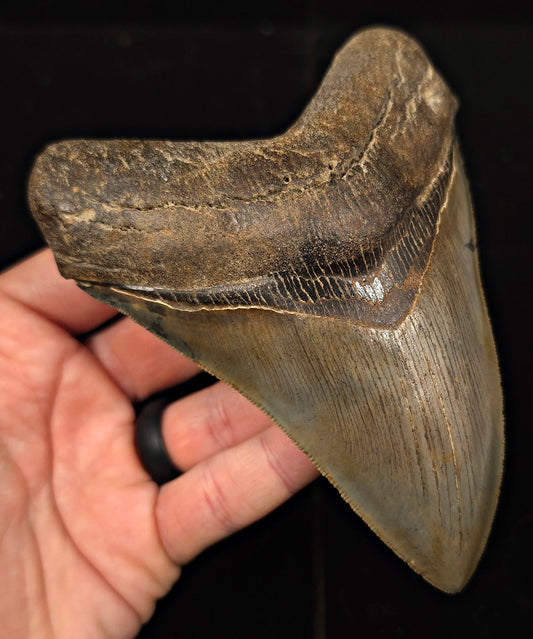
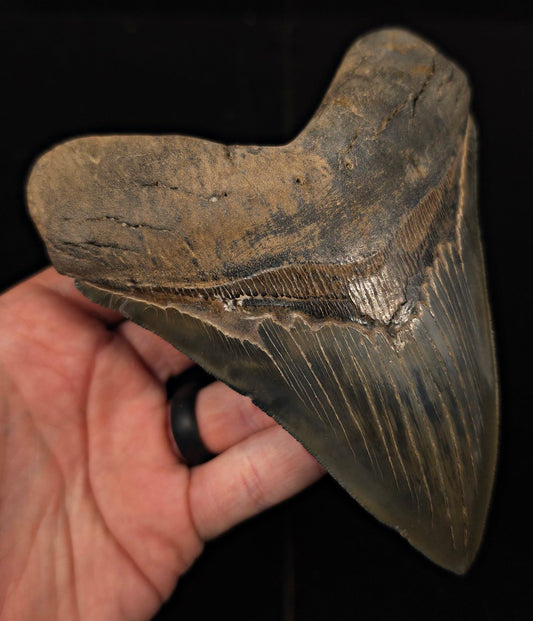
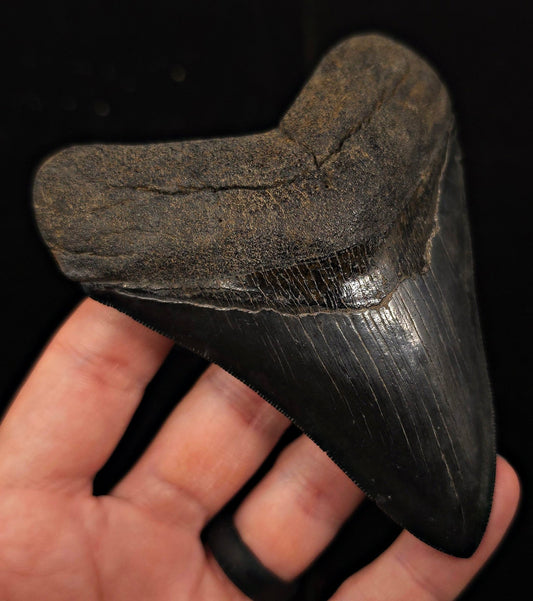
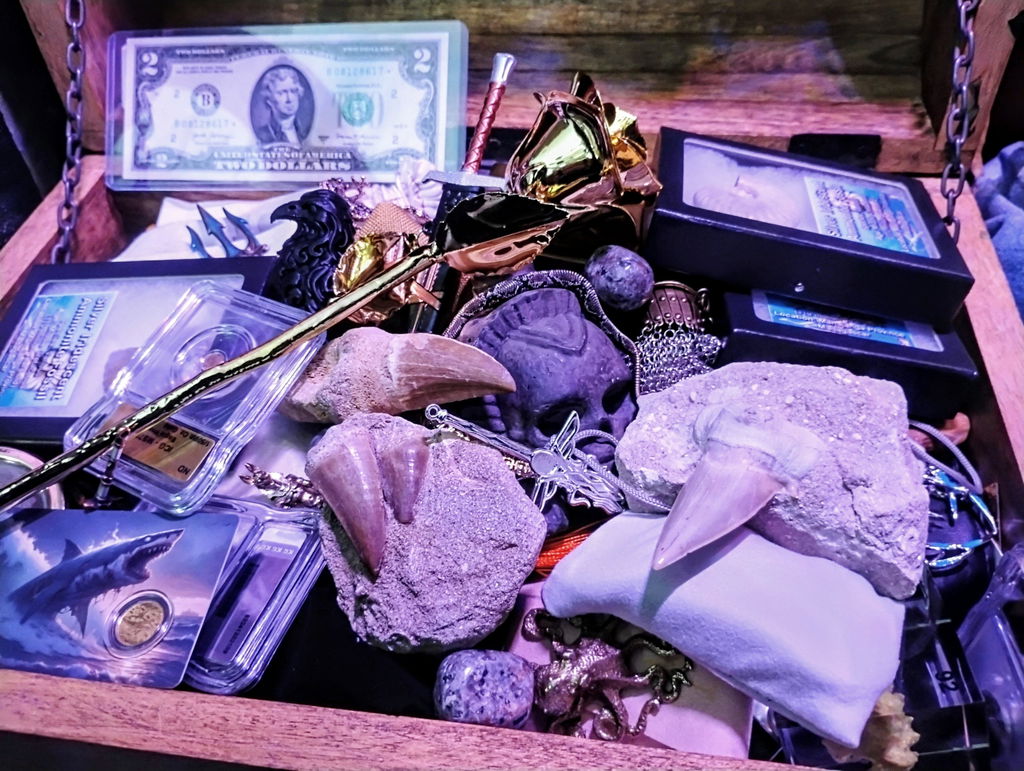
Shopping for Authentic Megalodon Teeth for Sale
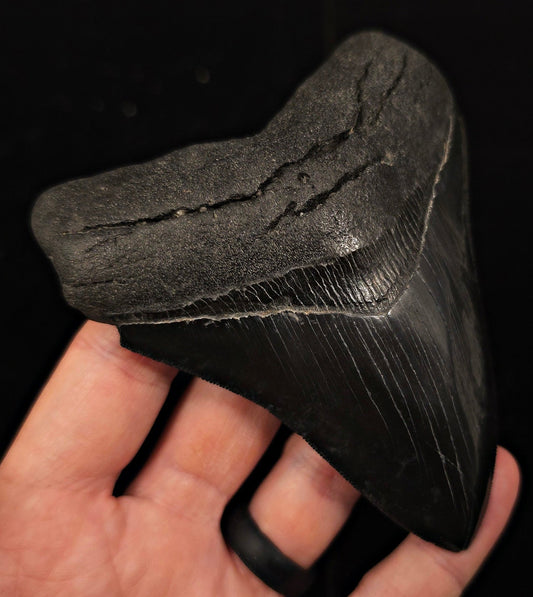
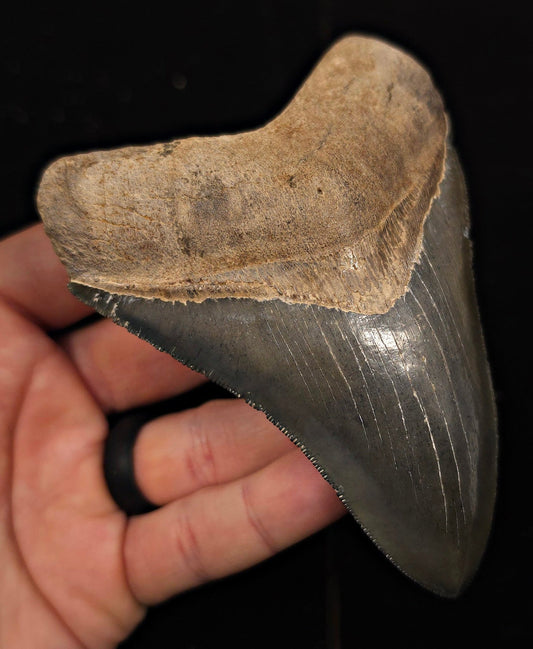
Otodus megalodon patrolled warm oceans around the world from roughly 23 to 3.6 million years ago, and because sharks shed thousands of teeth over a lifetime, its fossilized teeth are one of the few pieces of a prehistoric giant that a collector can actually hold. Every tooth in this collection is a one-of-a-kind specimen, measured and photographed individually, so the tooth you see in the listing is the tooth that arrives at your door.
Quick Megalodon Facts
Scientific name
Otodus megalodon, historically called Carcharocles megalodon. It belongs to the extinct Otodus lineage that descended from Otodus obliquus, not to the ancestry of the modern great white.
When it lived
About 23 to 3.6 million years ago, spanning the Miocene and Pliocene epochs.
Typical tooth size
Most teeth measure 3 to 5 inches in slant height. Teeth over 6 inches are rare and sit at the top of the collecting market.
Body size
Commonly estimated at 50 feet or more for the largest individuals, though researchers still debate the exact length and build.
Where Our Megalodon Teeth Come From
Locality shapes almost everything about a tooth, from its color to its condition. Color comes from the minerals present during fossilization, not from age: iron sulfides and manganese tend to produce blacks and charcoal grays, while iron oxides create browns, tans, and oranges.
Venice, Florida
Gulf Coast beaches and offshore beds that mostly yield smaller, darker teeth, a classic starting point for new collectors.
Bone Valley, Florida
Florida's phosphate district, prized for blue and gray enamel and, on rare occasions, gold and green tones found almost nowhere else.
Charleston & Beaufort, South Carolina
River and offshore finds from the South Carolina Lowcountry that tend toward rich blacks, browns, and grays, with good size and solid enamel.
Wilmington (Meg Ledge), North Carolina
An offshore dive site that produces some of the most sought-after commercial-quality teeth, often with dark enamel and crisp serrations.
West Java & Banten, Indonesia
Teeth from Java's Miocene deposits, including the Bentang Formation, are known for bright, high-contrast colors. They are also among the most frequently restored on the market, so disclosure matters.
Rare and Limited Localities
From time to time we also offer teeth from less common sources, such as North Carolina's Meherrin River, known for its striking red and orange tones. These pieces come and go quickly, so check back often.
For a deeper look at why two teeth from the same species can look so different, read our guide to megalodon tooth color variations.
What Affects the Price of a Megalodon Tooth
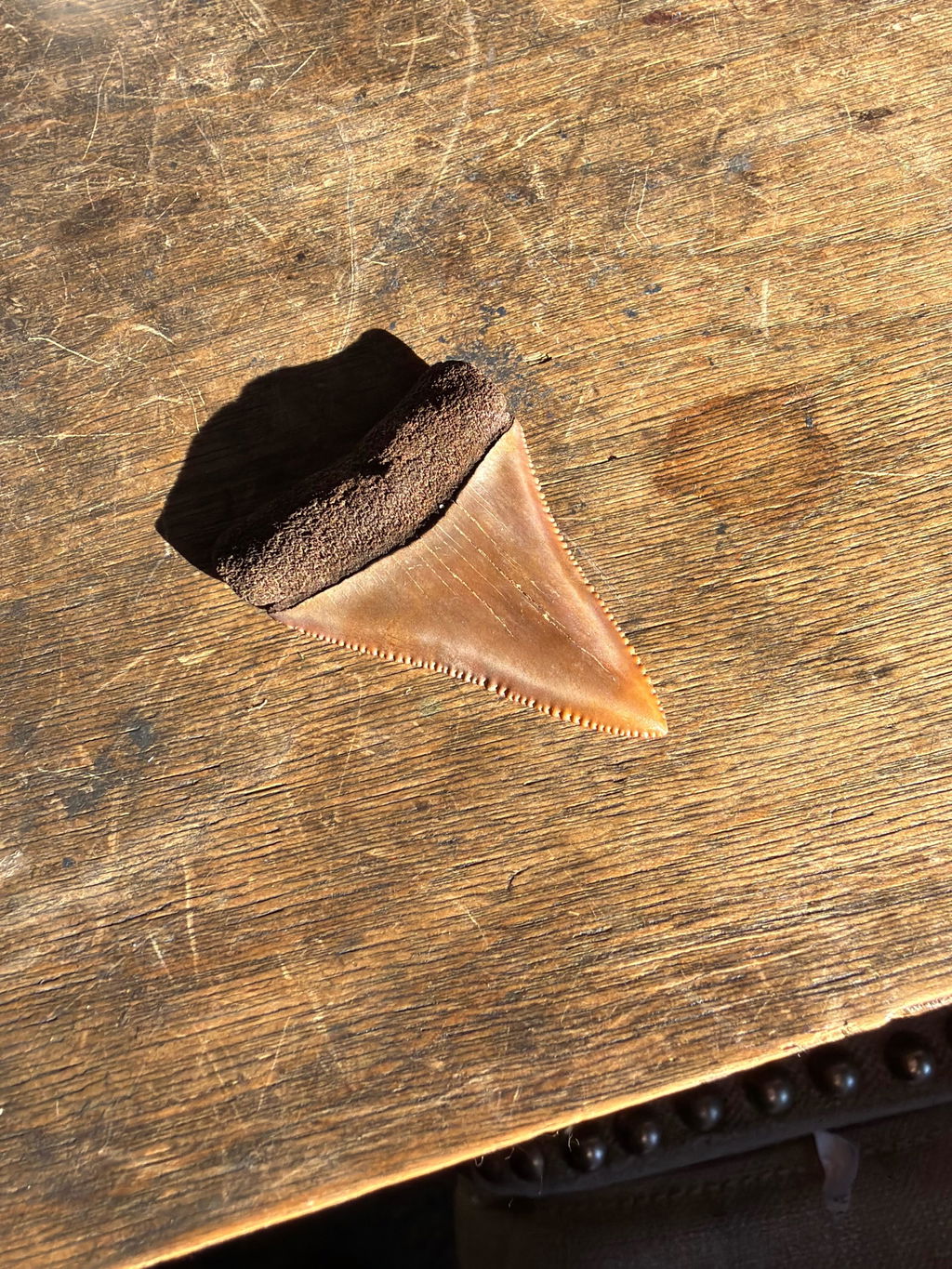
Size is the most obvious factor, and value climbs steeply once a tooth passes five inches. Still, two teeth of the same length can differ in price by hundreds of dollars. Collectors weigh enamel completeness, serration sharpness, root condition, symmetry, the bourlette, and whether the tip is intact. An authentic tooth shows a clear root structure and a natural transition between enamel and root, with serrations along the blade unless they have been worn down by river tumbling.
Posterior teeth from the back of the jaw are smaller and naturally asymmetrical, which makes them an affordable way to own a genuine megalodon tooth. For a closer look at what drives value, see our megalodon tooth pricing guide.
Honest Condition Disclosure
Restoration is common in the megalodon market, particularly among larger and brightly colored teeth, and not every seller discloses it. A repair is not a dealbreaker, but it does affect long-term value, so you deserve to know. With more than 13 years of fossil identification experience behind every listing, we state plainly whether a tooth is fully natural, repaired, or restored. If you would like to evaluate a tooth yourself, our guide on how to spot repaired or restored megalodon teeth walks through exactly what to look for.
Every tooth we sell is hand-selected from trusted divers and suppliers and backed by our authenticity guarantee and a 30-day return policy.
Display it right. Give your tooth the presentation it deserves with one of our megalodon tooth display stands, designed to hold teeth securely while showing off both the enamel and the root.
Helpful Megalodon Buying Guides