What Makes a Shark Tooth Pathological
Sharks grow their teeth in rows inside the jaw, with new teeth constantly forming and moving forward to replace old ones. If something disrupts that process, such as an injury to the jaw, an infection, or a developmental problem, the teeth growing in that spot can form abnormally. The result is a pathological tooth: a tooth that grew into an unusual shape and carries a record of something that happened during the shark's life.
Pathology vs. Feeding Damage
These two get confused often. Feeding damage happens after a tooth has fully formed, when the tip or edge chips or wears down from use. A pathological tooth grew abnormally from the start, so its unusual shape is part of the tooth itself. Feeding damage is common and usually lowers value, while true pathologies are rare and often increase it.
Common Types of Pathologies
Split or Forked Tips
A crown that divides into two points, one of the most dramatic and sought-after pathologies.
Twisted or Curved Crowns
Blades that bend, twist, or curve in an S-shape instead of growing straight.
Compressed or Narrow Teeth
Teeth squeezed into an unusually narrow or lopsided shape, often from crowding as they formed.
Deformed Roots and Ridges
Unusual root shapes, extra ridges, or grooves in the enamel where growth was disrupted.
What Affects the Value of a Pathological Tooth
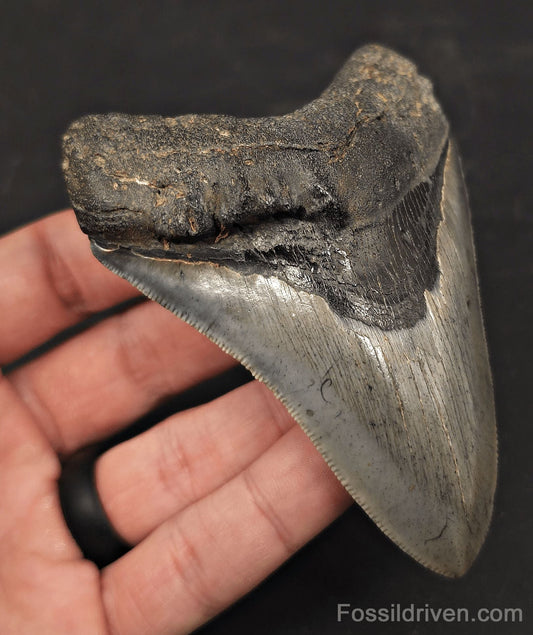
The more dramatic and visually striking the pathology, the more desirable the tooth. Collectors also weigh the species and size, with large pathological megalodon teeth among the most prized fossils in the hobby, along with overall preservation of the enamel, serrations, and root. A strong pathology on an otherwise well-preserved tooth is the ideal combination.
Authentic Fossils, Clearly Described
Every tooth in this collection is genuine, and we make sure each one shows a true pathology rather than ordinary wear or damage. Any repair, restoration, or notable condition detail is clearly disclosed in the listing, and every tooth is backed by our authenticity guarantee and a 30-day return policy.
Helpful Guides