Shopping for Authentic Fossil Great White Shark Teeth
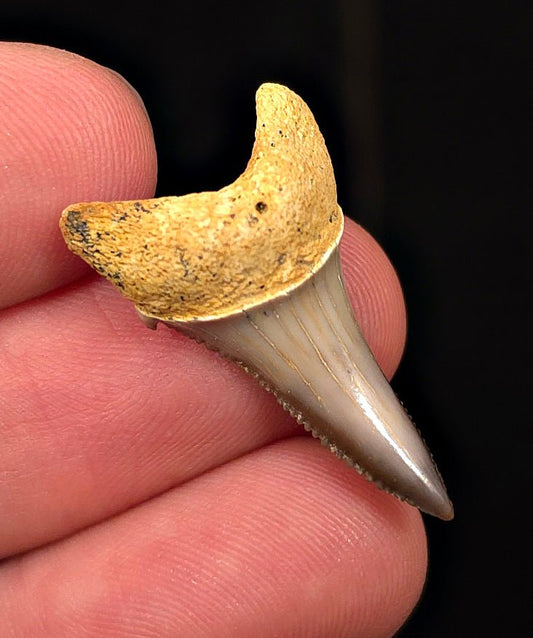
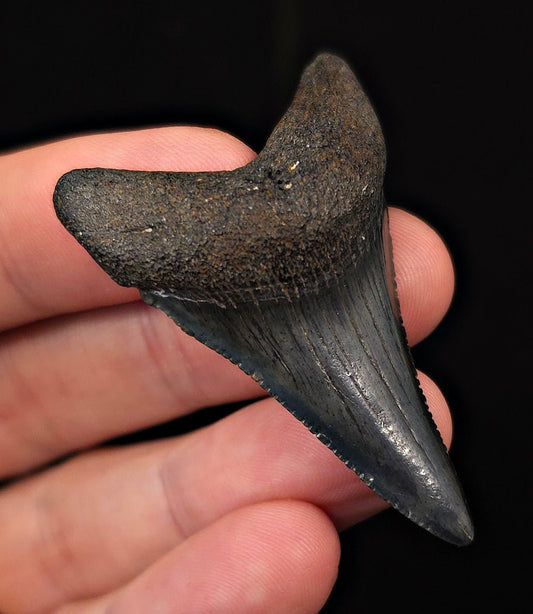
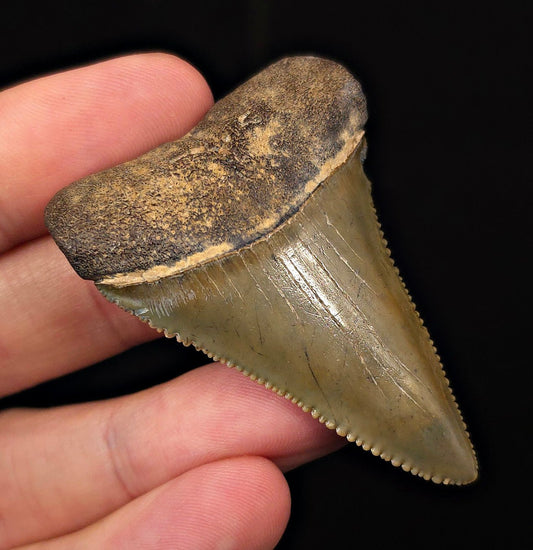
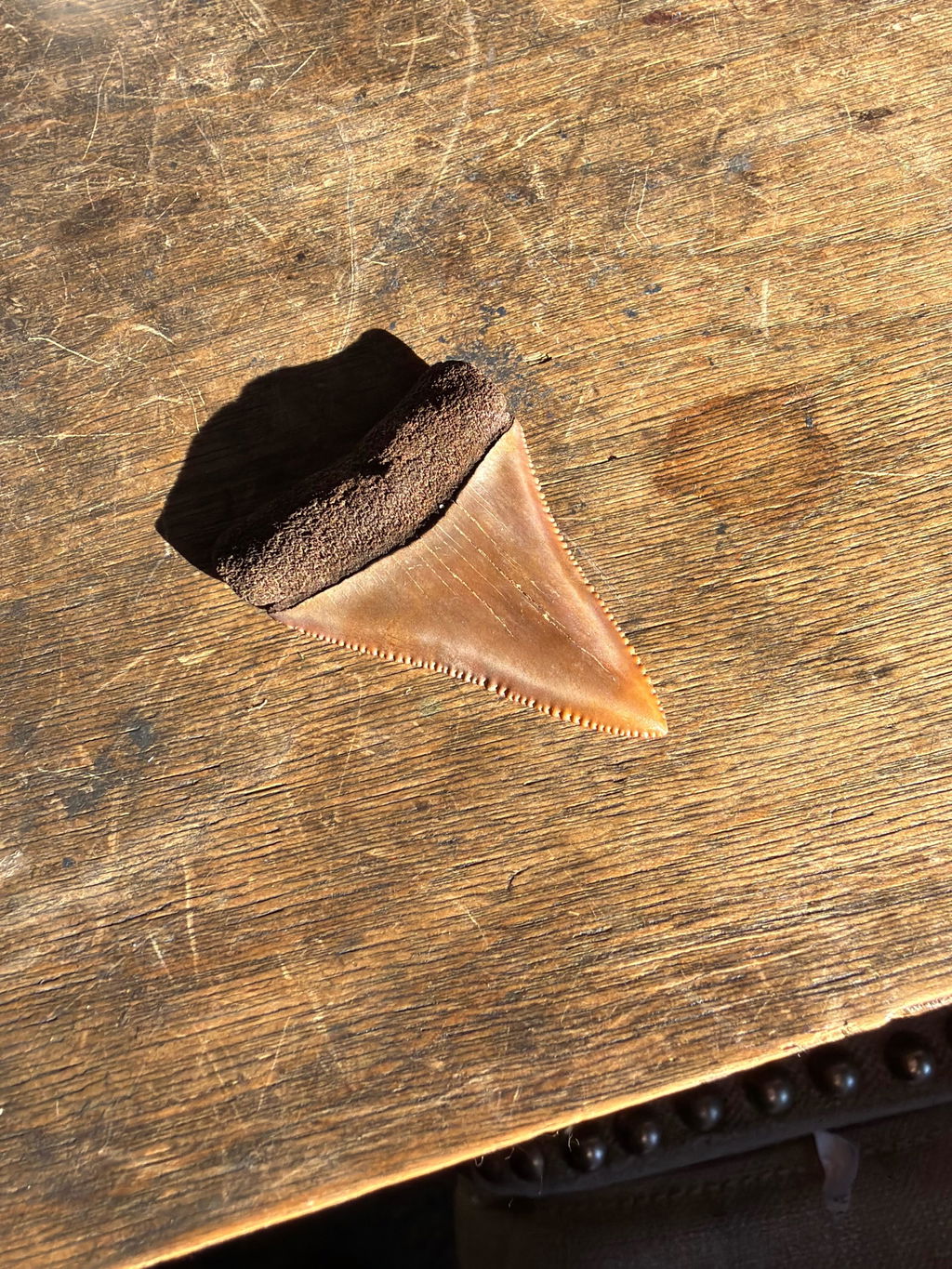
The great white shark is one of the few apex predators from the fossil record that still patrols the oceans today, which makes its fossil teeth a direct link between the ancient seas and the modern world. Every tooth in this collection is a one-of-a-kind specimen, measured and photographed individually, so the tooth you see in the listing is the tooth that arrives at your door.
Quick Great White Facts
Scientific name
Carcharodon carcharias. Despite the old theory, great whites did not descend from megalodon. They evolved from broad-toothed mako sharks, with transitional forms such as Carcharodon hubbelli bridging the gap.
When it appeared
The modern great white first shows up in the fossil record in the early Pliocene, roughly 5 million years ago, and is still alive today.
Typical fossil size
Most fossil great white teeth measure 1 to 2 inches. Complete teeth over 2.5 inches are uncommon and sit at the top of the collecting market.
How to tell it from megalodon
Great white teeth have coarser, more irregular serrations and lack the bourlette, the chevron-shaped band between the enamel and root that megalodon teeth show.
For the full story of how the modern great white emerged, read our article on the evolution of the great white from ancient mako ancestors.
Where Our Great White Teeth Come From
Locality shapes a fossil great white tooth's color, preservation, and value, and some deposits are far more productive than others.
South Carolina
Rivers and offshore sites around Charleston produce dark, well-preserved teeth, including some of the larger great whites found in the United States.
Florida
Beaches, rivers, and offshore beds from St. Augustine to the Gulf Coast yield great white teeth in shades of gray and black, usually on the smaller side.
Savannah River, Georgia
Diver-recovered teeth from the Savannah River often show rich browns and blacks, and finds recovered in place are especially prized.
West Java & Banten, Indonesia
Indonesian great whites are known for exceptionally sharp serrations and bright, high-contrast coloring that makes them standout display pieces.
Sacaco, Peru
Peru's Pisco Formation is world-famous for fossil sharks with remarkable preservation, including pristine enamel and crisp serrations.
Rare and Limited Localities
From time to time we also offer teeth from less common sources, such as Chile, known for some of the most colorful great white teeth ever found. These pieces come and go quickly.
What Affects the Price of a Fossil Great White Tooth
Size matters more with great whites than almost any other fossil shark, because complete teeth over 2 inches are genuinely hard to find. Beyond size, collectors weigh serration sharpness, enamel quality, root completeness, symmetry, color, and locality. Smaller teeth with average preservation can often be found for under $100, while sharp, well-preserved teeth over 2 inches commonly reach several hundred dollars or more.
Honest Condition Disclosure
Repair and restoration happen with great white teeth just as they do with megalodon teeth, especially on larger specimens with damaged roots or tips. Every listing here states plainly whether a tooth is fully natural, repaired, or restored, backed by more than 13 years of fossil identification experience. If you would like to evaluate a tooth yourself, our guide on how to spot repaired or restored shark teeth walks through what to look for.
Every tooth we sell is hand-selected from trusted divers and suppliers and backed by our authenticity guarantee and a 30-day return policy.
Comparing great whites and megalodon? See how the two stack up side by side in our Megalodon Teeth collection, from affordable collector pieces to premium display specimens.