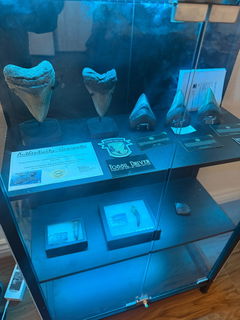
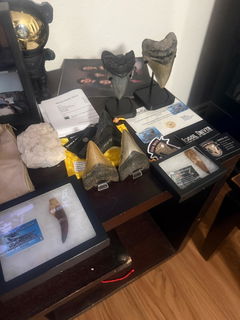
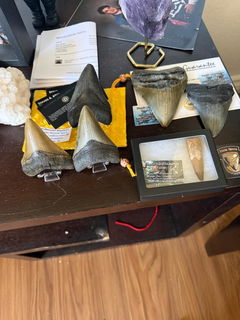
This 2.08" fossil great white shark tooth was found in a creek in eastern North Carolina, where streams cut through Pliocene seafloor sediments roughly 5 to 3 million years old. It comes from the same species that still hunts the oceans today, and fossil great white teeth are a favorite with collectors for their bold, coarse serrations.
Species: Carcharodon carcharias (great white shark)
Size: 2.08" long by 1.63" wide
Locality: Eastern North Carolina
Age: Pliocene to Pleistocene
Condition: 100% natural, no repair or restoration
Specimen #: 3197
About This Specimen
This tooth has natural fossil coloration created through millions of years of mineralization within marine sediments. The photos show the exact tooth you will receive. This collector-quality specimen displays razor-sharp serrations, with phenomenal enamel color and a solid, intact root. Making it a great specimen for anyone who loves fossil great white shark teeth.
About the Great White Shark
The great white shark, Carcharodon carcharias, has hunted the oceans for roughly 5 million years and still lives today. Its fossil teeth are broad and triangular with coarse, irregular serrations, and unlike megalodon teeth they have no bourlette between the enamel and the root. The great white descends from smooth-toothed ancestors like the lesser white shark (Carcharodon hastalis), and fossil teeth from the Pliocene and Pleistocene are popular with collectors for their bold serrations and natural colors.
Where This Fossil Comes From: Eastern North Carolina
The creeks and rivers of eastern North Carolina's coastal plain, including the Tar River, cut down through layers of ancient sea floor. Many of them expose the Yorktown Formation, Pliocene marine sediments roughly 5 to 3 million years old, along with younger and older layers that have mixed together in the stream beds. Collectors search the gravel and banks after high water, and these streams produce fossil great white shark teeth, along with mako, megalodon, and other species. Teeth from eastern North Carolina streams often show dark gray, black, and brown tones from the minerals in the sediment. Learn more in our guide to where fossil shark teeth are found.
Authenticity Guarantee. Every fossil at Fossil Driven is hand-selected, photographed individually, and described with more than 13 years of fossil identification experience. Any repair or restoration is always disclosed. Each specimen is backed by our authenticity guarantee and 30-day return policy.