Condition: Natural fossil, professionally polished, no artificial color
Specimen #: 2247
About This Specimen
This tooth has beautifully preserved enamel and dentin banding, showcasing the internal structure that mammoths used to grind coarse grasses and vegetation. The photos show the exact tooth you will receive.
About the Columbian Mammoth
The Columbian mammoth, Mammuthus columbi, roamed North America during the Pleistocene, from Canada south into Central America, until it disappeared around the end of the last Ice Age. It was larger than the woolly mammoth and lived in warmer grasslands, grinding tough grasses with huge molars made of stacked enamel plates. Cutting and polishing a mammoth tooth reveals those plates as a striking pattern of enamel ridges, a beautiful way to display a piece of Ice Age history.
Where This Fossil Comes From: South Carolina
South Carolina's Lowcountry is one of the richest fossil shark tooth regions in the world. Divers recover teeth from blackwater rivers around Charleston and Beaufort, where currents expose layers ranging from the Oligocene through the Pleistocene. That range of ages is why the state produces everything from megalodon to its ancestors, angustidens and chubutensis, along with Ice Age mammal fossils. Learn more in our guide to where megalodon teeth are found.
Authenticity Guarantee. Every fossil at Fossil Driven is hand-selected, photographed individually, and described with more than 13 years of fossil identification experience. Any repair or restoration is always disclosed. Each specimen is backed by our authenticity guarantee and 30-day return policy.
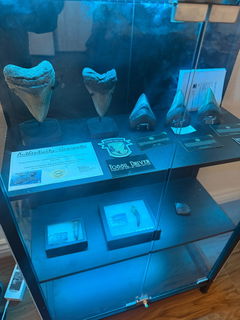
Stunning absolutely chuffed to bits stunning display case for it and just as described. Had some trouble at customs and Brandon got straight back to me and got in touch with UPS for me and sorted everything he was super helpful. Very pleased.