
How to Buy Authentic Fossil Shark Tooth Jewelry

A shark tooth on a chain or cord can look great in a photo. What separates a piece you wear once from one you keep for years usually comes down to the part most buyers cannot judge at a glance: whether the tooth is authentic, stable, and properly selected for jewelry.
For collectors, fossil shark tooth jewelry offers a way to wear real natural history instead of keeping every specimen in a display case. For gift buyers, it provides something memorable, prehistoric, and unlike anything found in a typical jewelry store. And for first-time fossil enthusiasts, it can be one of the most approachable ways to own an authentic fossil without stepping directly into higher-end collector pricing.
The challenge is that not all shark tooth jewelry is created equal. Understanding what makes a quality piece can help you buy with confidence and avoid decorative lookalikes (there are a lot of those) that may not have the authenticity or durability you expect.
What Makes Fossil Shark Tooth Jewelry Worth Buying?
The appeal is straightforward. You are not wearing a replica inspired by the past. You are wearing an actual fossilized tooth from a shark that lived millions of years ago. That real-world connection matters for a lot of people, especially when the jewelry is built around a genuine specimen rather than a cast or imitation, as most gift shops sell.
Jewelry also changes how a fossil is experienced. A loose tooth sits on a shelf. A pendant becomes personal. It starts conversations, works as a gift with a story behind it, and often feels more accessible to buyers who like fossils but do not necessarily see themselves as full-time collectors.
That said, not every tooth makes a good jewelry piece. Some shark teeth are better suited for display than wear. Others may be visually attractive but too fragile, or too thin at the root to hold up well in a setting. Good fossil jewelry starts with specimen selection, not just metalwork.
The Difference Between a Real Fossil Tooth and a Decorative Lookalike
This is where buyer confidence matters most.
In the jewelry market, it is common to find pieces marketed loosely, with very little detail about whether the tooth is genuinely fossilized, recently shed, reconstructed, or entirely man-made. If authenticity is part of the reason you are buying, that distinction matters.
A real fossil shark tooth should be identified clearly and described honestly. That includes the species whenever possible, whether the tooth is natural or restored, and what kind of stabilization may have been needed before setting. Some restoration is normal in fossils, especially with larger or older specimens, but the seller should never leave you guessing. The most commonly restored teeth that you'll see on the market are Otodus obliquus shark tooth necklaces.
Which Shark Teeth Work Best in Jewelry?
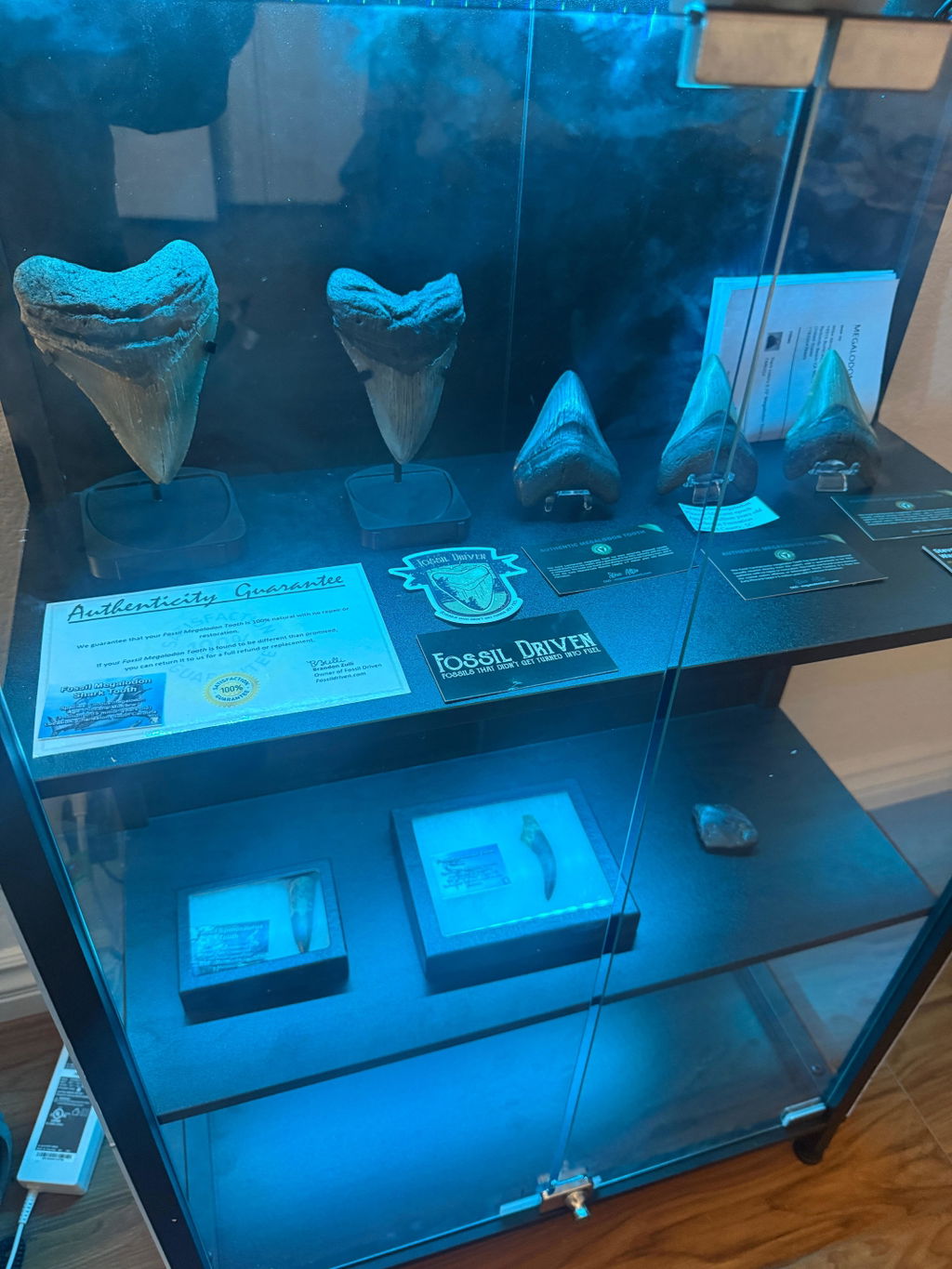
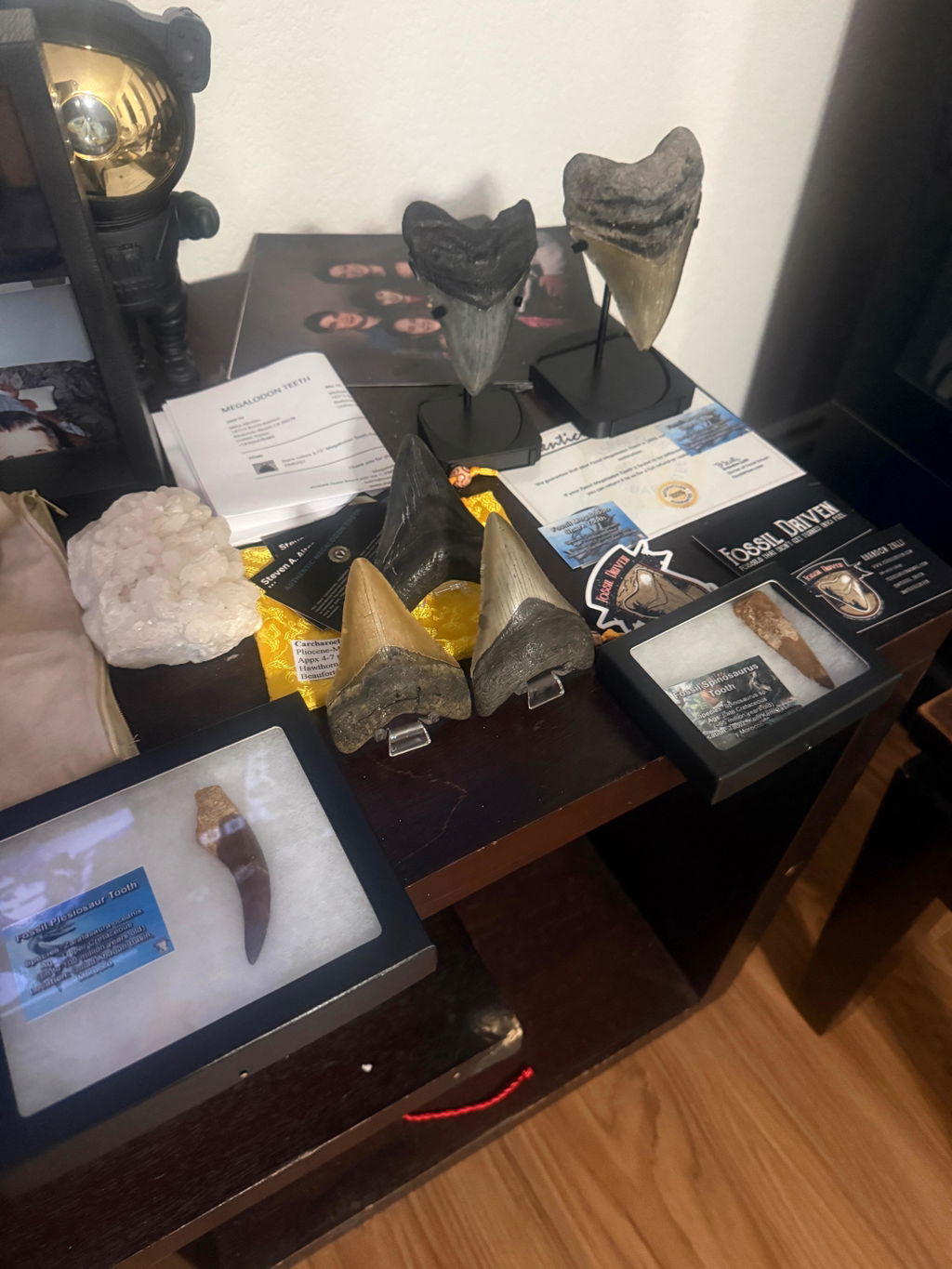
Megalodon teeth get most of the attention, and for good reason. They are recognizable, dramatic, and instantly tied to one of the most famous prehistoric predators ever discovered. Smaller megalodon teeth often make excellent pendants because they retain the iconic triangular shape while remaining wearable. If the tooth becomes too large, the piece can start feeling more like a display specimen hanging from a chain than practical jewelry. However, that doesn't seem to stop some folks from wearing one with a large, thick chain, especially if it was something that they've personally found.
Other fossil shark species, like lemon, bull, tiger, mako, great white, and hemipristis, can be just as compelling depending on the shape. Teeth with slender profiles, clean serrations, or unusual coloration often make elegant pieces that feel less oversized than megalodon jewelry. For some buyers, that is the better fit. They want authenticity and prehistoric appeal but also something they can comfortably wear on a regular basis.
Color plays a role as well. Fossil shark teeth can range from deep black and charcoal to gray, tan, brown, and mixed mineral tones. No two teeth fossilize exactly alike, which gives each jewelry piece a one-of-a-kind quality that mass-produced accessories simply cannot match.
Are Megalodon Tooth Necklaces Worth It?
Megalodon tooth necklaces remain among the most popular fossil jewelry options because they combine authenticity with immediate visual impact. Even people who know very little about fossils often recognize the shape of a megalodon tooth. There is a certain fascination that comes from wearing a real fossil from one of the largest predators to ever live.
For everyday wear, smaller megalodon teeth are often the best choice. They are lighter, more comfortable, and easier to set securely while still providing the unmistakable look collectors and shark enthusiasts love. Larger teeth can certainly make dramatic statement pieces, but comfort, weight, and durability become increasingly important considerations as specimen size increases.
How Settings Affect Both Appearance and Longevity
The setting is not just decorative. It determines whether the piece is secure enough for regular wear. A well-designed pendant should support the tooth without putting unnecessary pressure on weak points such as the root or edges. If a setting grips too tightly or unevenly, it can increase the risk of damage over time.
Simple wraps and caps are common, and each has trade-offs. A minimal setting may show more of the fossil, which collectors tend to appreciate. However, the more exposed the specimen is, the more careful the wearer needs to be. More protective designs may offer greater security but can cover portions of the tooth.
There is no single best option for everyone. A statement piece worn occasionally may benefit from an open display style, while jewelry intended for regular wear often benefits from additional protection and stability.
Can Restored Fossil Shark Teeth Be Used in Jewelry?
Many buyers are surprised to learn that some fossil shark teeth used in jewelry have undergone stabilization or minor restoration before being mounted. This is not unusual. Fossils spend millions of years buried in sediment, and small fractures, enamel loss, or root damage can occur naturally over time.
The important distinction is whether the restoration was performed professionally and disclosed honestly. A stabilized fossil can make an excellent jewelry piece and may actually be more durable than an untreated specimen with hidden weaknesses. However, heavily reconstructed teeth are often better suited for display rather than regular wear.
Whenever possible, buyers should look for clear descriptions regarding restoration, repair, and stabilization before purchasing fossil jewelry. Transparency matters.
What to Look for Before You Buy
The first thing to consider is whether the seller treats the tooth like a real fossil specimen or simply an aesthetic component. Clear identification, honest condition notes, and authenticity-backed presentation are all good signs. Next, examine the tooth itself. Is the shape balanced? Are the edges intact enough to present well? Does the fossil have appealing natural color? A jewelry tooth does not need to be investment-grade, but it should still be thoughtfully selected.
Then consider stability. Fossils can have natural wear, feeding damage, enamel loss, or restoration. None of those automatically rule out a piece, but they should be disclosed. Finally, think about wearability. Size, weight, chain style, and overall proportion matter more than many buyers expect. A tooth that looks perfect in a product photo may feel heavier than expected when worn daily. The best jewelry pieces balance specimen impact with comfort.
Is Fossil Shark Tooth Jewelry a Good Gift?
In many cases, yes.
Most jewelry gifts fall into familiar categories such as watches, bracelets, or rings. Fossil shark tooth jewelry offers something completely different. Every tooth is naturally unique, genuinely ancient, and impossible to duplicate exactly.
For shark enthusiasts, fossil collectors, marine biology fans, and history lovers, a real fossil tooth can be far more memorable than mass-produced jewelry. The story behind the piece often becomes just as meaningful as the jewelry itself. Because every tooth fossilized differently, each piece has its own character. No two gifts are exactly alike.
Caring for Fossil Shark Tooth Jewelry
Real fossils are durable, but they are not indestructible. A fossil tooth pendant should be treated with more care than standard metal-only jewelry. Dropping it on a hard floor, storing it loosely with other jewelry, or repeatedly exposing it to moisture and chemicals can shorten its lifespan.
It is best to remove the piece before swimming, showering, exercising, or applying lotions and perfumes. Store it separately in a soft pouch or lined box whenever possible. If the fossil contains any known stabilization or restoration, extra care is wise. That does not mean the piece is flawed. It simply means the fossil should be respected for what it is: a genuine specimen that has survived millions of years.
Why Authenticity Matters More in This Category
With fossil jewelry, authenticity is not just a technical selling point. It is the reason the piece has meaning. A replica may copy the shape, but it cannot carry the same story, collector interest, or connection to prehistory.
That is why experienced buyers tend to favor sellers who specialize in fossils rather than generic accessories. Expertise in sourcing, identification, and grading creates confidence that the specimen is real and represented accurately. For first-time buyers, that confidence removes uncertainty. For longtime collectors, it is often non-negotiable.
Frequently asked questions
Is fossil shark tooth jewelry actually made from real teeth? From a reputable seller, yes. The tooth should be a genuine fossil, not a resin cast or replica. Always look for sellers who clearly identify the specimen as authentic.
How do I know if a shark tooth necklace is a megalodon or a smaller species? Megalodon teeth are typically thicker, more triangular, and have visible serrations even at smaller sizes. Smaller fossil shark species like mako or lemon tend to be slimmer and more curved. A seller should always specify the species in the listing.
Can fossil shark tooth jewelry get wet? It's best to remove it before swimming, showering, or exercising. Repeated moisture exposure over time can weaken the fossil or the setting, even though the tooth itself is naturally durable.
Is it normal for a fossil shark tooth to have small chips or wear marks? Yes. Most fossil teeth show some natural wear, feeding damage, or minor enamel loss from millions of years in the ground. This is normal and doesn't mean the piece is lower quality, as long as it's structurally sound for wear.
What's the best fossil shark tooth necklace for everyday wear? Smaller, lighter teeth with a secure, low-profile setting tend to hold up best for daily wear. Larger megalodon teeth make great statement pieces but are usually better suited for occasional wear rather than everyday use.
Find your piece
A quality fossil shark tooth necklace is more than an accessory. It is a real piece of natural history that can be worn, shared, and appreciated every day. When done right, it connects the ancient past with modern craftsmanship in a way few other jewelry categories can.
👉 Browse our current Fossil Shark Tooth Jewelry collection to find a piece worth wearing for years to come.
Written by: Brandon Zulli - Owner of Fossil Driven