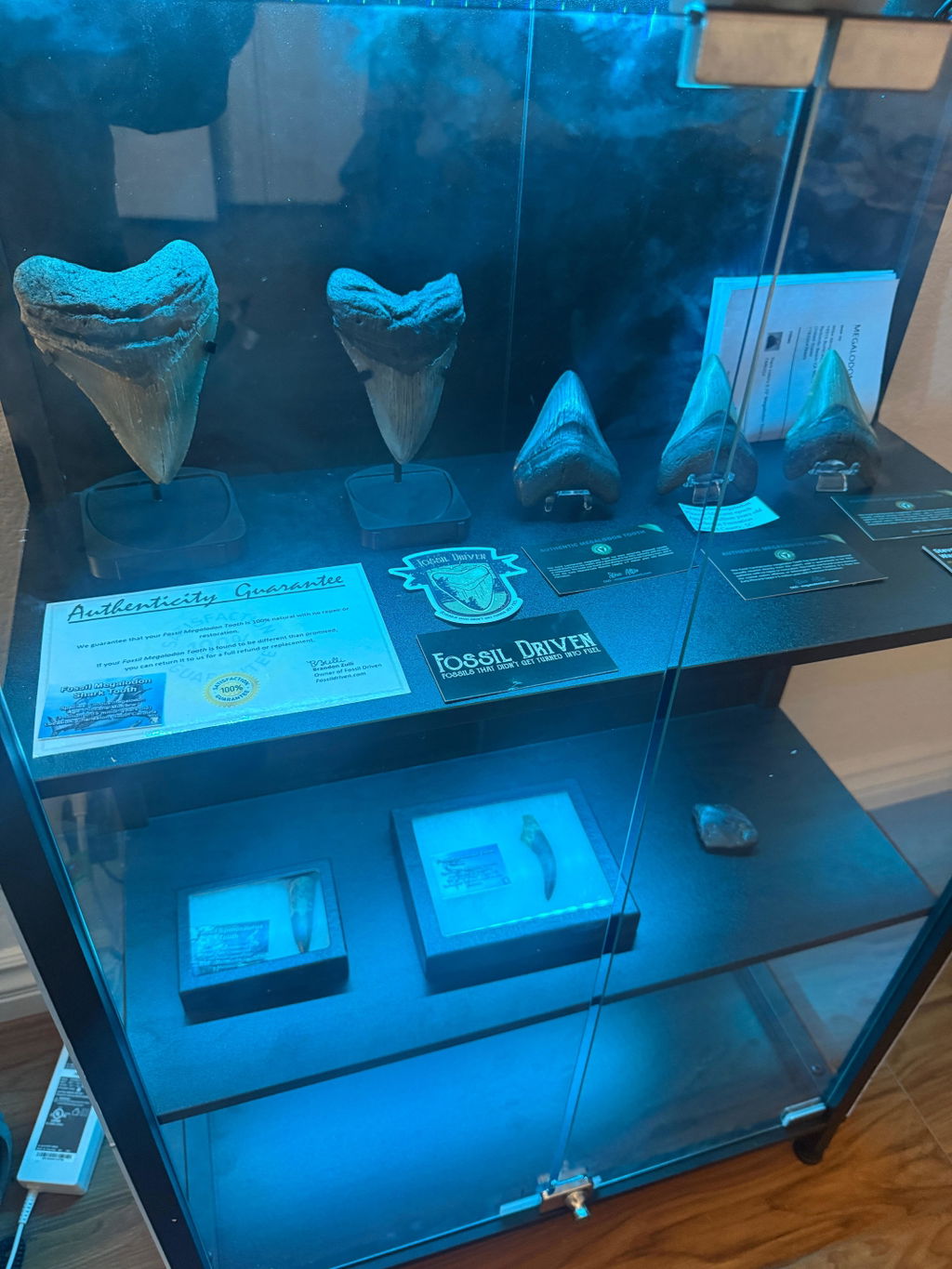

Megalodon Teeth for Sale: How to Identify an Authentic Fossil Tooth

A real megalodon tooth has a way of grabbing your attention immediately. Whether it is a small 2-inch specimen or a massive 6-inch collector piece, these fossils are tangible evidence of one of the largest predators that ever lived.
As interest in fossil collecting continues to grow, so does the number of people searching for megalodon teeth for sale online. The challenge is that not every listing provides the information buyers need to make an informed decision. Understanding what makes a fossil tooth authentic, how quality affects value, and what to look for before purchasing can help you avoid costly mistakes and build a collection with confidence.
What Is an Authentic Megalodon Tooth?
An authentic megalodon tooth is a genuine fossil from Otodus megalodon, the giant shark that lived approximately 3 to 15 million years ago. A real specimen is not a replica, cast, or modern shark tooth altered to resemble a megalodon tooth. Authentic fossils retain the natural characteristics collectors expect, including the triangular crown, serrated cutting edges, bourlette between the crown and root, and fossilized coloration created during burial.
However, authenticity involves more than simply confirming that a tooth is real. Experienced collectors also evaluate whether the specimen has been properly identified, accurately graded, and honestly represented. Any restoration, repair, or reconstruction should be clearly disclosed so buyers understand exactly what they are purchasing.
Why Authentic Megalodon Teeth Vary in Price
One of the most common questions new collectors ask is why two authentic megalodon teeth can both be genuine fossils yet sell for dramatically different prices. While size is often the first characteristic buyers notice, it is far from the only factor that determines value.
A large megalodon tooth with strong serrations, an intact bourlette, attractive coloration, and a complete root will generally command a higher price than a larger specimen with significant damage or restoration. Preservation plays a major role in collector demand because it directly affects both appearance and rarity.
Color can also influence desirability. Megalodon teeth are recovered from a variety of fossil deposits, and each location can produce distinct colors ranging from shades of gray and black to blue, tan, and even multicolored specimens. Some collectors actively seek out certain colors or localities, creating additional demand for those examples.
Beyond appearance, provenance and preparation quality matter as well. A well-documented specimen from a trusted fossil dealer often provides more confidence than a poorly described tooth with limited photographs or unclear restoration history. In many cases, the highest-value specimens are not simply the biggest teeth available but the examples that combine size, preservation, symmetry, serration quality, root condition, and overall eye appeal into a single fossil.
How to Verify a Real Megalodon Tooth
If you are shopping for a fossil megalodon tooth for sale, there are several features worth examining before making a purchase.
Examine the Overall Shape
Authentic megalodon teeth typically display a broad triangular crown with a thick root and visible bourlette. The proportions should appear natural and balanced. While shape can vary depending on where the tooth was positioned in the shark's jaw, the overall structure should not appear artificially modified or sculpted.
Look Closely at the Serrations
Serrations are one of the defining characteristics of megalodon teeth. Well-preserved specimens often retain visible serrations along both cutting edges. Excessive polishing, reshaping, or restoration can soften these features, making them appear less natural. Although minor wear is common, the serrations should generally follow the tooth's edge in a consistent pattern.
Evaluate the Root
The root provides valuable clues about preservation quality. A natural root should display realistic texture and coloration that complements the rest of the fossil. Roots that appear unusually smooth, glossy, or artificially colored may warrant closer inspection. Some restoration is common in fossil collecting, particularly for larger megalodon teeth recovered from rivers or offshore deposits. The key is proper disclosure.
Photos Matter More Than Most Buyers Realize
Quality photographs can reveal a great deal about a fossil specimen. A trustworthy listing should include clear images of both the front and back of the tooth, along with close-up photographs of the root, serrations, bourlette, and tip. Multiple viewing angles help buyers evaluate preservation, restoration, and overall condition more accurately than a single photo ever could. When photographs are limited, or details are difficult to see, it becomes much harder to assess the true quality of the specimen.
Restoration Is Not Always a Bad Thing
Many first-time buyers assume that every desirable megalodon tooth must be completely unrestored. In reality, restoration is common throughout the fossil industry. Millions of years underground, combined with natural erosion during recovery, often leave fossils with chips, cracks, or missing areas. Professional restoration can stabilize and improve a specimen when performed responsibly.
What separates a reputable seller from a questionable one is transparency. A professionally restored tooth that is clearly disclosed may still be an excellent display specimen. Hidden restoration, however, can significantly impact both value and buyer trust.
How to Judge Quality Beyond Size
Large megalodon teeth naturally attract attention, but experienced collectors know that size alone does not determine quality or value. While a 6-inch tooth may seem more impressive at first glance, condition is often what separates an average specimen from a truly exceptional one.
When evaluating a megalodon tooth, collectors typically look for several characteristics working together. Strong, well-preserved serrations help demonstrate the tooth's original structure, while a complete root and clearly defined bourlette often indicate better overall preservation. Symmetry also plays an important role, as teeth with balanced proportions tend to display more attractively and are generally more desirable to collectors.
Coloration can further influence appeal. Some collectors are drawn to classic black specimens, while others prefer blue, gray, tan, or multicolored teeth, depending on the source locality. Restoration should also be considered. A professionally restored tooth can still make an outstanding display piece, but specimens with minimal restoration often command greater interest among advanced collectors.
Ultimately, quality is created by the combination of preservation, symmetry, serration quality, root condition, coloration, and overall eye appeal. Because of this, a beautifully preserved 4-inch megalodon tooth can sometimes be far more desirable than a heavily damaged 6-inch specimen. The best fossils are rarely defined by a single measurement. Instead, they stand out because all of their characteristics work together to create a specimen that collectors enjoy displaying for years to come.
Common Mistakes New Buyers Make
One of the biggest mistakes is assuming every large tooth is automatically premium quality. Large specimens can still suffer from feeding wear, river rolling, root damage, repaired tips, or reconstructed edges. Understanding the condition is just as important as understanding size.
Another common mistake is expecting perfection. Fossils are ancient natural objects, and even high-quality specimens frequently display minor imperfections. Small chips, worn serrations, or natural root wear are often part of the fossilization process.
Finally, many buyers underestimate the importance of purchasing from a knowledgeable fossil dealer. Expertise, accurate descriptions, and transparent grading standards can make a substantial difference in the overall buying experience.
Frequently asked questions
How can I tell if a megalodon tooth is fake? Look closely at the serrations, root texture, and overall coloration. Fakes or heavily altered teeth often have unnaturally smooth roots, inconsistent serration patterns, or coloring that looks too uniform or artificial. Buying from a seller who provides multiple close-up photos and clear descriptions is the best safeguard.
Is it normal for megalodon teeth to have chips or wear? Yes. Even high-quality, authentic megalodon teeth often show some natural wear, minor chipping, or root irregularities from millions of years in the ground. This doesn't necessarily affect authenticity, but it should be disclosed and reflected in the price.
Does restoration mean a megalodon tooth isn't real? No. Restoration is common in the fossil industry and doesn't make a tooth fake. It means part of the fossil was repaired or stabilized. What matters is whether the seller discloses the restoration honestly.
What's the most important factor in megalodon tooth quality? There isn't a single factor. Serration preservation, root condition, symmetry, coloration, and disclosed restoration all combine to determine quality, which is why two teeth of the same size can have very different values.
Should I buy a megalodon tooth without seeing it in person? Many collectors buy online successfully, but it requires trusting the seller's photos and descriptions. Look for multiple angles, close-ups of the root and serrations, and a seller with a track record of accurate, honest listings.
Shop with confidence
The best megalodon tooth is not always the biggest specimen available. It is the one that combines authentic preservation, honest condition reporting, strong eye appeal, and a level of quality that fits your goals and budget.
👉 Browse our current Megalodon Teeth collection to find an authentic specimen backed by clear photos and honest grading.
Written by: Brandon Zulli - Owner of Fossil Driven