Shopping for Authentic Otodus angustidens Teeth
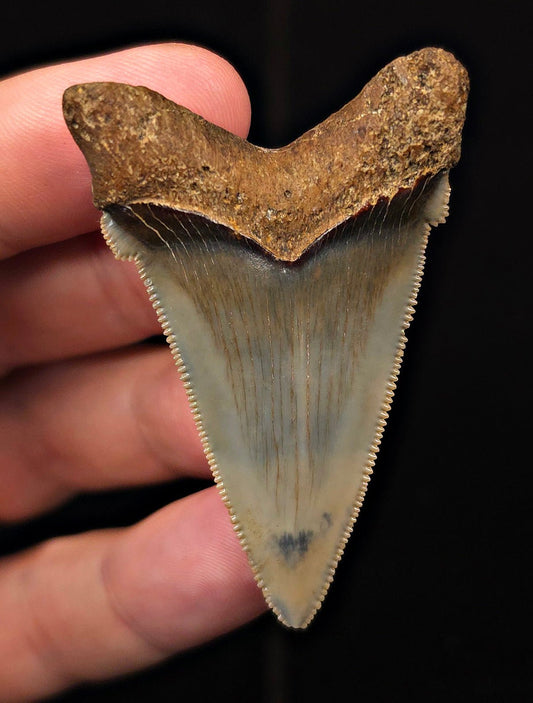
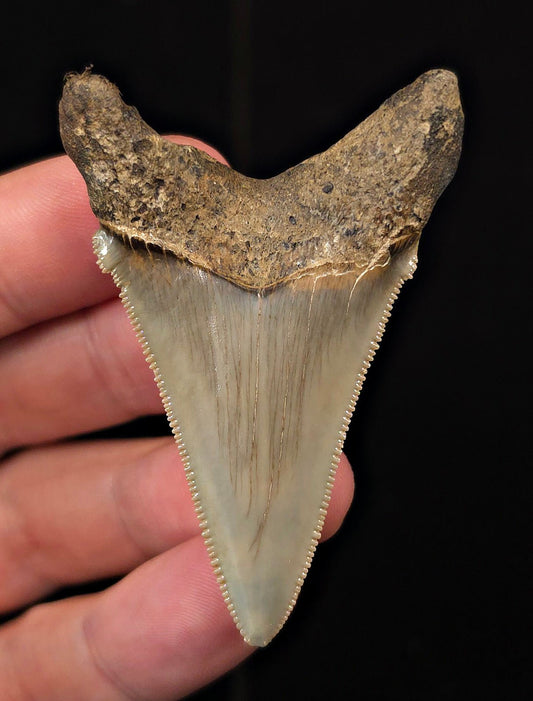
Otodus angustidens is the point in the megatooth story where the teeth start to look unmistakably like Megalodon's, with fully serrated blades, while still holding on to the side cusplets of their ancestors. That combination makes angustidens one of the most popular and recognizable species in any lineage collection. Every tooth in this collection is a one-of-a-kind specimen, measured and photographed individually.
Quick Angustidens Facts
When it lived
The Oligocene epoch into the earliest Miocene, roughly 33 to 22 million years ago.
Place in the lineage
The link between the Eocene megatooth sharks and Otodus chubutensis, the direct predecessor of Megalodon.
What to look for
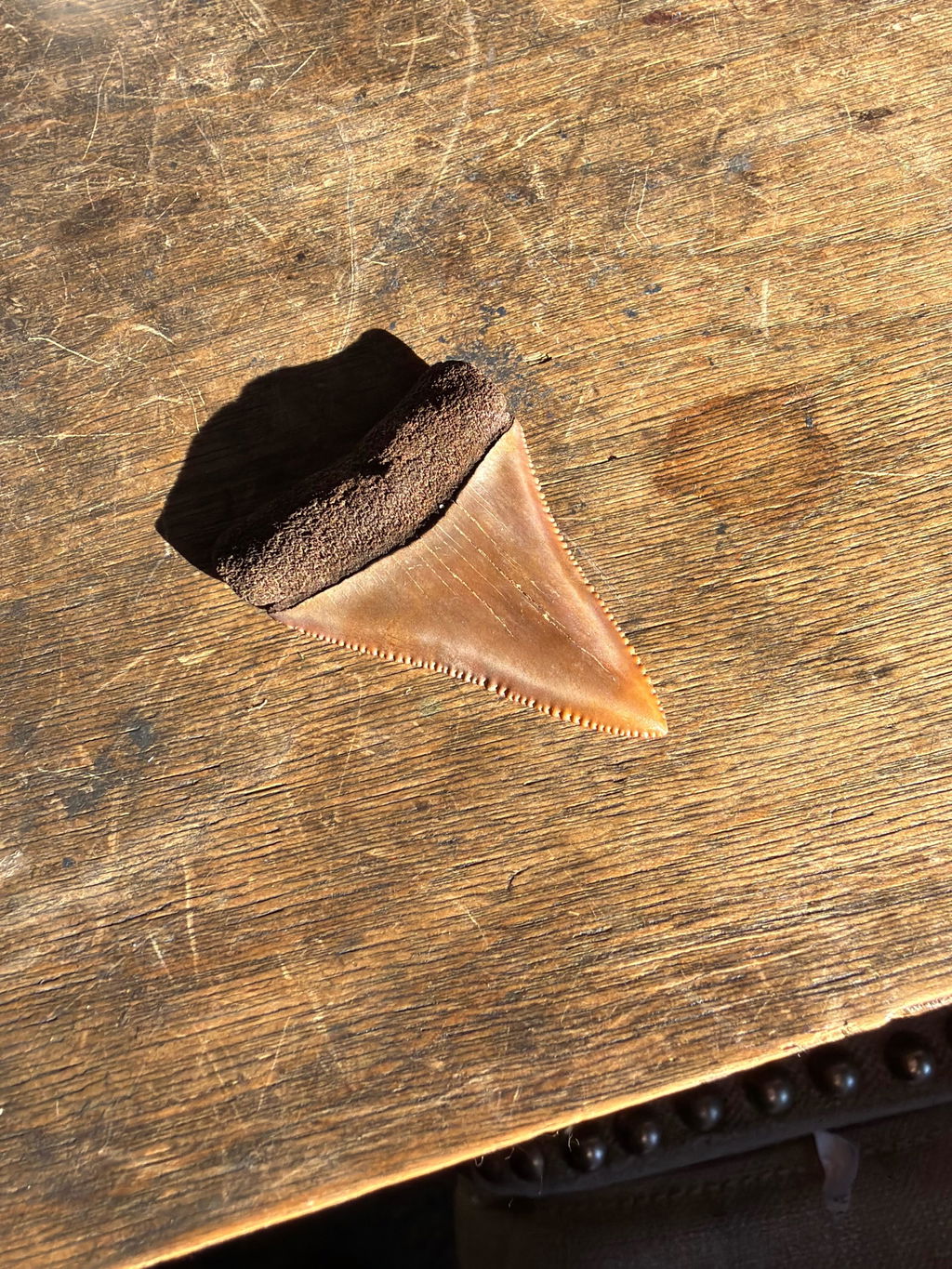
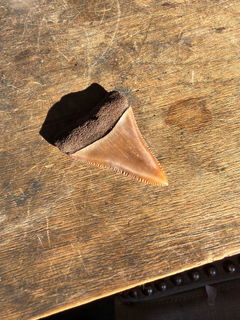
A tall, triangular crown with fine serrations along both edges and a pair of sharp, distinct side cusplets that are often serrated as well.
Size
Most teeth measure about 2 to 3.5 inches, and complete teeth over 4 inches with both cusplets intact are rare and highly prized.
Where Angustidens Teeth Are Found
South Carolina is the best-known source of Otodus angustidens teeth, especially Oligocene deposits around Charleston and Summerville that produce dark, well-preserved specimens. Angustidens teeth are also found in New Zealand, Europe, and other sites around the world, though complete teeth with both cusplets intact are uncommon anywhere.
The Megatooth Lineage
Collecting each species in order is one of the most popular ways to build a shark tooth collection, because you can literally see the teeth grow larger, gain serrations, and lose their cusplets over tens of millions of years.
3. Otodus angustidens
Oligocene to early Miocene. Fully serrated, with sharp cusplets. You're here.
Honest Condition Disclosure
Cusplets and root edges are the most fragile parts of these teeth, and they are often repaired or restored on the market. With more than 13 years of fossil identification experience behind every listing, we state plainly whether a tooth is fully natural, repaired, or restored. Every tooth is backed by our authenticity guarantee and a 30-day return policy.
Complete the lineage. The story ends with the largest shark that ever lived. Explore our Megalodon Teeth collection to add the final chapter to your set.