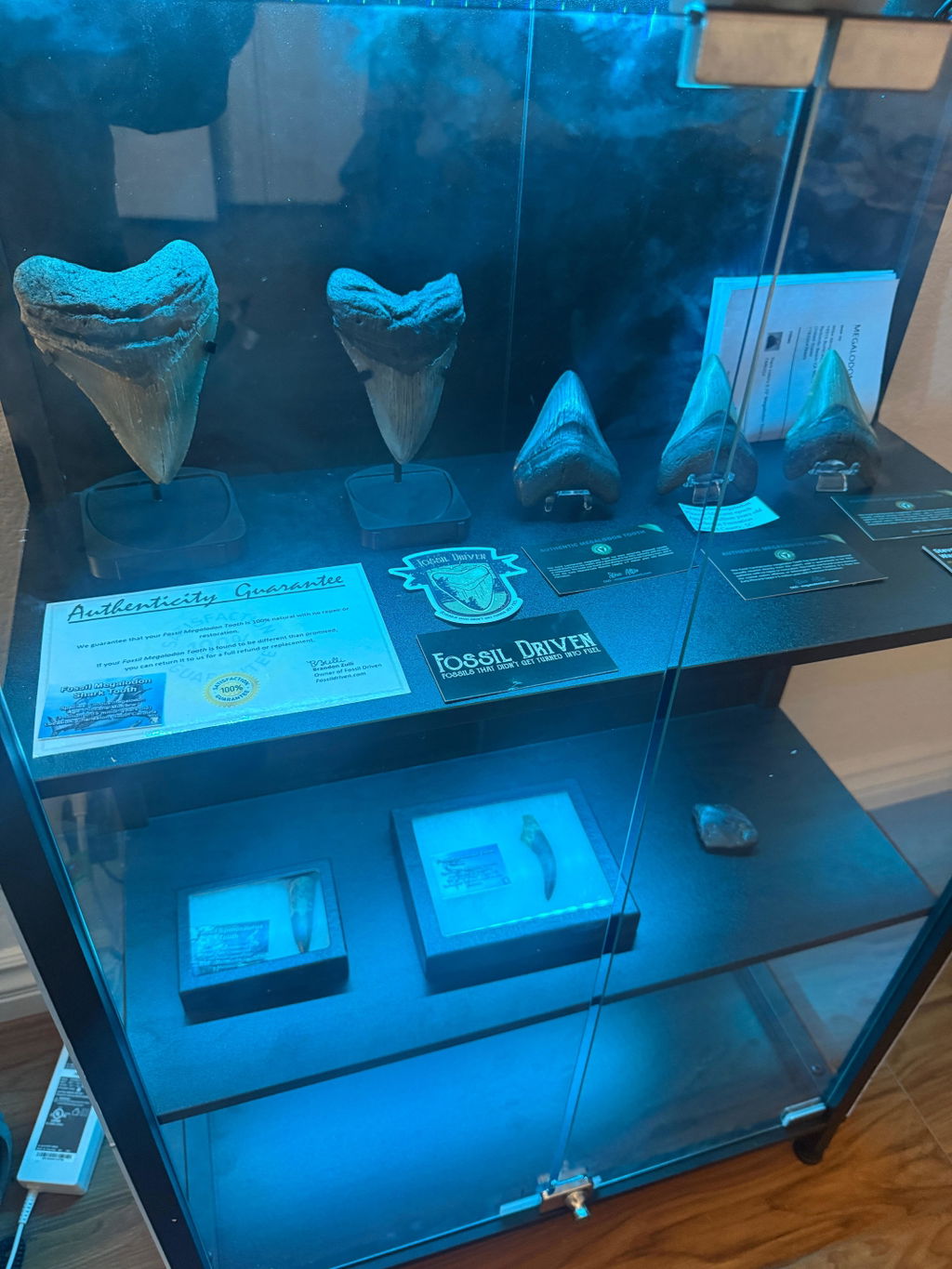
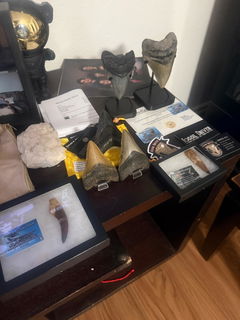
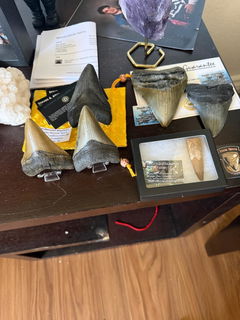
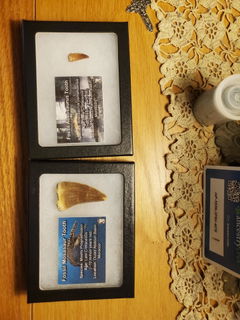
2.15" Fossil Angustidens Shark Tooth – South Carolina (Otodus angustidens)
This authentic fossil Angustidens shark tooth (Otodus angustidens) measures approximately 2.15 inches in length and 1.37 inches in width and was recovered from the fossil-rich marine deposits in South Carolina. Dating back roughly 28 to 33 million years to the Oligocene epoch, this specimen represents an important stage in the evolutionary lineage of giant predatory sharks.
This tooth displays natural fossil coloration formed through millions of years of mineralization within ancient marine sediments. Angustidens teeth are recognized for their distinctive triangular crown and characteristic lateral cusps, small side points located near the base of the crown that help distinguish them from later members of the Otodus lineage.
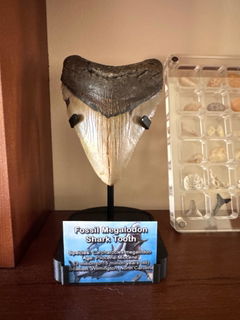
Fossil shark teeth from the South Carolina area are often recovered from rivers that once formed part of a shallow prehistoric sea along the Atlantic Coastal Plain. These sediments have produced a wide variety of fossil shark species, including ancestors of the later Megalodon.
About Otodus Angustidens
Otodus angustidens was one of the dominant predatory sharks of the Oligocene oceans, living approximately 28 to 33 million years ago. Paleontologists consider Angustidens an important evolutionary predecessor to Otodus megalodon, the massive shark that would later dominate the world’s oceans during the Miocene and Pliocene epochs.
Like modern sharks, Angustidens possessed a skeleton composed primarily of cartilage, which rarely fossilizes. As a result, most of the fossil record for these ancient sharks comes from their teeth. Throughout its lifetime, a single shark could shed thousands of teeth, many of which became buried within marine sediments and eventually fossilized.
Today, Angustidens' teeth are discovered in fossil deposits throughout regions of North America, South America, Europe, and Africa, where ancient seas once covered large portions of the continents. These fossils provide valuable insight into the evolutionary history of large predatory sharks.
Identifying an Angustidens Tooth
One of the defining characteristics of Angustidens teeth is the presence of distinct lateral cusps located on either side of the crown near the root. These small projections are a key evolutionary feature that gradually disappeared in later members of the Otodus lineage as sharks evolved toward the broad, serrated teeth seen in Megalodon.
Angustidens teeth typically display a more elongated and narrow crown compared to the broader triangular shape commonly associated with Megalodon teeth. Many specimens still preserve fine serrations along the blade edges, though the level of preservation can vary depending on the fossilization environment.
These features make Angustidens teeth particularly interesting to collectors who appreciate the evolutionary transition between early giant sharks and the later Megalodon lineage.
Fossilization and Natural Color Variation
The colors seen in fossil Angustidens teeth are created through the fossilization process rather than the original tooth color. As minerals in surrounding sediments replace organic material over millions of years, they can produce a wide range of natural hues, including gray, tan, brown, blue, and black.
These variations depend on local geology, sediment chemistry, and environmental conditions during fossilization. Because of this natural process, every fossil shark tooth displays its own unique coloration and mineral pattern.
Authentic Fossil Shark Teeth
All Angustidens teeth offered by Fossil Driven are authentic fossil shark teeth, not replicas or casts. Each specimen is a genuine prehistoric fossil formed naturally over tens of millions of years.
Collectors value Angustidens teeth not only for their age and rarity, but also for their role in the evolutionary story of giant predatory sharks that eventually led to Megalodon.
A Unique Piece of Prehistoric Ocean History
Fossil Angustidens teeth remain highly collectible due to their distinctive side cusps, impressive size, and evolutionary connection to Megalodon. Each specimen represents a real predator that once inhabited ancient oceans long before modern shark species evolved. For fossil collectors and enthusiasts alike, an Angustidens tooth offers both scientific significance and striking display appeal.