Shopping for Authentic Otodus sokolovi Teeth
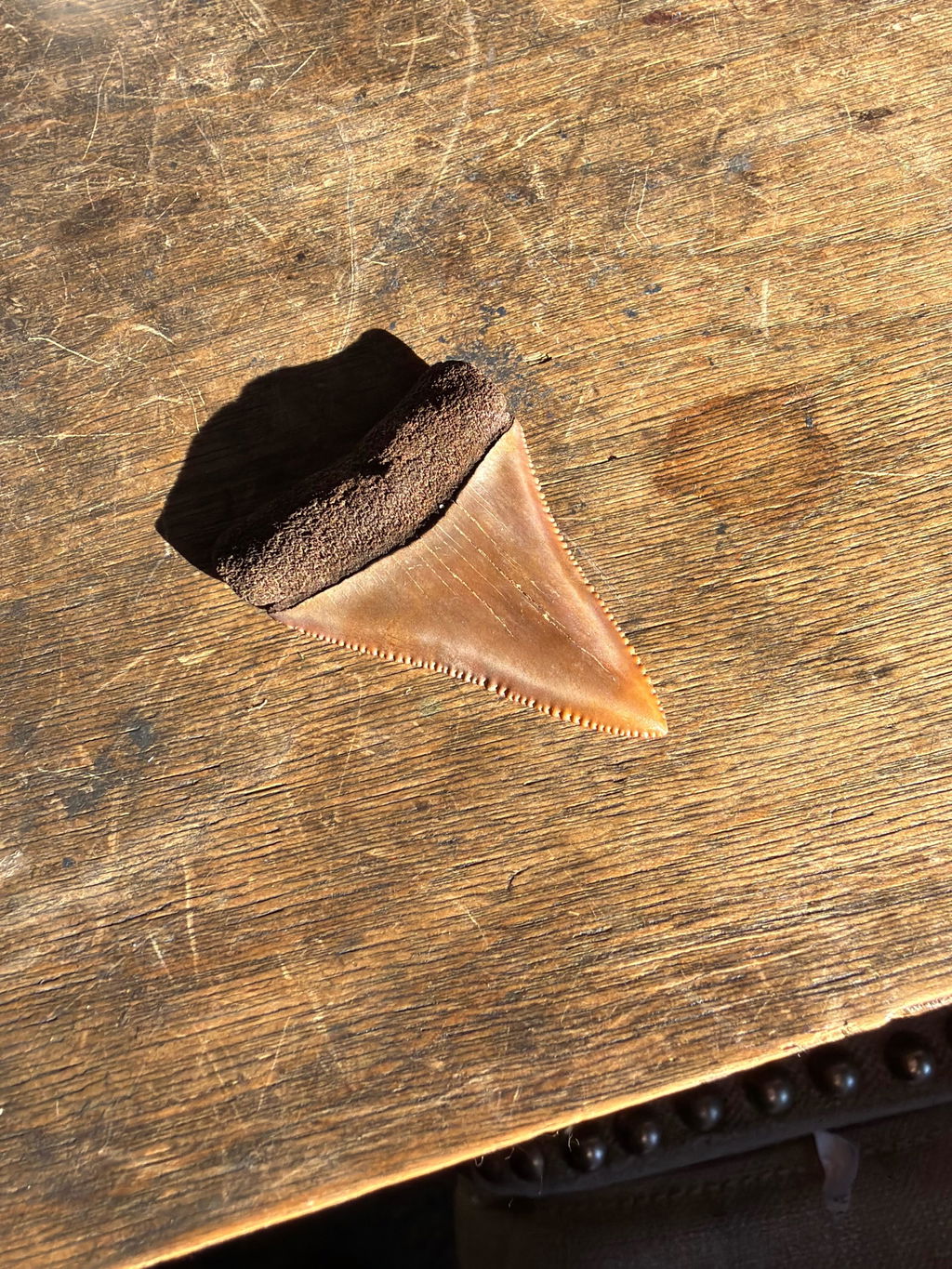
Otodus sokolovi sits near the middle of one of the best-documented evolutionary stories in the fossil record: the gradual transformation of the megatooth sharks into Megalodon. Its teeth show a turning point in that story, combining the side cusplets of earlier ancestors with the serrated edges of the giants that followed. Every tooth in this collection is a one-of-a-kind specimen, measured and photographed individually.
Sokolovi or Auriculatus?
You'll see these teeth sold under both names, and for good reason. For decades, megatooth teeth from the Eocene were labeled Carcharocles auriculatus. More recent research suggests that many of them, especially the middle to late Eocene teeth common on the market today, are better assigned to Otodus sokolovi. Researchers still debate whether the two represent separate species or stages of a single evolving lineage, which is why collectors often list them together as "Sokolovi (Auriculatus)."
Quick Sokolovi Facts
When it lived
The middle to late Eocene epoch, roughly 34 to 48 million years ago.
Place in the lineage
A transitional form between the earlier Otodus auriculatus and the Oligocene shark Otodus angustidens, on the road to Megalodon.
What to look for
A broad, triangular crown with serrated edges, a pair of hooked side cusplets that are often serrated too, and a thick, heavy root.
Size
Most teeth measure 2 to 3 inches, with larger examples over 3.5 inches being much harder to find.
Where Our Sokolovi Teeth Come From
Dakhla, Morocco
Middle to late Eocene desert deposits near Dakhla, in the Western Sahara region, are the best-known source of sokolovi teeth, often with light tan to gray coloring and well-defined serrations.
Suwannee River, Florida
River finds from North Florida, where Eocene limestone is exposed along the riverbed. These teeth typically show darker river-stained colors.
Rare and Limited Localities
From time to time we also offer sokolovi teeth from Eocene sites in the Carolinas. These pieces come and go quickly, so check back often.
The Megatooth Lineage
Collecting each species in order is one of the most popular ways to build a shark tooth collection, because you can literally see the teeth grow larger, gain serrations, and lose their cusplets over tens of millions of years.
2. Otodus sokolovi (Auriculatus)
Eocene. Serrations appear alongside the cusplets. You're here.
Honest Condition Disclosure
Cusplets and root edges are the most fragile parts of these teeth, and they are often repaired or restored on the market. With more than 13 years of fossil identification experience behind every listing, we state plainly whether a tooth is fully natural, repaired, or restored. Every tooth is backed by our authenticity guarantee and a 30-day return policy.
Complete the lineage. The story ends with the largest shark that ever lived. Explore our Megalodon Teeth collection to add the final chapter to your set.