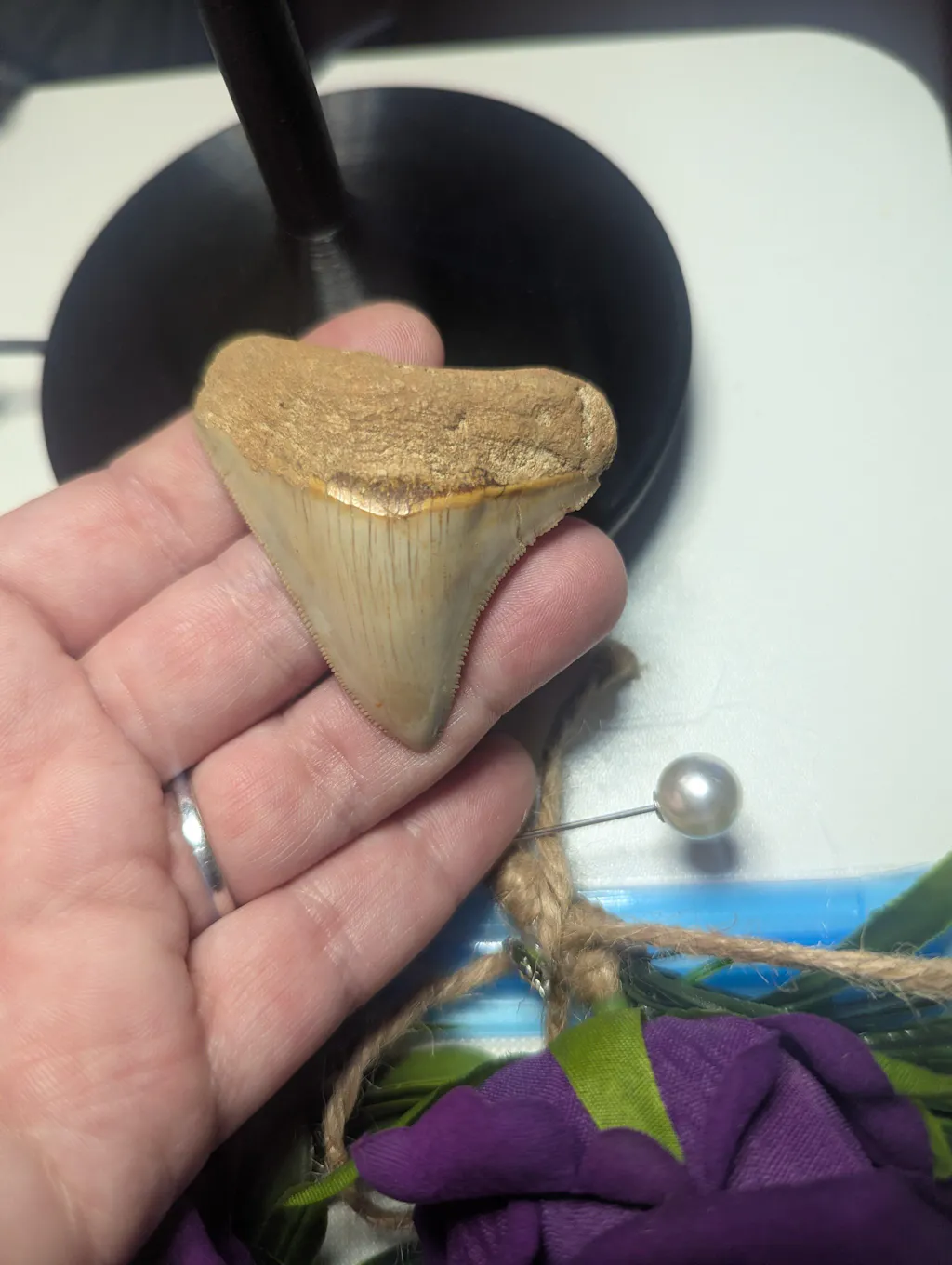

Understanding Megalodon Tooth Quality Grades: From Fragments to Top 1% Collector Pieces
If you’ve ever wondered why one fossil megalodon tooth might sell for under $100 while another can command thousands, the answer almost always comes down to one thing: quality.
While size is one of the first things collectors notice, experienced fossil buyers know that the true value of a megalodon tooth depends on much more than size alone. Condition, completeness, serrations, enamel quality, bourlette preservation, root integrity, color, rarity, and even the location where the tooth was found can all dramatically affect what a specimen is worth.
This is why two megalodon teeth of the same size can have completely different price tags. A 5-inch tooth with worn serrations, root damage, or heavy feeding wear may be considered an affordable collector piece, while another 5-inch tooth with razor-sharp serrations, excellent enamel, clean bourlette preservation, and exceptional color can be worth several times more.
In the fossil-collecting world, there is no universally official grading system for megalodon teeth like there is for coins or trading cards. However, serious collectors and reputable fossil dealers often evaluate teeth using informal quality tiers. These “grades” help describe where a specimen falls, from fragments and entry-level collector pieces to elite top 1% museum-worthy examples.
In this guide, we’ll break down the most common quality levels of fossil megalodon teeth, explain what separates a commercial-grade tooth from a high-end collector specimen, and show how factors like color, location, and rarity can influence value within each tier.
Why Megalodon Tooth “Grades” Matter
Not all fossil megalodon teeth are created equal. Go figure. Millions of years of burial, shifting sediment, feeding damage, transport wear, and natural breakage mean that most teeth are found with at least some level of imperfection. That’s completely normal. In fact, truly flawless megalodon teeth are incredibly rare.
Because of that, collectors often think in terms of quality categories rather than simply “good” or “bad.” A beginner may be thrilled with a partial tooth that still shows classic megalodon shape. We see this often at our farmers' markets or fossil shows. Meanwhile, a serious collector may only be looking for a complete, symmetrical, highly serrated tooth with strong enamel and bourlette, beautiful color, and zero restoration. Understanding these quality levels helps buyers make smarter decisions. It also helps explain why some Megalodon fossils are great budget-friendly entry pieces, while others are considered premium investment-grade specimens.
If you’re new to collecting, this grading mindset can save you from overpaying for average material. If you’re more advanced, it gives you a better framework for identifying true high-end examples when they become available.
Fragment and Partial Megalodon Teeth

At the entry point of the market, you’ll often find fragmentary megalodon teeth. These can include broken crowns, damaged roots, half teeth, three-quarter teeth, or heavily worn specimens that still retain some of the classic megalodon shape. Fragment and partial teeth are often the most affordable way to own a genuine megalodon fossil. For many collectors, especially beginners, they can be a great introduction to the species without the higher cost of a complete display-quality tooth. Even a broken tooth still represents a real piece of one of the largest predatory sharks to ever live.
These teeth are usually priced primarily by how much of the original tooth remains, whether the crown still has visible serrations, and how visually appealing the fragment is. A clean three-quarter tooth with nice enamel and decent shape can often be much more desirable than a heavily eroded “complete” tooth with poor eye appeal.
Although fragments are not typically considered premium collector pieces, some can still be highly displayable, especially if they preserve strong color, attractive feeding damage, or enough of the crown and root to showcase the classic megalodon profile clearly. For collectors shopping on a budget, fragments and partials can be a smart way to build a collection while learning what condition factors matter most.
Commercial Grade Megalodon Teeth: Great Entry-Level Collector Pieces

The next step up is what many collectors and dealers would call commercial-grade megalodon teeth. These are often complete or mostly complete teeth that still have obvious flaws, but remain attractive, authentic, and affordable. Commercial-grade teeth are some of the most popular specimens on the market because they offer a strong balance between price and display value.
A commercial-grade tooth may have worn or partially missing serrations, root chipping, feeding wear, enamel imperfections, or minor blade damage. Despite these flaws, the tooth still presents well enough to be recognizable and appealing as a true megalodon specimen. Some even prefer these teeth, not only because of the price, but because the tooth has some character to it.
A large percentage of these entry-level collector teeth often come from Meg Ledge off the coast of Wilmington, North Carolina, a famous locality known for producing a huge volume of authentic fossil megalodon teeth for sale. Many of these teeth are excellent for first-time collectors because they can offer solid size and authentic provenance without the steep price of elite display pieces.
This is also where buyers need to be careful. Some commercial-grade teeth can look impressive at first glance because of size alone, but once you examine the serrations, root, bourlette, and enamel closely, you’ll see why the pricing is lower than that of higher-end pieces.
High-Quality Megalodon Teeth: Strong Collector-Grade Specimens

Once you move beyond commercial grade, you enter the category most serious collectors actively seek: high-quality megalodon teeth.
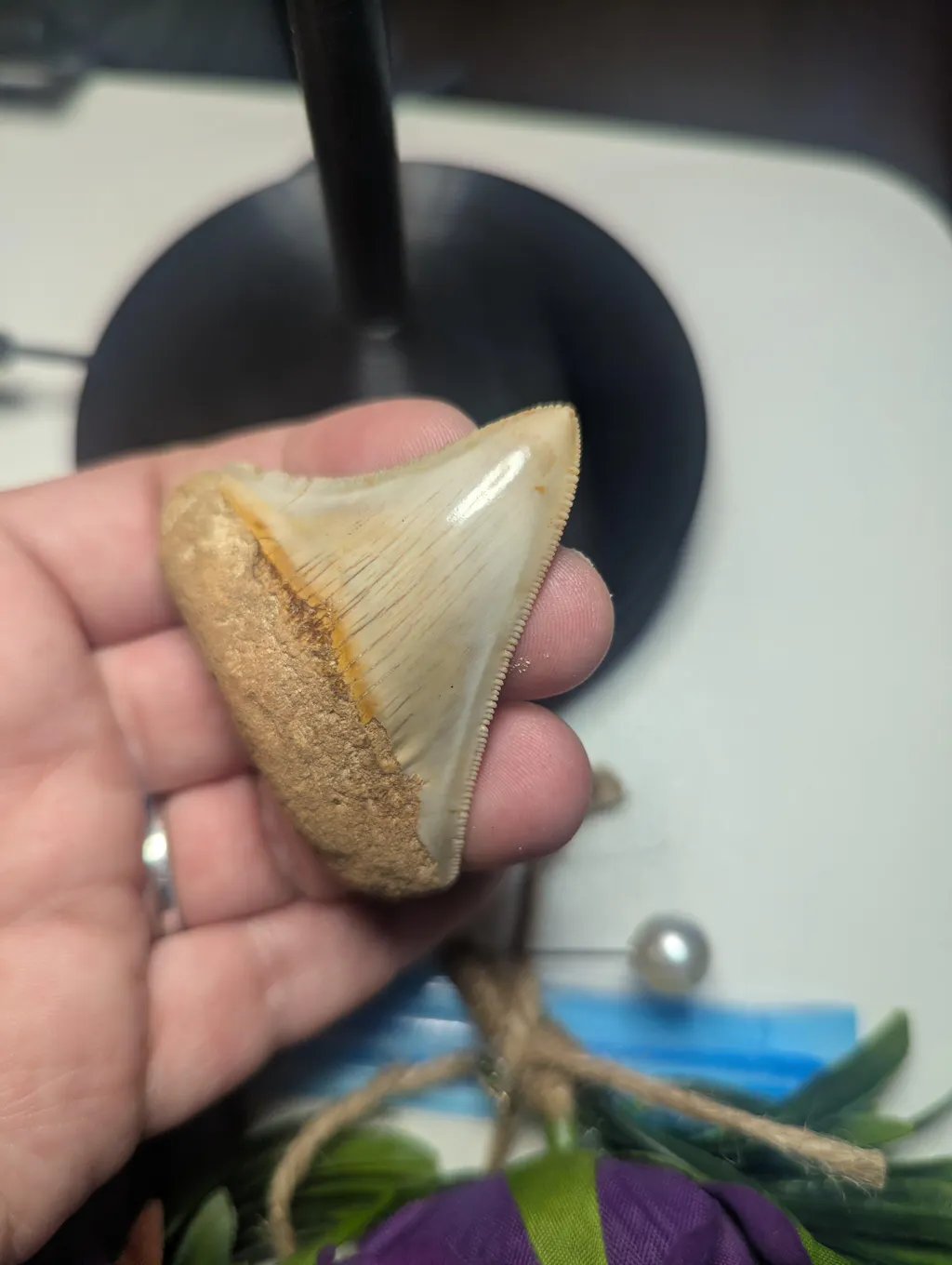
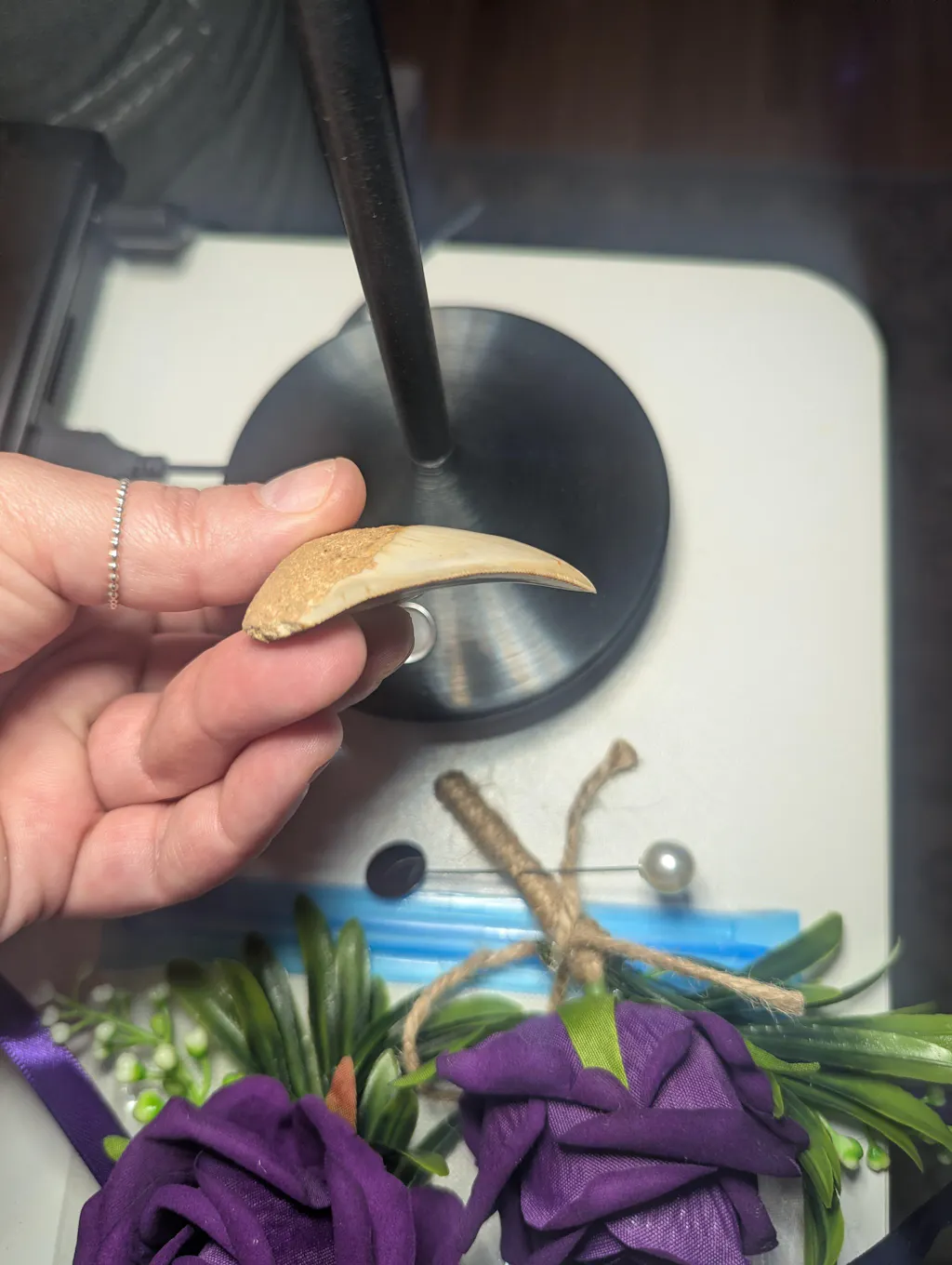
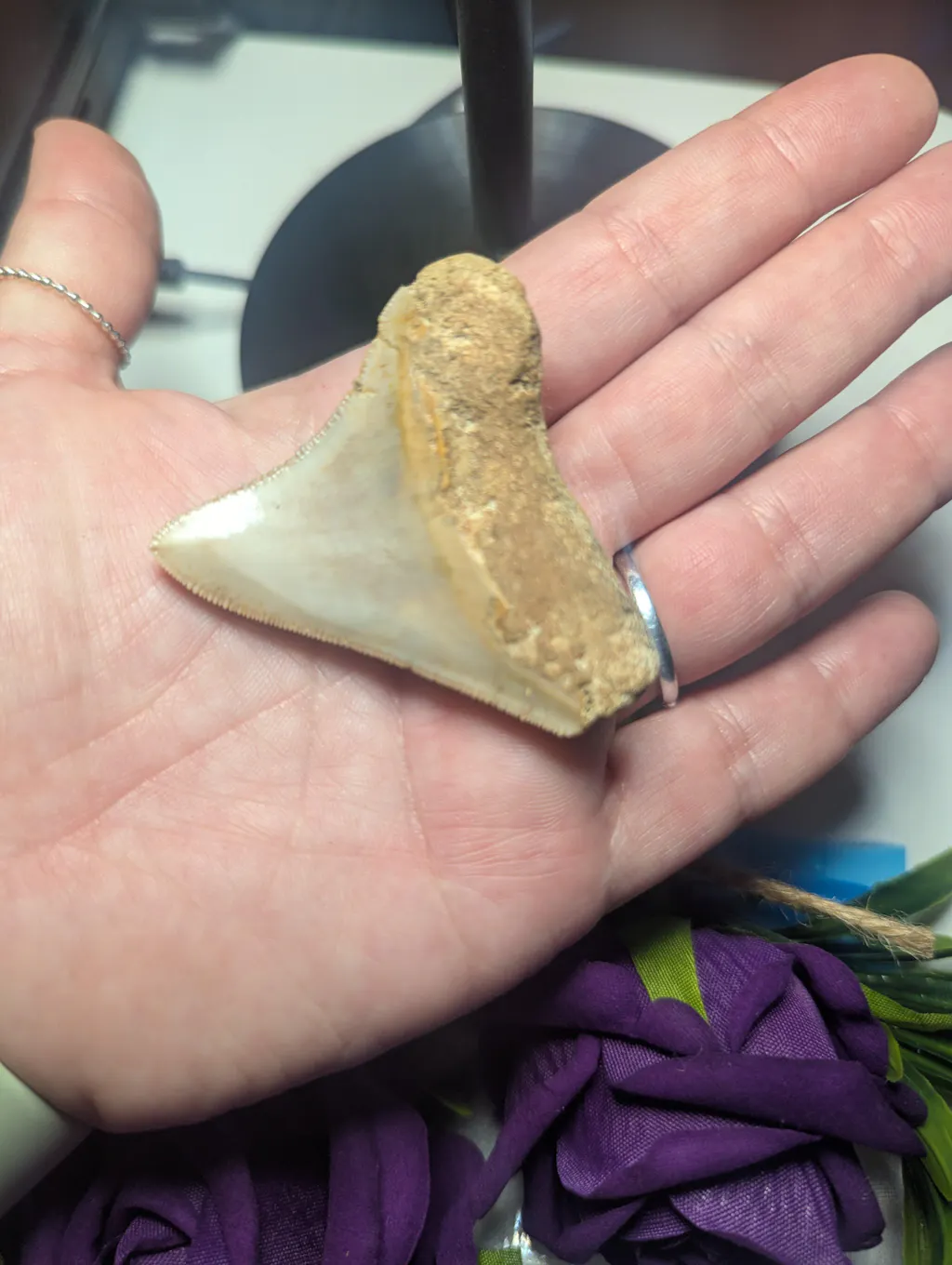
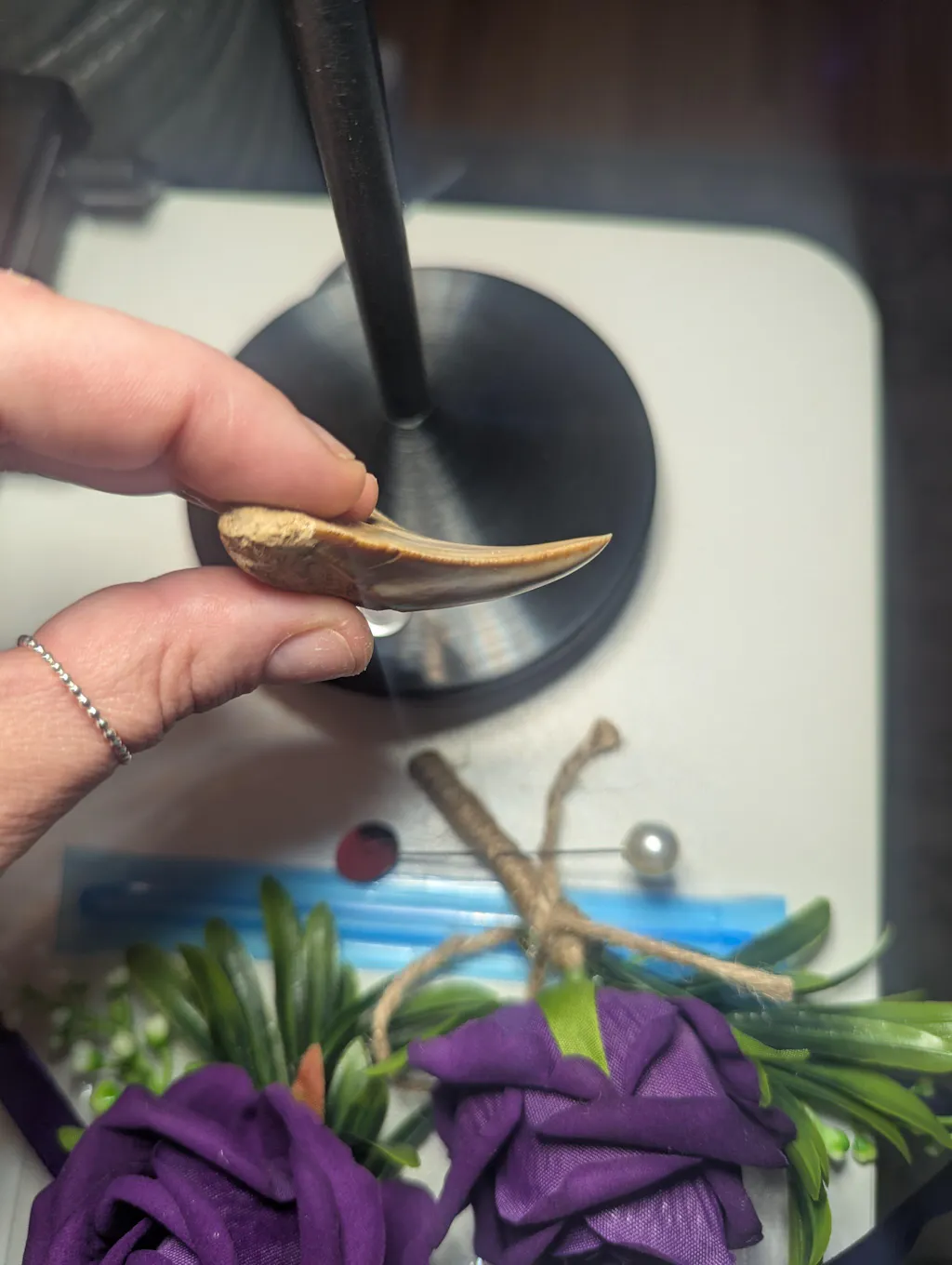
A high-quality megalodon tooth is typically complete, with strong eye appeal, highly displayable, and minimal defects. These teeth usually have clearly visible serrations, solid enamel, a well-preserved bourlette, and an intact root with little to no distracting damage.
This is the tier where condition starts to matter dramatically more than size alone. A smaller but cleaner tooth can easily be more desirable than a larger specimen with heavy wear or restoration. High-quality teeth are the kind of pieces that immediately stand out in a collection because they have both strong preservation and they just look fantastic.
What separates a high-quality megalodon tooth from an average specimen is the combination of preservation, completeness, and overall eye appeal. Experienced collectors rarely focus on size alone. Instead, they evaluate several characteristics that work together to determine a tooth's desirability and long-term value.
One of the first areas collectors examine is the root. A complete, well-preserved root significantly improves both the appearance and collectibility of a fossil megalodon tooth. Missing root corners, heavy erosion, or extensive repairs can reduce value, while a strong, symmetrical root often indicates a specimen that has survived millions of years with minimal damage.
Serrations are another critical factor. High-quality megalodon teeth typically retain sharp, continuous serrations along much of the cutting edge. These serrations played an important role in helping the shark slice through prey and are often among the first features collectors inspect when evaluating condition. Strong serration preservation is particularly desirable because it becomes increasingly uncommon as teeth experience wear, transport, and fossilization.
Collectors also pay close attention to the bourlette, the dark chevron-shaped band located between the crown and root. A thick, well-defined bourlette often enhances a tooth's visual appeal and can indicate excellent overall preservation. While not every collector prioritizes bourlette condition equally, it remains one of the most recognizable features of a collector-grade megalodon tooth.
The enamel itself should be examined carefully for color, luster, and structural integrity. High-quality specimens frequently display attractive natural coloration, smooth enamel surfaces, and minimal cracking or flaking. Some localities, such as Bone Valley, Indonesia, and Peru, are especially prized for producing megalodon teeth with striking colors and strong enamel contrast.
Finally, experienced collectors evaluate overall symmetry, tip preservation, and whether a tooth remains completely natural or has undergone repair or restoration. A symmetrical blade with an intact tip often creates stronger display appeal, while restoration can influence both value and collector demand depending on the extent of the work and how clearly it has been disclosed. The most sought-after collector-grade specimens are those that combine strong preservation, attractive coloration, complete anatomy, and minimal restoration into a single fossil.
Top 1% Megalodon Teeth: The Elite Collector Tier

At the very top of the market are what many collectors would consider the top 1% megalodon teeth. These are the rarest, most desirable, and most expensive specimens available. A true top 1% tooth is not simply large; it is exceptionally preserved in nearly every way. These teeth often have razor-sharp serrations, a full and undamaged root, strong bourlette definition, excellent enamel, a preserved tip with zero wear, and outstanding overall eye appeal. In many cases, these are the teeth that instantly stop collectors in their tracks.
A true top 1% specimen, and in especially exceptional cases, what some collectors might informally consider a "top 0.1%" example, is the kind of tooth that experienced buyers struggle to find any meaningful flaw in. That level of preservation is incredibly uncommon because megalodon teeth spent millions of years buried in marine environments, where breakage, wear, erosion, feeding damage, and transport damage were all common. This is why the jump in price between “high-quality” and “top 1%” can be dramatic.
For example, a high-quality 5-inch Indonesian megalodon tooth may sell for around $1,000, depending on color and preservation. But a true top 1% Indonesian tooth of similar size, especially with exceptional serrations, strong bourlette and root preservation, deep color, and no meaningful flaws, can easily sell in the $3,000 to $4,000 range or more. In some cases, especially with exceptional size and rare coloration, pricing can go even higher.
These are not just collector pieces. They are often considered centerpiece fossils, investment-grade specimens, or museum-quality display pieces.
Investment Grade vs. Collector Grade Megalodon Teeth
After learning about quality grades, many collectors encounter the phrase "investment grade." While the term is common in the fossil hobby, it is important to understand that it is not an official scientific classification.
Investment-grade megalodon teeth are typically specimens that combine exceptional preservation, rarity, eye appeal, and strong collector demand. These are often high-quality or top 1% examples, but not every high-quality tooth automatically qualifies as investment grade.
A tooth can be large, authentic, and visually impressive without necessarily being considered investment grade. Likewise, some smaller specimens command significant premiums because of outstanding serrations, rare coloration, exceptional symmetry, unusual pathology, or remarkable provenance.
It is also important to remember that fossils are collectibles, not guaranteed financial investments. Collector preferences, market demand, rarity, and overall presentation all influence value over time. The specimens most often considered investment grade are those that remain highly desirable because truly exceptional examples are difficult to replace.
For many collectors, a high-quality display tooth provides just as much enjoyment as a top-tier specimen. The goal is not necessarily to own the most expensive fossil, but to understand what makes certain teeth stand out and choose a specimen that fits your collecting goals.
What Actually Determines a Megalodon Tooth’s Quality?
To understand why one tooth falls into a lower grade and another lands in the top 1%, you have to know what collectors are actually evaluating. The most important factor is usually overall completeness. Is the tooth whole? Is the tip intact? Are both root lobes complete? Is the blade fully present, or is part of it chipped or worn away?
Next comes serration quality. Strong, sharp, evenly preserved serrations are one of the biggest signs of a desirable megalodon tooth. Since serrations are delicate, they’re often worn down over time or chipped in some way. Teeth with crisp, visible serrations on both sides of the blade are always more sought after.
Root condition is another major value driver. Chipped, missing, or heavily eroded roots are common. A full, clean, well-shaped root with no deep cracks can significantly raise a tooth’s desirability.
Bourlette preservation also matters. The bourlette, the darker chevron-shaped band between the root and blade, is a classic feature collectors love to see. A thick, well-defined bourlette often improves both eye appeal and value. Even certain patterns can catch someone's eye really quickly.
Then there’s enamel quality. Some collectors want strong color, while others may want a jet black blade. But they all generally want a smooth texture, minimal cracking, and as little flaking or feeding wear as possible. Heavy enamel damage can drop a tooth down a full tier, even if the size is impressive.
How Color Can Affect Megalodon Tooth Value
Color is one of the most fascinating and misunderstood factors in megalodon tooth collecting. This is especially true for collectors who are new to the hobby.
Color does not always determine quality by itself, but it can dramatically influence desirability and price when paired with strong preservation. A flawless tooth with uncommon or especially attractive coloration can sell for far more than a similar tooth with more ordinary tones. But of course, this depends on the preference of every collector. Someone like me absolutely loves a colorful Megalodon tooth. Whereas a good friend of mine loves the more solid, darker colored teeth with little to no patterns.
Megalodon teeth get their color from the minerals and sediments they fossilized over millions of years. This is why locality matters so much. Teeth from different regions often develop very different color profiles, from grays and blacks to tans, blues, reds, oranges, greens, and even highly contrasted two-tone combinations. For example, Bone Valley Megalodon teeth are often especially sought after because they can display striking color and bold root contrast. When those traits are combined with high-end preservation, they can become some of the most desirable teeth in the hobby.
That said, color should always be considered secondary to overall preservation. A rare or desirable color on a heavily damaged tooth does not automatically elevate it into a top-tier category. However, when exceptional condition is paired with uncommon natural coloration, collector demand and market value can increase significantly. If you’d like to explore the fossilization science behind these color variations in more detail, be sure to check out our blog article on why fossil Megalodon teeth display such a wide range of natural colors.
Why Location Matters More Than Most Collectors Realize
Where a Megalodon tooth was found can have a major effect on both quality expectations and price. Some localities are known for producing more affordable commercial-grade material in larger numbers. Others are famous for producing rarer, larger, or more visually dramatic specimens that command premium prices.
For example, Wilmington / Meg Ledge, North Carolina, is one of the best-known localities for authentic fossil megalodon teeth and often produces a wide range of collector material, especially commercial-grade and mid-tier teeth. Many of these are ideal for beginner and intermediate collectors.
By contrast, Indonesian megalodon teeth are often known for size, dramatic coloration, and strong collector appeal. High-end Indonesian teeth, especially large examples with exceptional serrations and color, can reach significantly higher prices than more common material from other regions.
Other locations, including parts of South Carolina, Florida, and Georgia, can each have their own reputation for color, preservation style, rarity, or market demand. This means that provenance is not just a fun detail; it can be a major part of what makes a tooth desirable.
Collectors often learn over time that they are not just buying a megalodon tooth. They are buying a combination of condition, color, rarity, and locality. Especially as they continue to expand their collections.
How to Choose the Right Quality Grade for Your Collection
The best megalodon tooth for your collection depends on your goals. If you’re just getting started, a fragment or commercial-grade tooth can be a fantastic place to begin. These pieces are more affordable, still authentic, and let you own a real megalodon fossil without jumping straight into premium pricing.
If you want a strong display specimen that looks impressive and holds collector appeal, high-quality teeth are often the sweet spot. They offer a noticeable jump in preservation and eye appeal without necessarily reaching the elite prices of the rarest examples. They are still premium pieces, but they remain far more attainable than the elite top 1% specimens that command the highest prices in the hobby.
If you’re building a serious collection, shopping for centerpiece fossils, or specifically looking for investment-grade material, then top 1% teeth are where condition, rarity, and eye appeal all come together. These are the specimens that advanced collectors wait for, and they are often worth paying more for when the right one appears.
The key is understanding what you’re buying. Once you know how to evaluate condition, serrations, root quality, bourlette preservation, color, and locality, you’ll be able to spot real value much more confidently.
Final Thoughts: Quality Always Drives Long-Term Value
At the end of the day, the biggest factor in Megalodon tooth pricing is not size alone, but overall quality. Fragments and partial teeth can still be exciting and affordable entry points into the hobby, while commercial-grade teeth often offer the best balance between authenticity, display value, and price. High-quality specimens provide the preservation and eye appeal that serious collectors actively seek, and true top 1% megalodon teeth remain in a class of their own, where rarity, condition, and visual appeal combine to create some of the most desirable fossil shark teeth on the market.
If you’re shopping for an authentic megalodon tooth for sale, the smartest thing you can do is look beyond inches and learn to evaluate the details that truly matter. That is how experienced collectors separate average specimens from exceptional ones, and why the best fossil megalodon teeth continue to command premium prices over time.
Written by: Brandon Zulli, owner of fossildriven.com