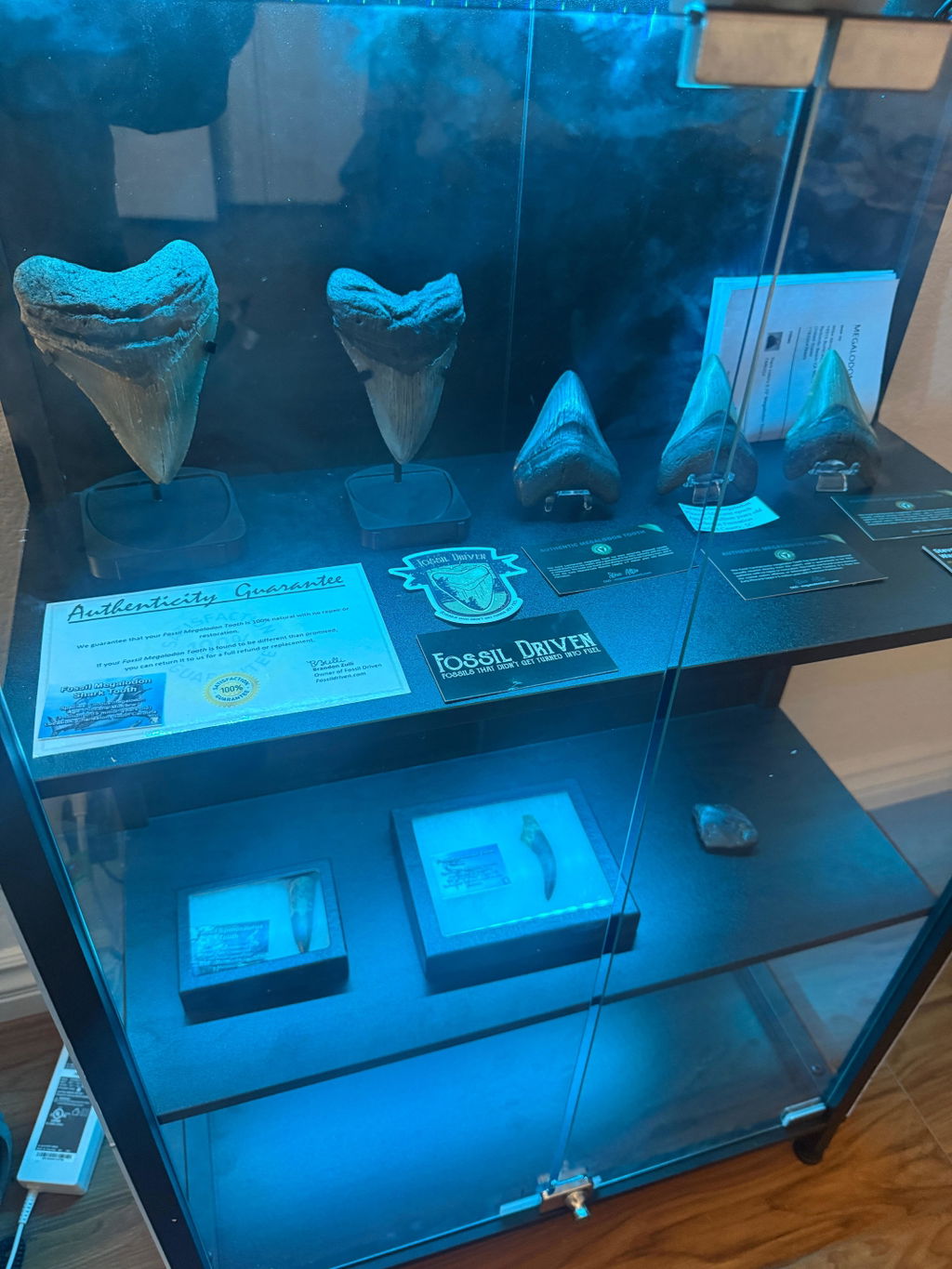

Why Fossil Megalodon Teeth Have Different Colors | Fossil Driven
Fossil Megalodon teeth are more than just remnants of the largest shark to ever live; they’re some of the most visually striking prehistoric fossils available today. From jet black and smoky gray to shades of blue, green, brown, and even creamy white, no two fossil Megalodon teeth look exactly alike.
These dramatic color variations aren’t random, and they don’t come from the shark itself. Instead, they’re the result of complex geological and chemical processes that occur over millions of years during fossilization. Understanding why fossil Megalodon teeth have different colors can help collectors appreciate their uniqueness and better understand what affects a Megalodon tooth’s value.
If you’re looking to add one to your collection, you can explore our collection of authentic Megalodon teeth for sale to see how color, size, and preservation vary between specimens.
What Is a Fossil Megalodon Tooth?
Before diving into color, it helps to understand what a fossil Megalodon tooth actually is.
Otodus megalodon (often historically referred to as Carcharocles megalodon) lived roughly 15 to 3 million years ago during the Miocene and Pliocene epochs. Like modern sharks, Megalodon continuously shed and replaced its teeth. When one of these massive teeth fell to the seafloor or riverbed and became buried under sediment, it sometimes entered the fossilization process.
Over time, the original organic material in the tooth was replaced by minerals from the surrounding environment through a process called permineralization. This transformation is what turns a Megalodon tooth into a true fossil, and it’s also what gives each tooth its distinct color.
Minerals Are What Give Megalodon Teeth Their Color
The color of a real Megalodon tooth is determined almost entirely by the minerals present in the sediment and groundwater where it fossilized. As minerals seep into the tooth, they replace enamel and dentin with stone-like material, permanently locking in color.
Here are the most common fossil Megalodon tooth colors and what causes them:
- Black – One of the most common colorations, black Megalodon teeth often form in environments rich in iron sulfides or manganese dioxide. These minerals produce deep black or charcoal-gray fossils, frequently found in riverbeds and marine sediments. Some localities that produce black and gray fossil Megalodon teeth are South Carolina, Georgia, Indonesia, and Florida.

Above is an example of a megalodon tooth with your typical black coloration. This specific specimen is from South Carolina
Photo Credit: Brandon Zulli, owner of fossildriven.com
- Brown/Tan – Iron oxides, essentially rust, create warm tones ranging from golden tan to reddish brown. These teeth are commonly found in fossil deposits throughout Georgia, South Carolina, Indonesia, Virginia, and parts of Florida.

Above is an example of a megalodon tooth with a unique brown coloration. This specific specimen is from Georgia
Photo Credit: Brandon Zulli, owner of fossildriven.com
- Light Gray/White – Megalodon teeth fossilized in areas with fewer impurities and higher phosphate concentrations may appear light gray, beige, or chalky white. These colors are often associated with the Venice, Florida, fossil beds.

Above is an example of a megalodon tooth with beautiful gray/white enamel. This specific specimen is from Venice, Florida
Photo Credit: Brandon Zulli, owner of fossildriven.com
- Blue/Orange/Gold/Green – Among the rarest and most desirable colors, blue, gold, orange, and green Megalodon teeth form under very specific chemical conditions involving trace minerals like glauconite. These vibrant teeth are especially well known from Bone Valley, Florida, and can command higher prices among collectors.

Above is an example of a megalodon tooth with beautiful blue enamel. This specific specimen is from Bone Valley, Florida
Photo Credit: Brandon Zulli, owner of fossildriven.com

Above is an example of a megalodon tooth with a beautiful & uncommon green enamel. This specific specimen is from Bone Valley, Florida
Photo Credit: Brandon Zulli, owner of fossildriven.com
👉 Important: The color of a Megalodon tooth comes from the earth it was buried in and the minerals that it absorbed. The color does not indicate its age.
Why Fossilization Environment Matters
The final color of a Megalodon tooth fossil depends heavily on its burial environment. Factors such as sediment type, groundwater chemistry, and even ancient climate conditions all play a role.
For example:
- Riverbeds, like in Florida, Georgia, or South Carolina, and peat-rich sediments often produce dark or black megalodon teeth.
- Sandy or clay-heavy deposits, like off the coast of Venice, Florida, or certain pockets of the Peace River, may result in lighter tan or beige fossil megalodon shark teeth
- Certain marine formations can produce blue, yellow, orange, or green hues
Even Megalodon teeth from the same time period can look completely different if they fossilized in different locations. Bone Valley, Florida, is a perfect example of how diverse Megalodon tooth colors can be within a single region. The same can be said about fossil Megalodon shark teeth being found in Indonesia.
Does Color Indicate Age or Rarity?
A common misconception is that darker megalodon teeth are older or more valuable, but that’s not always true. I personally get this comment a lot, and most people are usually very intrigued when I tell them that the color has nothing to do with how old a megalodon shark tooth is.
Color doesn't directly reflect the age of a megalodon tooth fossil, or just fossils in general. Instead, it reflects the geochemical environment in which it was buried. However, some colors are linked to specific formations or layers of sediment, as mentioned prior, so they can offer clues about the fossil’s origin.
All fossil Megalodon teeth are millions of years old, regardless of color. However, color can influence Megalodon tooth value when combined with other factors such as:
- Size
- Preservation
- Completeness
- Rarity
- Location
Rare colors, especially blue, green, orange, or golden brown, are often more desirable to collectors and can increase what a Megalodon tooth is worth, particularly when sourced from well-known fossil sites like Bone Valley, Lee Creek, and Peru.
What Color Can Tell Collectors
Collectors often ask about the color of fossil megalodon teeth because it can impact value, aesthetic appeal, and origin identification. Understanding the “why” behind the color helps you appreciate the tooth’s geological journey, not just its prehistoric past.
When shopping for authentic Megalodon teeth, keep these points in mind that were pointed out earlier in the article:
- Darker colors usually mean the megalodon tooth came from riverbeds or organic-rich layers.
- Lighter or tan hues may suggest a drier or sandier fossilization environment.
- Vibrant or rare colors can be region-specific and sometimes command a premium. Again, Bone Valley is one of these locations. Same with Peru or even Indonesia.
Understanding these details can help any collector make informed decisions when buying fossil Megalodon teeth.
Frequently asked questions
Does the color of a megalodon tooth affect its value? Color alone doesn't determine value, but rare colors from specific localities, especially blue, green, orange, or gold from Bone Valley, Florida, can increase desirability and price when combined with strong preservation and size. Common black or brown specimens can still be highly valuable if other quality factors are exceptional.
Are darker megalodon teeth older than lighter ones? No. Color reflects the minerals in the burial environment, not the age of the fossil. A black South Carolina tooth and a white Venice Beach tooth can be the same age — they just fossilized in chemically different sediments.
What causes the rare blue and green colors in Bone Valley megalodon teeth? These colors are linked to specific trace minerals, including glauconite, present in the Bone Valley phosphate deposits of Florida. The exact chemical conditions required to produce these hues are relatively uncommon, which is part of why blue and green Bone Valley teeth are especially sought after by collectors.
Can the color of a megalodon tooth fade over time? Natural enamel color is generally stable once fully fossilized. However, prolonged exposure to direct sunlight, especially for lighter Bone Valley specimens, can cause subtle fading over time. Displaying in indirect light or UV-resistant cases helps preserve the tooth's natural coloration.
Is an artificially colored or painted megalodon tooth worth less? Significantly less, and it would be considered misrepresented if sold without disclosure. Natural color is a core authenticity factor. UV light testing can often reveal artificial colorants or coatings that don't fluoresce consistently with genuine enamel.
Buying Authentic Megalodon Teeth
If you’re looking to purchase a genuine Megalodon tooth, color is just one part of the story. Size, condition, and authenticity matter just as much, if not more.
At Fossil Driven, we specialize in authentic Megalodon teeth for sale, hand-selected and verified for quality and preservation. Each specimen tells a unique geological story, shaped by millions of years beneath the earth.
Explore our collection of real Megalodon teeth for sale here:
Wrapping Up
The color of a fossil Megalodon tooth isn’t just about appearance; it’s a record of chemistry, geology, and deep time. From dark and dramatic to light and rare, each tooth reflects the unique environment that preserved it for millions of years.
Understanding why fossil Megalodon teeth have different colors adds depth to collecting and helps you appreciate these incredible fossils for more than just their size or rarity.
Written by: Brandon Zulli, owner of FossilDriven.com