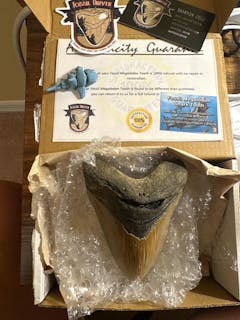
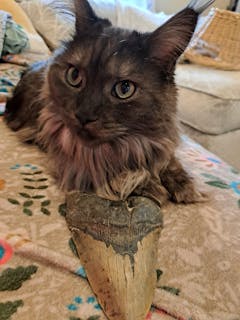
3.05" Fossil Megalodon Tooth – Wilmington, North Carolina
Bring home a genuine piece of prehistoric ocean history with this 3.05-inch fossil Megalodon tooth for sale, recovered from the well-known Meg Ledge fossil site located approximately 20–40 miles offshore of Wilmington, North Carolina, at depths of around 80–120 feet.
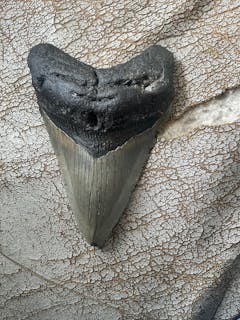
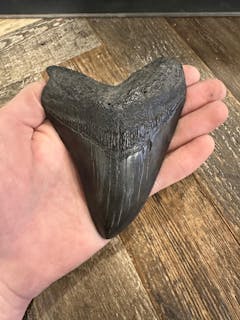
This specimen features warm tan enamel, a solid root, and worn yet still visible serrations, giving it strong character and collector appeal. It is an excellent option for collectors searching for an authentic Megalodon tooth for sale from a classic offshore North Carolina locality.
Fossil Megalodon teeth like this are among the most iconic prehistoric fossils ever discovered, valued by collectors for their size, preservation, and direct connection to ancient marine ecosystems.
Shed naturally by Otodus megalodon during the Miocene to early Pliocene Epoch (approximately 3–15 million years ago), this fossil represents one of the most iconic apex predators in Earth’s history. Every specimen at Fossil Driven is hand-selected, 100% natural, and backed by our Authenticity Guarantee, so you can buy with confidence.
Item Specifics
-
Species: Otodus megalodon
-
Size: 3.05" × 2.14"
-
Location: Meg Ledge, North Carolina
-
Age: Miocene–Pliocene (~3–15 million years old)
-
Condition: 100% natural, no restoration (see our Authenticity Guarantee)
About This Specimen
This Megalodon tooth displays a beautiful tan enamel, a solid, well-preserved root, and serrations that, though worn, remain visible along the blade. Its natural character and locality make it an excellent addition for collectors seeking North Carolina specimens or assembling a size-graded Megalodon tooth set.
All Fossil Driven fossils are guaranteed authentic, unrestored, and accurately photographed. Individual specimens like this help complete our broader selection of authentic Megalodon teeth for sale, each offering its own unique size, coloration, and fossil history.
Where This Fossil Comes From
This specimen was recovered 20–40 miles offshore of Wilmington, NC, at depths of around 80–120 feet. An area famous for producing both high-quality and heavily water-worn Megalodon teeth. Over millions of years, teeth like this one became buried in sediment, mineralized, and preserved until divers brought them safely to the surface.
Interested in learning more?
Read our guide: Where Fossil Megalodon Teeth Are Found.
About the Megalodon Shark
Otodus megalodon (often historically referred to as Carcharocles megalodon) was the largest predatory shark to ever live, reaching estimated lengths of 50–60 feet and dominating warm oceans worldwide during the Miocene and Pliocene epochs. Its massive jaws and serrated teeth enabled it to prey on whales, dolphins, and other large marine mammals.
As the largest predatory shark ever known, Megalodon fossils, especially well-preserved teeth, offer rare insight into the size, power, and behavior of this prehistoric apex predator.
Want to learn more about this apex predator? Check out our blog:
New to collecting? Explore our guides on:
If you’re comparing individual Megalodon teeth for sale, this North Carolina specimen offers excellent natural color, preservation, and value within the popular 3–4" size range.
Why Collect This Tooth
- Genuine Megalodon tooth from North Carolina
- Strong collector value in this size class
- Natural coloration and excellent display appeal
- 100% authentic fossil backed by our guarantee
- Perfect for display stands or curated collections
- Great gift for fossil enthusiasts and shark lovers
Learn More & Explore Related Fossils
Why Buy from Fossil Driven
- Authentic, hand-selected fossils only
- No restoration unless clearly disclosed
- Clear, accurate photography
- Fast, secure shipping
- Small, enthusiast-owned business passionate about fossils
Final Notes
Add this authentic North Carolina Megalodon tooth to your collection and own a true piece of prehistoric ocean history. Every Fossil Driven specimen is verified for authenticity, no repairs, no restoration, just genuine fossil material preserved for millions of years.
— Brandon Zulli & the Fossil Driven team