
How to Start a Fossil Megalodon Tooth Collection: A Collectors Guide
Very few fossils capture the imagination quite like a fossil Megalodon tooth. A fossil from the largest predatory shark that ever existed. Holding one is just an all-around awesome feeling, a piece of ancient ocean history that’s survived millions of years beneath the seafloor.
Whether you’ve been fascinated by these prehistoric predators since childhood, early high school years (like me), or recently developed an interest in fossil collecting, starting a Megalodon tooth collection is a great way to connect with the past, learn about marine paleontology, and build a fossil collection or display that tells a cool and unique story.
For new collectors, the easiest way to start is by choosing a verified specimen from a trusted source. You can explore our curated selection of authentic fossil Megalodon teeth for sale to see different sizes, colors, and price points suitable for beginners.
So, What Makes a Megalodon Tooth Special?
Otodus megalodon (often historically referred to as Carcharocles megalodon) lived roughly 3 to 15 million years ago, dominating the oceans as the largest predatory shark to exist. Adult Megalodon sharks are estimated to have reached 50–60 feet in length (80 now if you follow the recent paleontology news), with teeth measuring up to 7-inches, which is roughly the size of your hand.

What makes these fossils so collectible isn’t just their size, but their incredible variation in color, preservation, and locality. Each tooth tells a unique story about the region it came from, whether it’s a colorful Bone Valley specimen from Florida, a black phosphate-coated river tooth from South Carolina, or a massive Indonesian find with rich mineral hues. They also don't take up a lot of space, so they are easy to display in a cabinet, coffee table, or even in a display case on your shelf. Some even collect them as an investment (this is not financial advice; I'm just sharing how some people collect), especially for megalodon teeth that have a rare locality.
💡 Collector Tip: Tooth color is determined by the minerals in the surrounding sediment. That’s why Bone Valley teeth can show white, blue, or even green tones, while Georgia and South Carolina teeth tend to have darker & lighter browns, grays, and blacks.
Decide What Kind of Collection You Want
There’s no wrong way to collect Megalodon teeth; your approach can be as scientific, aesthetic, or adventurous as you want. For myself, I love to collect Florida localities, small, high-quality specimens, large, pristine teeth, pathological teeth, and teeth that have self-inflicting bite marks on them. Each collection has a different story behind it. I collect Florida megalodon teeth because I grew up and still live in Florida. So, I figured it would be cool to collect every Florida locality. Smaller high-quality specimens take up less space and are somewhat more uncommon. Large and pristine teeth will always fetch and hold a higher dollar amount. So, for me, they are an investment. Especially if I can get megalodon teeth from a rare location. Pathological teeth are just funky, and I love showing off how teeth can have different forms of pathologies. Last, self-inflicting bite-marked teeth always tell a cool and unique story of how the megalodon shark preyed on whales and other large mammals.
Many collectors choose to build their megalodon tooth collection around a specific theme rather than purchasing specimens at random. One of the most popular approaches is collecting by size. A size-focused collection allows you to display the growth stages of one of the largest sharks to ever live, from smaller juvenile teeth to impressive collector-grade specimens exceeding five or even six inches. As a general rule, larger teeth become increasingly scarce, especially when they retain strong serrations, complete roots, and attractive coloration. Because of this, exceptionally large specimens often command higher prices and are highly sought after by serious collectors.
Another rewarding approach is collecting by locality. Every fossil site produces megalodon teeth with unique characteristics shaped by the sediments and minerals where they fossilized. A collector might focus exclusively on Florida localities such as Bone Valley and the Peace River, while others enjoy acquiring specimens from South Carolina, Georgia, North Carolina, or even international locations like Indonesia, Peru, Belgium, and Australia. Building a locality-based collection not only creates visual variety but also tells the story of where megalodon sharks once inhabited ancient oceans around the world.
Color-based collections have also become increasingly popular among fossil enthusiasts. Bone Valley megalodon teeth are especially prized because they can display shades of white, blue, orange, green, gray, and black depending on the surrounding mineral composition. Indonesian and Peruvian specimens can be equally impressive, often displaying striking mineral patterns and color contrasts. For many collectors, assembling a range of naturally colored fossil megalodon teeth is every bit as rewarding as pursuing larger specimens.
Some collectors prefer to focus on the evolutionary story behind megalodon. By collecting related megatooth shark species such as Otodus obliquus, Otodus auriculatus, Otodus angustidens, and Otodus chubutensis, it becomes possible to create a display that showcases the evolutionary progression leading to Otodus megalodon. These collections provide a fascinating visual representation of how one of history's most iconic apex predators evolved over millions of years.

If you want to learn more about how these sharks evolved, check out our blog article! The Evolution and Extinction of the Megalodon Shark.
🧭 Fossil Driven Tip: Start small but with purpose. One quality tooth with accurate data (location, age, and species) adds more value to your collection than several lower-quality ones with similar data. Unless, of course, you like the ones with more character.
Learn How to Identify Authentic Teeth
Learning how to identify an authentic megalodon tooth is one of the most important skills a new collector can develop. Because megalodon teeth are among the most recognizable fossils in the world, replicas, casts, and modern reproductions are commonly sold online. Fortunately, genuine fossil megalodon teeth often display characteristics that are difficult to replicate convincingly. Natural specimens frequently show subtle wear patterns, mineral inclusions, pitting, and minor imperfections created during fossilization. Genuine roots typically have a porous texture rather than a perfectly smooth appearance, while preserved serrations along the crown edge usually taper naturally toward the tip.
Weight can also be a useful indicator when examining a specimen in person. Fossilized teeth have been mineralized over millions of years and often feel noticeably heavier than resin casts or lightweight reproductions. Modern 3D-printed replicas are generally even easier to identify because they often display visible layer lines and uniform surface textures that are not present on authentic fossils.
For collectors purchasing online, the safest approach is to buy from reputable fossil dealers who provide detailed locality information, accurate condition disclosures, and authenticity guarantees. Understanding these characteristics can help you avoid reproductions while building a collection of authentic megalodon teeth that retains both scientific and collector value.
If you want to dive deeper into how to spot fakes and replicas, check out our other blog article: How to spot repaired and restored megalodon teeth.
Know Where Megalodon Teeth Are Found
Some of the most desirable fossil megalodon teeth for sale today originate from a handful of well-known collecting localities around the world. Florida remains one of the most important regions for megalodon fossils, particularly the Peace River and Bone Valley formations. Peace River teeth are often recognized for their glossy phosphate preservation and darker shades of black, gray, and brown. Bone Valley specimens, on the other hand, are famous for producing a remarkable range of colors, including white, blue, green, orange, and multicolored examples that are highly sought after by collectors.
Outside of Florida, Wilmington, North Carolina, has become known for producing large offshore megalodon teeth, many of which make excellent entry-level specimens due to their availability and size. Beaufort, South Carolina, and the Savannah River region of Georgia have produced countless river-recovered teeth with attractive coloration and strong serration preservation. Internationally, Indonesia has gained a reputation for yielding exceptionally large megalodon teeth with distinctive mineralization patterns and colors that are rarely seen elsewhere.
Understanding where a fossil megalodon tooth originated can significantly enhance the collecting experience. Locality information provides insight into the tooth's geological history, preservation style, rarity, and overall appeal. Many experienced collectors eventually begin seeking specific localities rather than simply focusing on size alone.
🌊 Pro Tip: Always check local collecting laws before digging or diving. Some areas require permits, and private land collecting always needs permission. No felony or fine is worth the cost of a megalodon tooth.
Display and Store Your Collection
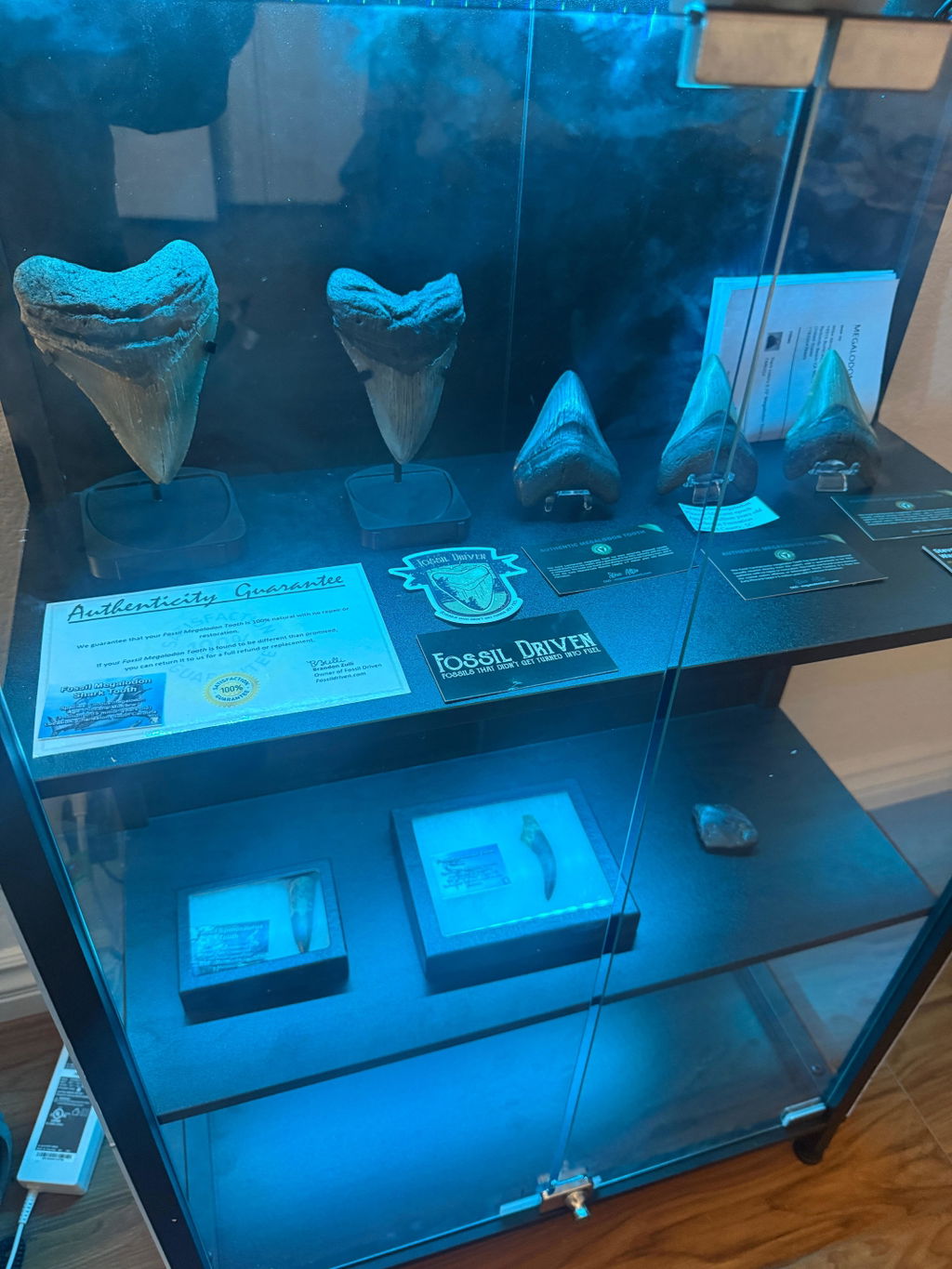
Once you begin building a megalodon tooth collection, proper display and storage become just as important as acquiring new specimens. A well-presented collection not only protects your fossils but also allows you to showcase the unique colors, sizes, and preservation styles that make each fossil megalodon tooth special. Many collectors use acrylic stands, custom display boxes, shadow boxes, or 3D-printed holders designed specifically for fossil shark teeth. These display options help support the tooth safely while creating an attractive presentation for shelves, desks, display cabinets, or dedicated fossil rooms.
Environmental conditions should also be considered when storing authentic megalodon teeth. Maintaining moderate humidity levels, typically between 40% and 60%, can help prevent unnecessary drying and reduce the risk of cracking over long periods. For particularly valuable specimens, UV-resistant display cases provide additional protection from prolonged sunlight exposure. Adding labels that include the species name, locality, and estimated age of the fossil can further enhance both the educational and collector value of your display. Detailed provenance information often becomes increasingly important as a megalodon tooth collection grows and expands over time.
One of the most rewarding ways to display a collection is to create a dedicated showcase featuring your favorite specimens. Many collectors arrange their top teeth together with printed identification cards, locality information, and lighting that highlights the natural colors produced during fossilization. Whether your collection focuses on rare localities, exceptional preservation, unusual pathologies, or colorful Bone Valley specimens, a thoughtfully designed display can transform a group of fossils into a conversation piece that tells the story of one of the largest sharks to ever inhabit Earth's oceans.
💡 Display Idea: Create a “collector’s plaque” showcasing your top five specimens, with printed labels and backlighting to bring out color variation.
Continue Learning and Expanding
As your collection grows, so will your curiosity. Consider expanding into other megatooth species or complementary fossils like Hemipristis (Snaggletooth Shark), Mako, or even marine mammal fossils that Megalodon may have preyed upon.
Join online fossil groups, attend fossil shows, or visit local markets like the Clermont Farmers Market (another shameless plug), where you can meet fellow collectors and share your fossil finds and stories. The community aspect of fossil collecting is one of the most rewarding parts of the hobby, especially when you find those groups who absolutely love everything about fossil collecting.
Frequently asked questions
How much should a beginner spend on their first megalodon tooth? You can find authentic, displayable megalodon teeth starting around $30 to $75. For a first piece, focus on authenticity, honest condition disclosure, and a locality you find interesting rather than chasing the largest size you can afford.
How do I know if a megalodon tooth is authentic? Genuine teeth typically feel heavier than replicas due to mineralization, show natural pitting and wear on the root, and have serrations that taper naturally toward the tip. Buying from a dealer with a clear authenticity guarantee is the safest starting point.
What's the best megalodon tooth locality for a beginner collector? Florida's Peace River and Venice Beach are great starting points — teeth from these areas are widely available, well-documented, and come in a range of price points. Bone Valley is also fantastic if you want colorful specimens.
Is it better to start with one quality tooth or several budget ones? One quality tooth with good locality data and honest condition reporting is almost always a better starting point than several lower-grade specimens. You'll learn more from studying one great tooth than from accumulating several mediocre ones.
Can megalodon teeth go up in value over time? High-quality, rare specimens with strong locality documentation and exceptional preservation tend to hold or increase in collector value over time. Size alone doesn't guarantee appreciation — condition, rarity, and locality all matter significantly.
Wrapping Up
Building a Megalodon tooth collection isn’t just about ownership; it’s about discovery, connection, and appreciation for an apex predator that once swam our oceans. Each tooth that you add to your collection adds a piece of prehistoric history to your shelf, telling a story that began millions of years ago beneath the waves. Whether you’re just starting or adding to an existing collection, just remember that authenticity, care, and curiosity are what truly make a collection valuable.
Start your collection
Every great megalodon tooth collection started with one piece. The right first tooth sets the standard for everything that comes after it.
👉 Browse our authentic Megalodon Teeth collection, hand-selected and backed by our authenticity guarantee.
Written by: Brandon Zulli - Owner of Fossil Driven