
How to Identify Repaired or Restored Megalodon Teeth
How to Spot Repaired or Restored Fossil Megalodon Teeth
Megalodon teeth are among the most iconic and sought-after fossils in the world, but not all specimens are in their original natural condition. Fossil Megalodon teeth, especially larger ones, can sometimes be repaired, restored, or assembled from multiple pieces. Understanding how to detect these interventions is crucial for collectors who want real fossil Megalodon teeth and not enhanced or reconstructed specimens.
Whether you’re just starting with fossil collecting or building a serious fossil Megalodon tooth collection, this guide will help you identify common repairs and restorations so you can buy with confidence.
For collectors who want complete transparency, purchasing from a reputable source matters just as much as knowing what to look for. You can browse our collection of authentic Megalodon teeth for sale, where all repairs or restorations are clearly disclosed.

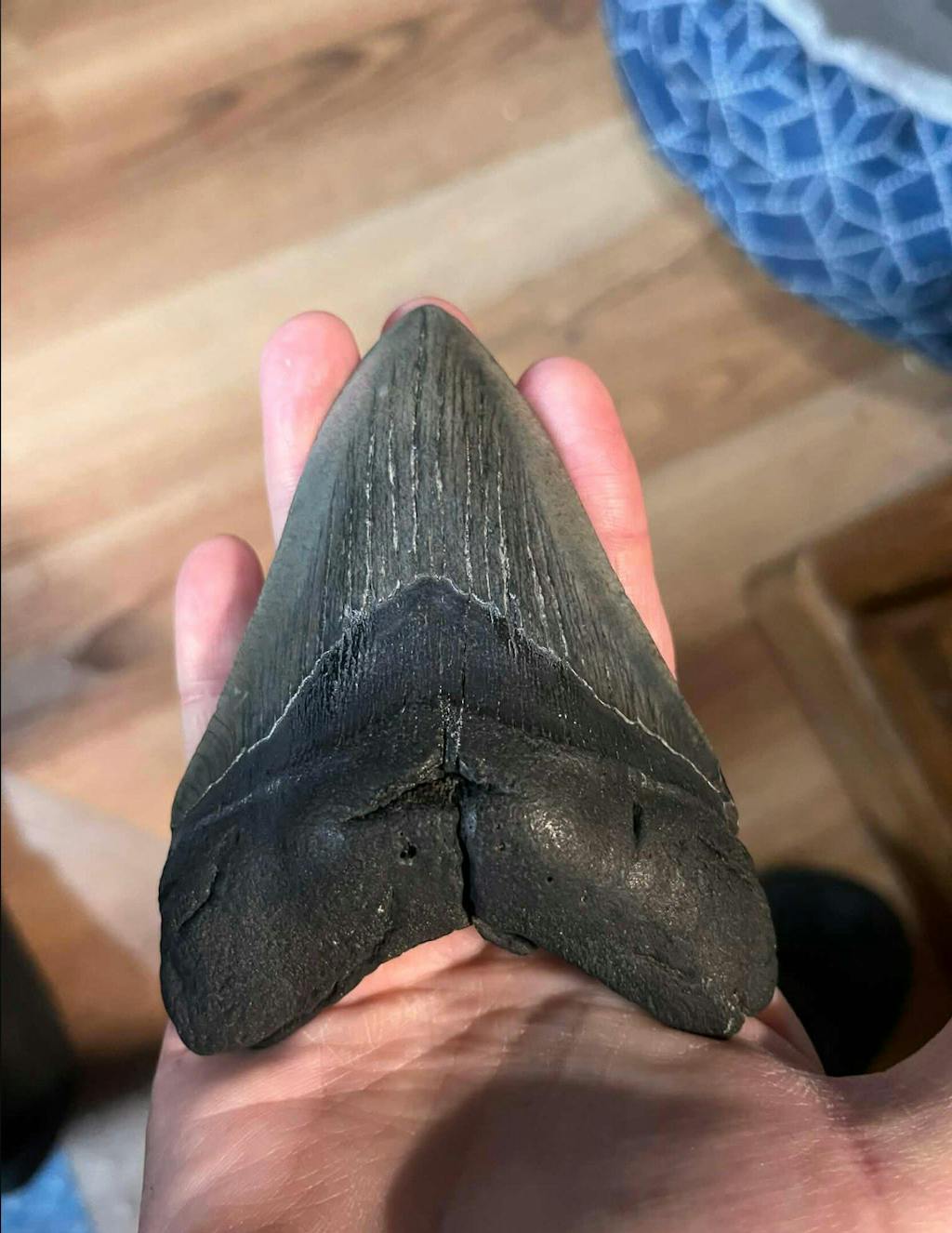
^ An example of a repaired megalodon tooth ^

^ An example of a restored megalodon tooth ^
What Does “Repaired” or “Restored” Mean?
Repaired or restored Megalodon teeth are fossils that have been altered after excavation to improve their appearance or completeness. Repairs are typically done with glue, filler, resin, or reconstruction materials. Restoration may include reattaching broken segments, filling in gaps, or even reshaping serrations.
These techniques can range from minor (stable glue repairs) to major (replacement of entire sections), and not all restorations are visible to the untrained eye.
Repaired Megalodon Teeth
Between repaired and restored Megalodon teeth, there’s no real easy way to spot the repair unless it's poorly done. Repaired megalodon teeth are usually teeth that are found broken, where two or more pieces of the same tooth match up perfectly. Sometimes these pieces are found together, or sometimes they can be found feet apart from each other. For the pictures shown, someone found this megalodon tooth broken, as you can see below. Instead of doing the repair work themselves, they sent it to a professional to get it done. The person glued the pieces back together and did some minor restoration work on it, making it seem like the tooth was never broken in the first place.


Restored Megalodon Teeth
Fossil Megalodon Teeth that have restoration are usually easier to spot than repaired Megalodon teeth. At least, in my personal opinion. But this, of course, usually depends on the restoration and whether the restoration was done by a professional or an amateur. There are people who have been restoring fossils for years, and sometimes, it's very difficult to spot where they restored a Megalodon tooth or a fossil in general. But no matter who has done the restoration, there will always be ways to spot and show where a fossil, or in this case, a megalodon tooth, has been restored. For the example picture below, you can see that most of the restoration done on this tooth was done to the enamel and the tip. The restoration work on this Megalodon tooth was done by a professional. So if someone doesn’t know what they’re looking at, they could argue that this was an all-natural Megalodon tooth. Even the serration work, which is generally very hard to replicate, is spot on.


Now, let's go into a bit more detail on the different types of restoration to look out for, how to spot them, and how to test to see if a tooth is restored or even repaired.
Restored Serrations
Out of all the ways to spot any restoration that's on a Megalodon tooth, serration restoration is probably the easiest to spot if it’s done poorly. Serrations on any fossil shark tooth, especially Megalodon teeth, are so distinct that it's very hard to replicate them flawlessly. Usually, people who restore fossils use paleo-bond or some sort of epoxy mixture. It is normally very difficult to mold and sculpt fine and detailed serrations perfectly unless you have a lot of patience, a steady hand, and a lot of skill. Since there are only a handful of people who do professional restoration on fossils, each person has different methods of replicating serrations. Below is an example of some restoration work done by a semi-professional. You can clearly see the distinct difference between all-natural serrations and the restored ones.

Below is an example of serration work that has been done by a professional. You almost can’t even tell that there has been restoration work done to this section of the tooth. But this artist has taken the extra time and effort to make sure the serrations look as natural as possible. This sort of restoration work is very hard to spot and usually can only be seen with a black light.

Photo Credit: Christian Hunt
Enamel Restoration
Enamel restoration can be tricky to spot. However, if the restoration and paint job are done by an amateur, the restoration can be very easy to spot. You will see enamel restoration on megalodon teeth that are usually 5 inches or larger. Most of the time, divers will find big megalodon teeth that have great serrations but they will have really bad enamel peel. Often enough, they will send these teeth to get the enamel restored and make the tooth look more appealing to a potential buyer. One of the most useful ways to spot for enamel restoration, just by looking at a picture, is checking where the enamel meets the bottom of the bourlette. There is a distinct difference between the restored enamel on a megalodon tooth and the all natural enamel just by looking at this area. It's very hard to describe what exactly to look for, so here are a couple of examples below.


Photo Credit: Christian Hunt
Root Restoration
Root restoration can be the hardest type of restoration to spot, especially if the restoration was done by a professional. There is no real big hint to spot root restoration in pictures or even just looking at a tooth in person. But there are ways you can test if a tooth has roots or any sort of restoration. We will go into more detail after this specific topic. Here are a couple of examples of root restoration.


Different Methods To Test For Repair Or Restoration
If you own a megalodon tooth and you think it's repaired or restored, there are a few different methods you can try to test your assumption.
Ultraviolet Light Testing
Ultraviolet light is a great way to test for any enamel restoration or any sort of broken pieces being reattached. Low ultraviolet light will make any natural enamel shine, while the dark spots show the repaired sections of a megalodon tooth. If it is repaired and there are any signs of glue where the megalodon tooth was reattached, the ultraviolet light will make the glue around the repaired area shine.

Acetone
Acetone will usually break down any glue that has been used in a repair or restoration, no matter how strong the glue may be. Even though this is a great way to test for root restoration and tooth repair, acetone can remove paint. So, unless you don't want to mess up your restored or repaired tooth, I would stick with the UV light method.

The Hot Needle Test
I wouldn't recommend doing this if you don't want to mess up your restored or replicated megalodon tooth. But if you don't care, then a hot needle test is good for showing if a megalodon tooth is fake or restored. The hot needle will melt into plastic or epoxy, but it won't damage something that's all-natural.
Importance of Authenticity
Purchasing a restored or repaired Megalodon tooth isn't inherently negative, especially if the restoration is well done and disclosed. However, undisclosed alterations can mislead buyers and affect the specimen's value. Always seek transparency from sellers and, when possible, request documentation of any restorations performed. This is why many collectors choose to buy a genuine Megalodon tooth from sellers who clearly disclose condition, repairs, and restoration work.
Written by: Brandon Zulli, owner of fossildriven.com
Related Reading
Want to learn more about fossil Megalodon teeth? Check out these other posts:
- Where Are Fossil Megalodon Teeth Found?
- How to Spot Repaired or Restored Fossil Teeth
- How Fossil Shark Teeth Are Priced
Explore the fossils that we have for sale: