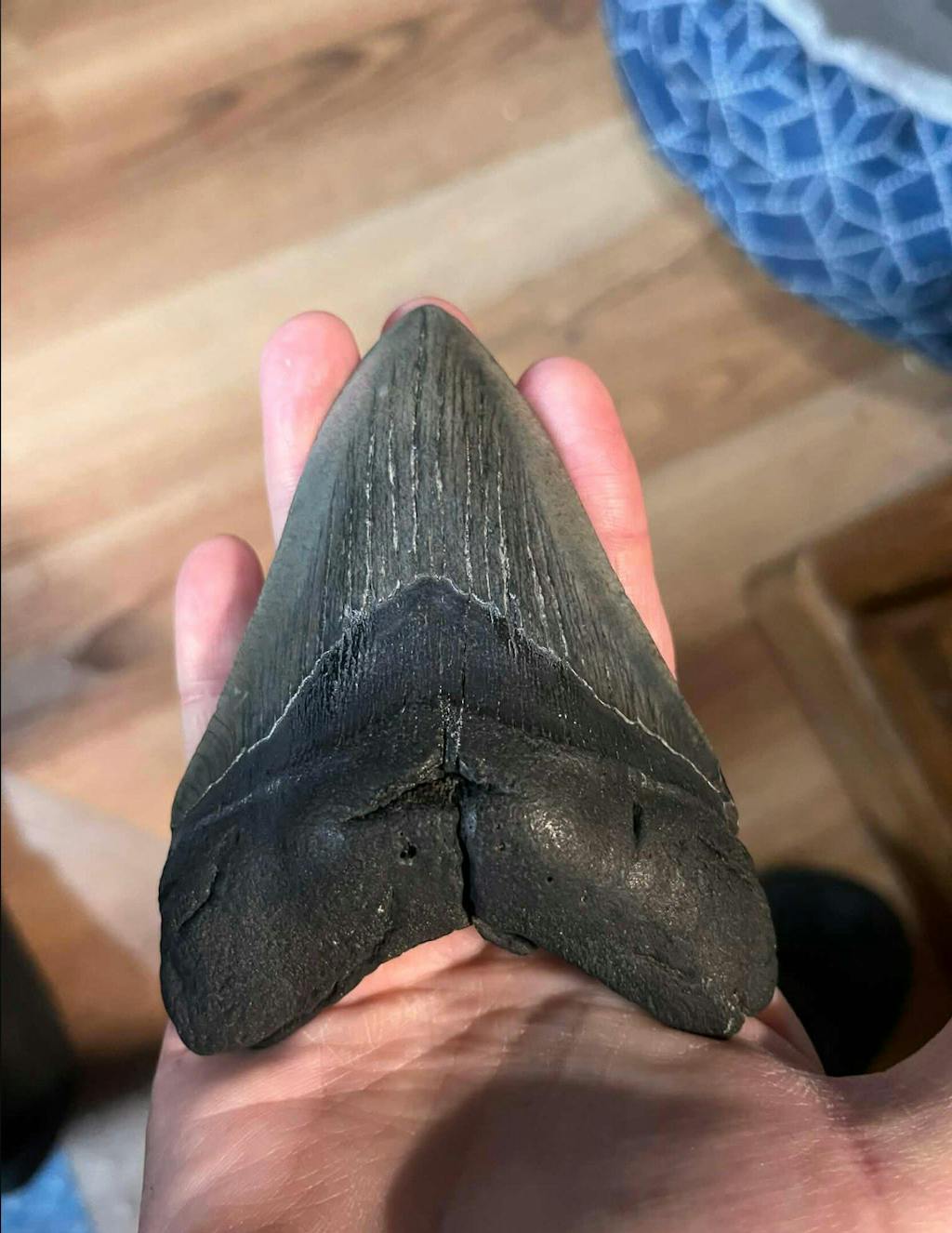

When Should You Restore a Fossil Megalodon Tooth? | Collector’s Guide
When Should You Restore a Fossil Megalodon Tooth?
Restoration is one of the most debated topics in the fossil collecting community, especially when it comes to fossil Megalodon teeth. Some collectors view restoration as a way to preserve history, while others believe it compromises authenticity and long-term value.
Interestingly, most authentic dinosaur fossils, whether from the Badlands of South Dakota or the Kem Kem Beds near Taouz, Morocco, have undergone some degree of restoration. In those cases, restoration is often accepted as part of preservation. But when it comes to Megalodon teeth, restoration is frequently viewed as a serious negative, if not an outright dealbreaker, by many collectors.
So the question becomes: when should a fossil Megalodon tooth be restored?
And when should it be left exactly as nature preserved it? The answer isn’t black and white. Like most things in serious fossil collecting, restoration does have a place, but only under very specific circumstances.
This guide will help you understand what restoration really means, when it may be appropriate, and how it affects the value, ethics, and collectability of Megalodon teeth.
What Does “Restoration” Mean in Fossil Collecting?
In fossil collecting, restoration refers to the addition of new material to a fossil in order to replace missing enamel, root, serrations, or structural sections. This process is fundamentally different from standard fossil repair or stabilization.
A restored Megalodon tooth may appear visually complete, but portions of what you see were not naturally formed by the shark millions of years ago. Instead, missing areas have been rebuilt using materials such as epoxy, resin, paleo-bond, or filler, then carefully sculpted and painted to mimic natural fossil structure.
For collectors, this distinction is critical. The extent and location of restoration can significantly impact a Megalodon tooth’s authenticity, desirability, and long-term value.
To clarify the differences:
- Restoration: Adding new material (epoxy, resin, filler, paint) to recreate missing fossil portions
- Repair: Reattaching original fossil material that has broken or separated
- Stabilization: Reinforcing cracks or fragile areas without altering the fossil’s original shape
Understanding these terms helps collectors make informed decisions and avoid unintentionally purchasing heavily altered specimens.
When Restoration May Be Appropriate
While untouched fossils are generally preferred, there are situations where restoration can be reasonable. Below are examples where a restored fossil Megalodon tooth may still make sense.
🦈 1. Educational or Museum Displays
Heavily restored Megalodon teeth can be acceptable for:
- Educational exhibits
- Teaching collections
- Public displays where durability matters more than perfection
In these settings, visual completeness can help communicate both scale and anatomy more effectively. A near-perfect specimen is less critical, while durability and ease of handling become far more important, especially for fossils that may be frequently displayed or examined.
🦈 2. Structural Preservation
In rare cases, minimal restoration may help prevent a fragile fossil from deteriorating further, particularly when a specimen would otherwise crumble or lose original material.
This is most commonly seen in fossils such as mammoth or mastodon teeth and tusks, but stabilization of Megalodon teeth is not uncommon, especially for specimens recovered from land sites where environmental exposure can cause structural weakness.
Even then, restoration should always be:
- Minimal
- Clearly documented
- Never concealed
🦈 3. Personal Display Preferences
Some collectors knowingly choose restored Megalodon teeth for personal reasons. These may include:
- Creating decorative or symmetrical display collections
- Choosing a more budget-friendly option for larger teeth
- Collecting for enjoyment rather than future resale value
There’s nothing wrong with any of these preferences, as long as restoration is fully disclosed. Dishonesty in the fossil community is one of the fastest ways to lose credibility and trust.
🦈 4. Rare Localities
In certain cases, collectors may restore a Megalodon tooth from a rare or restricted locality.
For example, a friend of ours acquired a Megalodon tooth from Peru, a location known for stunning coloration but limited legal availability. Although the tooth had a broken tip, the rarity of the locality justified careful restoration. Today, it stands as a highlight in his collection.


Photo Credit: Christian Hunt
In cases like this, restoration may be viewed as preserving the representative value of a scarce fossil rather than inflating its market value.
How and When Restoration Hurts Value (Most of the Time)
For serious collectors, restoration almost always reduces a fossil Megalodon tooth’s value.
Authenticity drives long-term collectability. Once original material is replaced, the specimen is permanently altered. While restoration can technically be removed, doing so often causes additional damage and rarely restores original value.
An authentic Megalodon tooth, even with damage, often holds more value than a visually “perfect” restored specimen, though this can depend on size, locality, and rarity.
When Does Restoration Hurt Megalodon Tooth Value?
If a Megalodon tooth comes from a common location, such as Meg Ledge off the coast of Wilmington, North Carolina, and falls within an average size range (around 3–4 inches), restoration is usually not worth it.
However, if a tooth approaches truly exceptional size, over 6½ inches or into the extremely rare 7-inch range, restoration may be considered, even though it will still be worth less than a pristine example of the same size. Ultimately, a Megalodon tooth is worth what a knowledgeable collector is willing to pay.
Similarly, teeth from highly regarded localities like Lee Creek, North Carolina, are prized by collectors. But extensive restoration, even on a desirable Lee Creek specimen, will significantly reduce value compared to an unrestored example.
Ethical Restoration & Full Disclosure
Ethics matter deeply in fossil collecting.
If a Megalodon tooth has been restored, sellers should:
- Clearly disclose all restoration work
- Explain exactly what areas were restored
- Provide before-and-after photos when available
- Never represent restored material as original
Undisclosed restoration is one of the fastest ways to lose trust in the fossil community. An example below is a great way for someone to keep trust within the fossil community. Especially if you're someone who constantly buys and sells fossils.


Photo Credit: Christian Hunt
At Fossil Driven, transparency is just as important as preservation.
So… Should You Restore a Fossil Megalodon Tooth?
In most cases, the answer is no.
Collectors seeking authenticity, long-term value, and scientific integrity are almost always better off choosing an unrestored Megalodon tooth, even with natural imperfections. Restoration does have its place, but that place is narrow, specific, and should never replace authenticity.
Wrapping Up
As a collector myself, I don’t mind restored Megalodon teeth, especially when they’re unique in size, shape, or locality. Personally, I often care more about how a specimen presents within my collection than its long-term resale value.
That said, every collector’s journey is different. What matters most is understanding your goals and making informed decisions that align with them.
Related Reading
- How to Spot Repaired or Restored Megalodon Teeth
- How Megalodon Teeth Are Priced
- Where Fossil Megalodon Teeth Are Found
👉 Explore our collection of authentic fossil Megalodon teeth for sale, each clearly documented and accurately represented.