
Where Are Megalodon Teeth Found? Global Locations Guide to Collecting | Fossil Driven
Where Are Fossil Megalodon Teeth Found? A Global Megalodon Tooth Locations Guide
Fossil Megalodon teeth are found in ancient marine sediments all over the world, from riverbeds in the southeastern United States to prehistoric seabeds exposed on desert floors. These remarkable fossilized Megalodon teeth are remnants of Otodus megalodon, one of the largest apex predators in Earth’s history, and they provide both collectors and enthusiasts a direct connection to prehistoric oceans.
Whether you’re interested in fossil Megalodon teeth for sale or dreaming of finding one yourself, this guide explores some of the most productive and famous Megalodon tooth locations on the planet, where these incredible fossils are found, what makes them unique, and what you might expect to discover there.
North America: Top U.S. Megalodon Tooth Locations


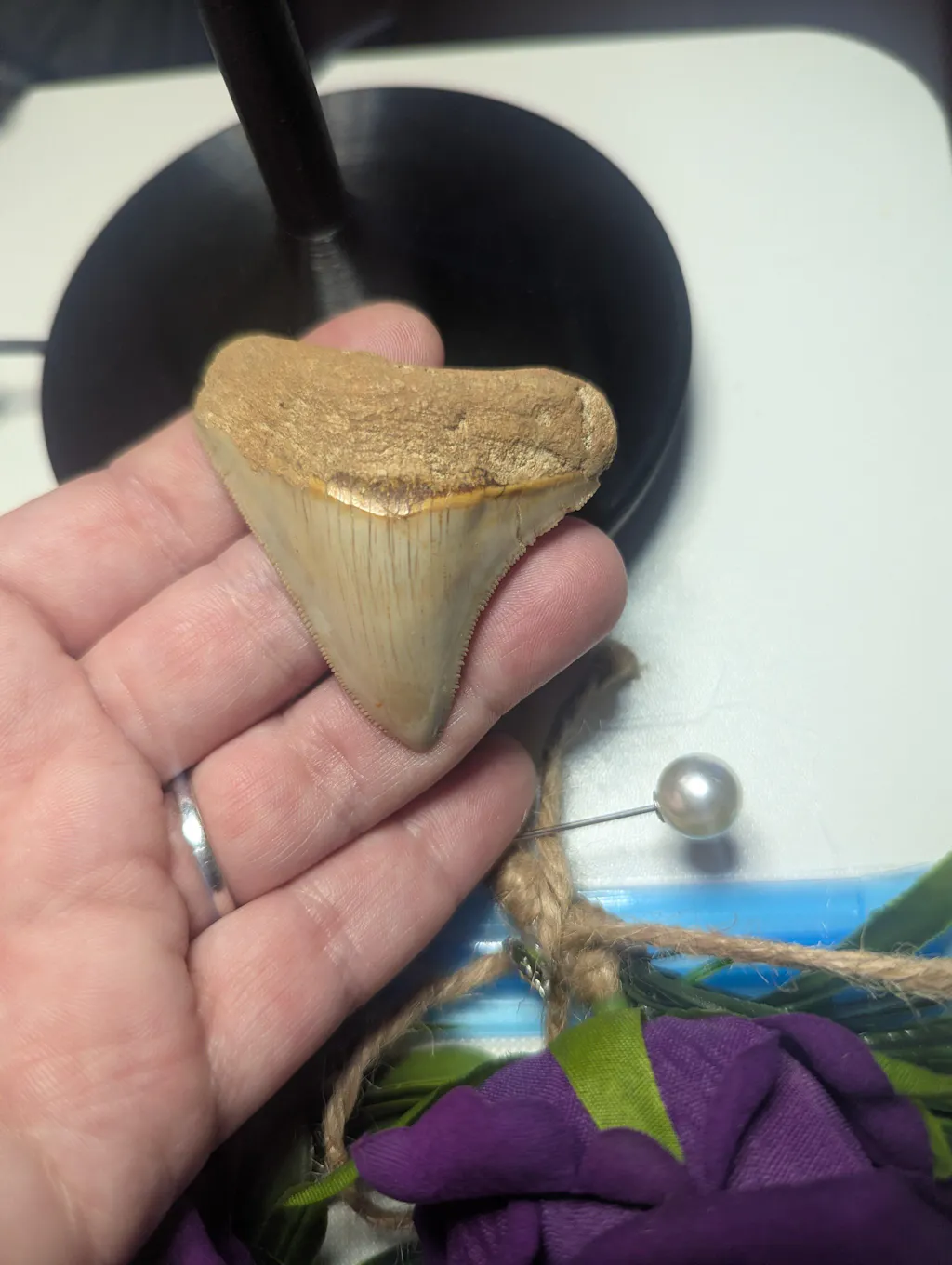
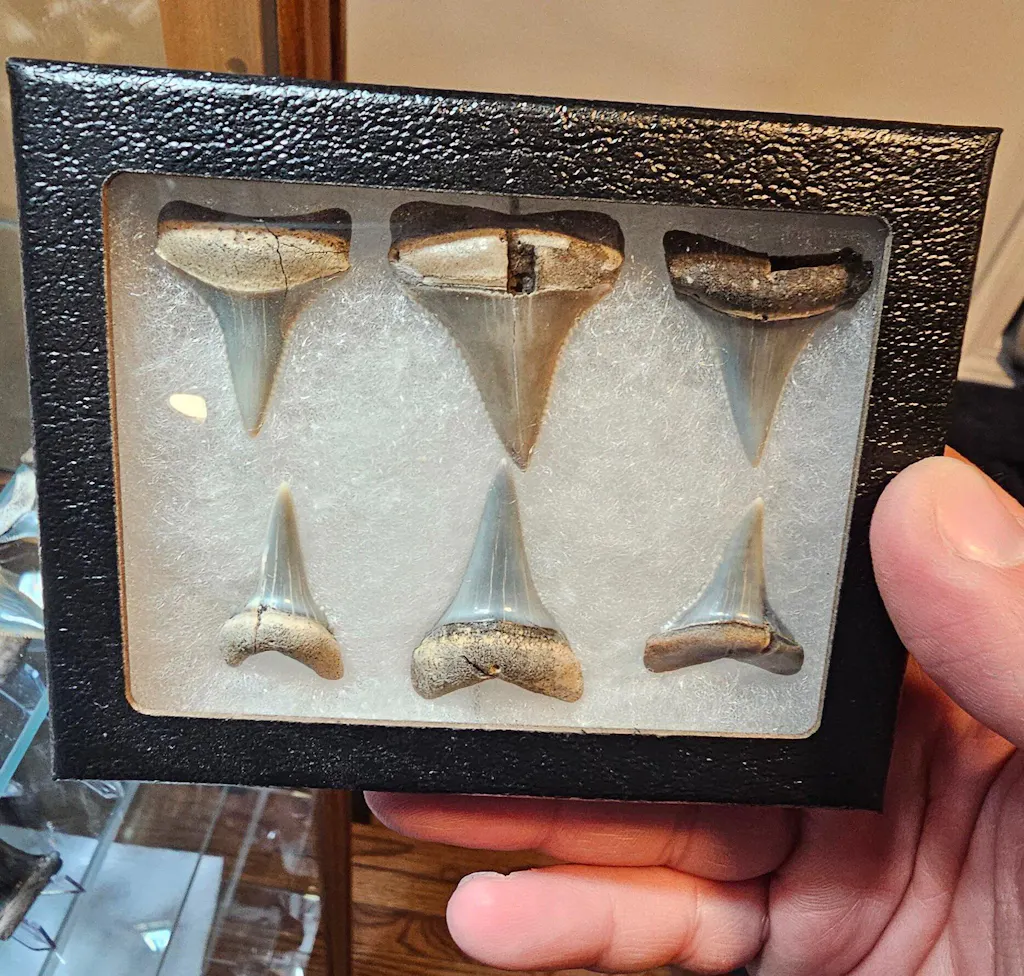
Venice, Florida: Venice is well known as the "Shark Tooth Capital of the World", and rightfully so. You can find a plethora of fossil shark teeth just by walking the beaches or sifting for them in the water. However, to find truly large teeth, like Megalodon fossil shark teeth, scuba diving is often required. There are normally three different varieties of Megalodon teeth found in this location: the standard Venice Beach tooth (top), a beautiful Manasota Beach tooth (middle), and the rare, highly sought-after Golden Beach tooth (bottom). Each megalodon tooth has its own unique characteristics.
Your typical Venice Beach Megalodon tooth will have your classic gray/bluish enamel, black bourlette, and root. Serrations on these meg teeth can be sharp or worn due to the constant wave action and currents along the ocean floor.
For Manasota Beach Megalodon teeth, these can have beautiful bourlettes. Some even have brown roots that contrast beautifully with their typical blue/gray enamels and colorful bourlettes. Nicknamed "Chocolate Top", Megalodon teeth.
Finally, Golden Beach Megalodon teeth. These meg teeth are fresh out of the clay layer and hold some of the best preservation for ocean teeth. They get their name from the beautiful, almost golden/tan roots and bourlettes, and often have a beautiful blue enamel with sharp and distinct serrations. These Megalodon teeth often resemble Bone Valley megs because they technically come out of the same layer, which extends into the Gulf.
Some popular local Venice, Florida charters include:
- Aquanutz Diving
- Black Gold Fossil Charters
- DustyDiscoveries Fossil Charters
- Top2Bottom Offshore Charters

The Peace River, Florida: The Peace River is another well-known area to find megalodon teeth and other fossils. This location is especially popular for individuals or families who are just getting into the hobby. With the seemingly endless creeks branching off the Peace River, the chances of finding a Megalodon tooth can be fairly good. This is especially true if you find an area that has not been explored yet. However, most Megalodon teeth from the Peace River tend to be smaller, are often brown, gray, or black in color, and are usually worn or broken.
For those who are looking for some great charters to take you out on the Peace River or adjacent creeks, I'd highly recommend the two businesses below:

Bone Valley (Central), Florida: Bone Valley is a region of central Florida that encompasses portions of present-day Hardee, Hillsborough, Manatee, and Polk counties. The area is heavily mined for phosphate used in agricultural fertilizer production. Megalodon teeth from this location often display a wide range of colors, including blues, blacks, grays, oranges, greens, and even white. The classic Bone Valley coloration is usually a bone white root with a blue blade. The orange, green, multicolored, and black teeth with white roots are usually considered to be more on the rare side and tend to be pricier. Unfortunately, Megalodon teeth can no longer be legally collected from this location. Trespassing within the mines can result in hefty fines and felony charges.
Suwannee River, Florida: Located in North Western Florida, the Suwannee River produces some of the most uniquely colored megalodon teeth in the whole state. The deposits that produce shark teeth on the Suwannee are either late Eocene or early Oligocene. As a result, finding Megalodon teeth from the Suwannee River is extremely rare. In fact, the owner of the tooth shown above has only documented two Megalodon teeth from this river over many years of hunting and collecting. The rest have been nothing but large auriculatus shark teeth. An ancestor of the megalodon shark.

Gainesville, Florida: Gainesville is another well-known area in Florida that produces some very colorful megalodon teeth. The fossil shark teeth that you generally find here are all found digging in creeks that usually cut through neighborhoods throughout the area. Unfortunately, fossil hunting in this area was recently banned due to people digging into the creek banks, which caused erosion. So if you're caught using tools digging in the creeks for that colorful megalodon tooth, you will be fined or sent to jail. Again, not worth the trouble. However, this does not mean you cannot still find fossil shark teeth by carefully scooping gravel in creeks by hand.

Seminole Springs, Florida: Seminole Springs is a small town in northern Florida that is now fully developed with houses, parks, schools, etc. During the town’s development, fossil Megalodon teeth and other shark teeth were occasionally found while retention ponds were being excavated. This specific juvenile megalodon tooth is from that time when the town was being developed. To my knowledge, you can no longer find megalodon teeth from this location unless new construction happens.

White Springs, Florida: White Springs is a small town in northern Florida that is now fully developed with houses, parks, schools, etc as well. Similar to Seminole Springs, fossil shark teeth, including Megalodon teeth, were occasionally found in retention ponds during periods of development. This specific juvenile megalodon tooth is from that time when the town was being developed.

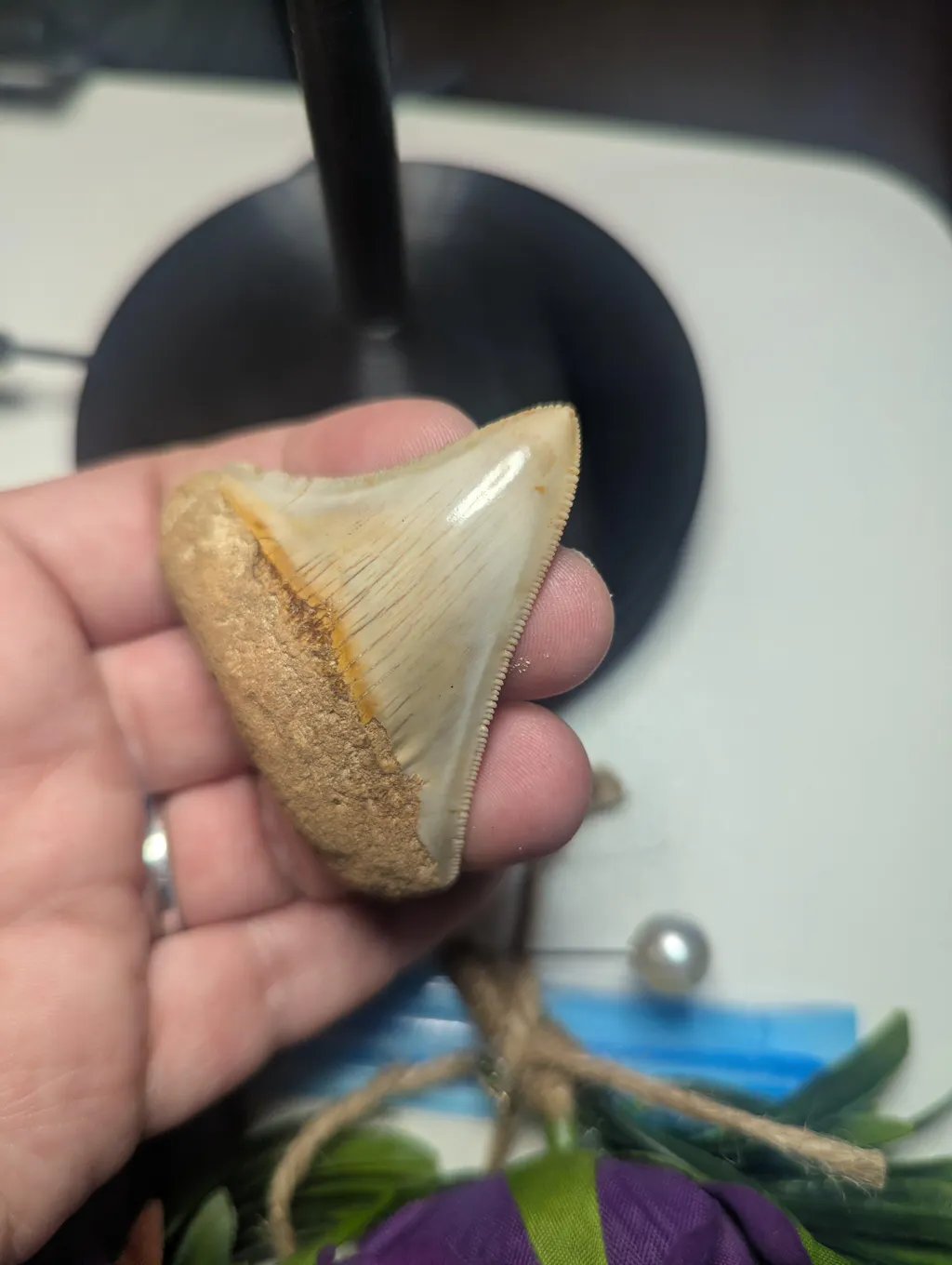
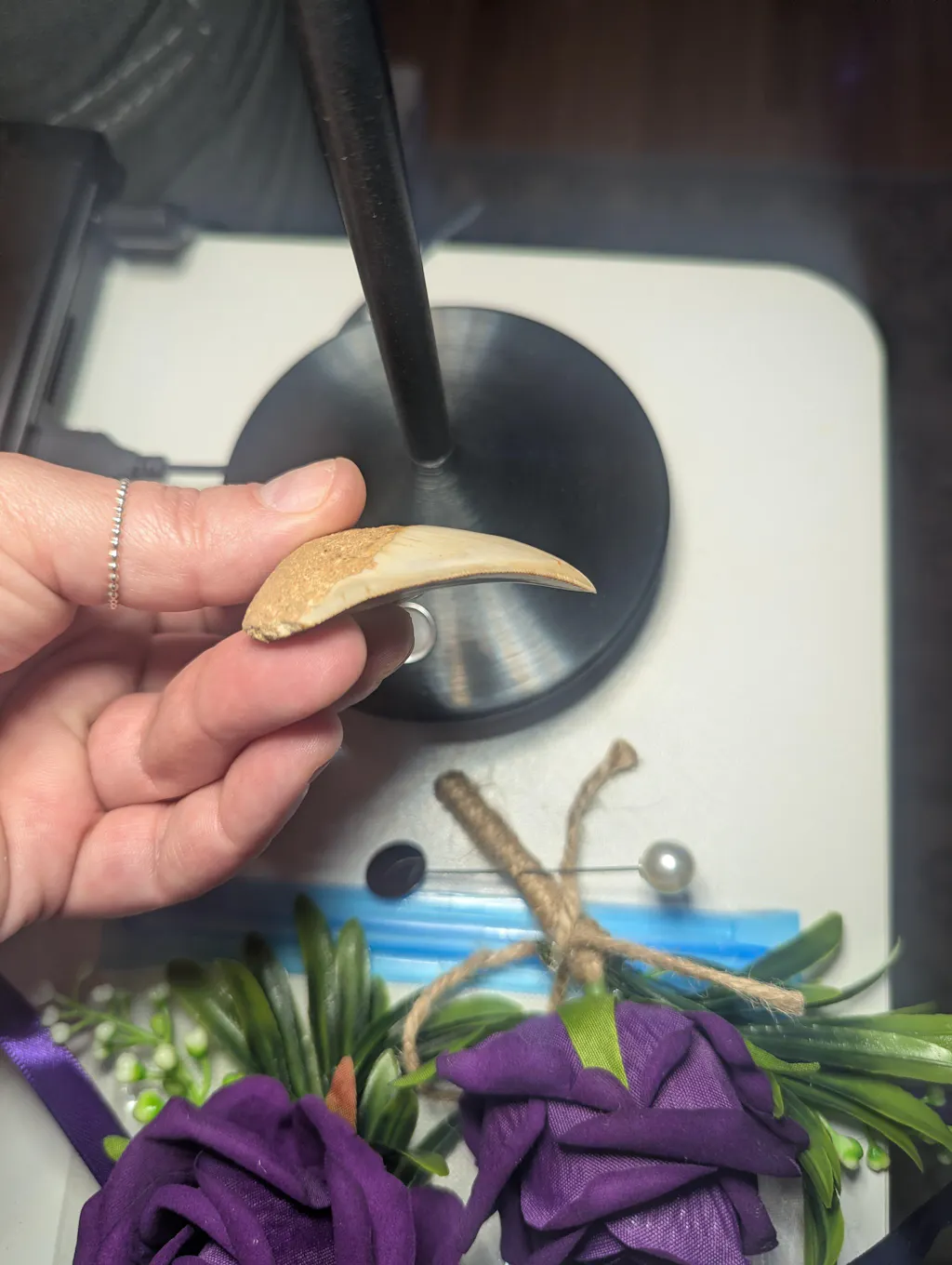
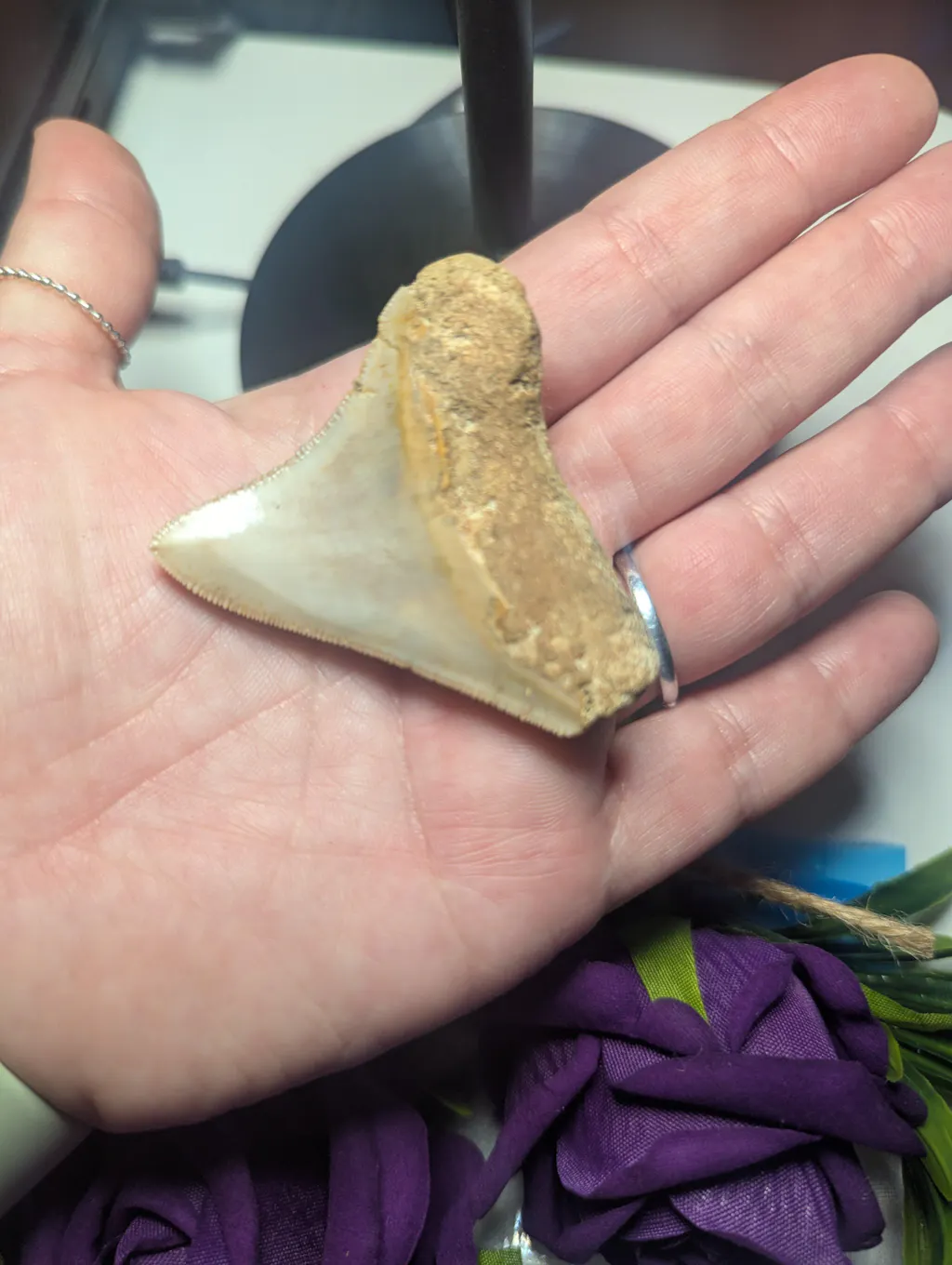
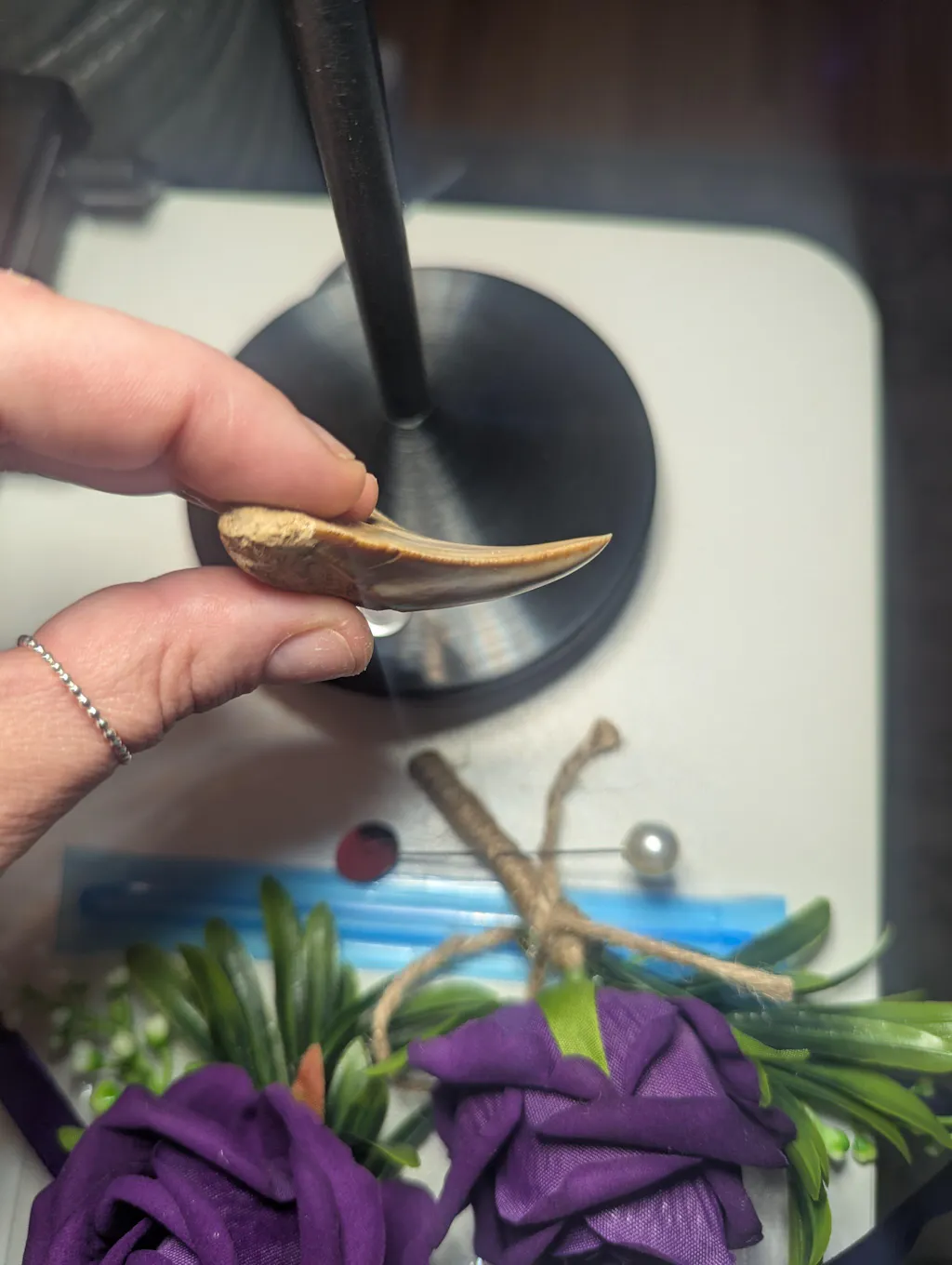
St. Augustine, Florida: A fossil megalodon tooth from a different and very rare location in Florida. In this part of North Florida, the Miocene fossil deposits are deep and are almost never naturally exposed. Which is why megalodon teeth from this location are so rare to come by. These teeth were found years ago when a digging operation uncovered a single fossil deposit at a depth of roughly 80 feet. The deposit was worked out and did not continue, so these are no longer being found. All megalodon teeth from this location have been left uncleaned to show the unusual characteristics (mostly attached limestone), which is almost never seen on fossil shark teeth this age from other locations. A very cool & unique location for Florida.
North America - Georgia Locations


Savannah, Georgia: Teeth from this location can only be found while diving. They are typically recovered at depths ranging from 30 to 80 feet, where visibility is often limited to just a few inches. As a result, most collectors rely on feeling for teeth rather than spotting them visually, unlike in places such as Venice, Florida.


The St. Mary’s River: This is another diving location that’s located on the Florida-Georgia borderline. Teeth recovered from this river are normally beaten up, broken, or heavily worn. However, when intact specimens are found, their color and overall quality can be absolutely incredible. The typical colors from the St. Mary’s River include reds, browns, tans, bluish grays, and blacks.
North America Locations - South Carolina


Beaufort, South Carolina: Similar to Georgia, these teeth are normally found in rivers with very low visibility. Collectors often have to feel around for teeth with only inches of visibility along the river bottom. On top of that, there is the potential presence of alligators or bull sharks. Despite these challenges, teeth from this location are typically more common than in other areas.

Gold Site, South Carolina: This specific site, located in South Carolina, was found accidentally by a couple of divers. Megalodon teeth recovered from this site were often worn or damaged, but they displayed striking golden and bluish coloration. Because of this distinctive coloration, the location became known as The Gold Site.

Battery Creek, South Carolina: Battery Creek is a location that branches off from the main river that cuts through Beaufort, South Carolina. Like the main river it branches from, Battery Creek is very dark, and collectors typically have to feel for the Megalodon teeth they are searching for. However, the teeth recovered from this location are often extremely well-preserved, beautiful, and sharp.


Summerville, South Carolina: Unlike other South Carolina locations, most, if not all, fossil Megalodon teeth from Summerville are found on land sites or in nearby creeks. Teeth found on land are most commonly recovered from construction sites where new homes, parks, or commercial areas are being developed.


Ashepoo River, South Carolina: Like many rivers in South Carolina, the Ashepoo River has extremely low visibility, and nearly all finds are made by feel rather than sight. The river is also considered dangerous to dive in due to the large amount of downed trees and submerged debris. Because of both the danger and rarity, fossil Megalodon teeth from this location can often command higher prices than those found near Beaufort.

Blue Site, South Carolina: This is another location that was found by accident by a group of fossil hunters who were scouting landsites. This site produced some particularly gorgeous Megalodon teeth with blue and tan coloration. Since then, the site has been built over by homes, and no new Megalodon teeth are currently coming from this location.


Fire Site, South Carolina: This specific site produces some gorgeous megalodon teeth. The coloration of these teeth resembles a burning fire, which is how the site earned its name. This site is located within a specific stretch of river, and the roots of the teeth are often worn down and soft. As a result, most teeth from this site typically require some level of restoration to the root.
North America Locations - North Carolina

Lee Creek, North Carolina: Known for producing tan, blue, and cream-colored Megalodon teeth, Lee Creek is a very popular fossil locality. Especially, fossil megalodon teeth. The coloration of these teeth comes from the phosphate-rich sediments in which they fossilized over millions of years. However, they do not get the same coloration as Bone Valley teeth. This location was once open to collectors but has since been closed to the public. Fossil hunting within the mines is now illegal due to safety concerns.

Meg Ledge, North Carolina: Located approximately 30–40 miles off the coast of Wilmington, North Carolina, Meg Ledge is well known for its abundance of commercial-quality Megalodon teeth. These teeth occur in a variety of colors but rarely appear black or gray, unlike some Megalodon teeth found in South Carolina rivers.

Greens Mill Run, North Carolina: Not much is known about this location, including whether this tooth was found in a creek, on land, or in a river. This Megalodon tooth was recovered somewhere within the area and is the only specimen from this location that I am personally aware of.

Meherrin River, North Carolina: The Meherrin River is well known for producing red and orange-toned fossil shark teeth. However, like many rivers in the Carolinas, diving conditions are often poor. Despite the conditions, Megalodon teeth recovered from this river can display absolutely stunning coloration.
North America Locations - Virginia

Virginia River, Virginia: Similar to the Fire Site and the Meherrin River, teeth from the Virginia River can display some incredible coloration. Reds, oranges, blacks, and tans are common, and this multicoloration is heavily sought after by high-end collectors.

Potomac River, Virginia: Not much is known about this river as a fossil locality. This specific Megalodon tooth is one of the very few specimens I am aware of that came from this location. Overall, this is a gorgeous tooth with striking blue and white coloration.
North America Locations - Maryland

Calvert Cliffs, Maryland: Calvert Cliffs is a well-known fossil location in Maryland. The area can be accessed through a designated state park or by boat to reach different sections of beach along the cliffs. Tides must be carefully timed to safely hunt this location.
The area can also be dangerous, as material frequently falls from the cliffs, so collectors should avoid standing too close. Megalodon teeth found here are typically on the smaller side, but larger specimens are occasionally recovered.
North America Locations - California

Bakersfield, California: Bakersfield is one of the few locations in California where fossil Megalodon teeth can be found, along with other shark species such as mako and cow sharks. Teeth recovered from this area can display beautiful coloration and are highly sought after due to their rarity.
International Locations

Argentina: Fossil Megalodon teeth found in Argentina, especially within the Chubut Province, are among the rarest Megalodon shark teeth on the market. These Megalodon tooth fossils are frequently mistaken for Otodus chubutensis due to small residual cusplets near the root, an evolutionary trait seen in transitional species. However, genuine Megalodon teeth from Argentina are prized for their strong enamel preservation and unique mineral coloration, comparable to high-quality Megalodon fossils recovered from Chile and Peru.

Australia: Fossil Megalodon teeth from Australia are among the rarest Megalodon tooth fossils known, most often preserved in hard limestone deposits within Western Australia’s Cape Range National Park. Although discoveries are limited, multiple authentic Megalodon teeth have been recovered by the Western Australian Museum, with additional finds reported along the Ningaloo Coast and in the Gascoyne Marine Park. These fossils require meticulous extraction due to the dense limestone matrix, and all fossil Megalodon teeth in Australia are legally protected, making private collecting or removal from national parks strictly illegal.

Austria: Fossil Megalodon teeth discovered in Austria are exceptionally rare, with notable specimens originating from the Middle Miocene (Badenian) Lajta Limestone deposits at Szentmargitbánya (St. Margarethen). These Megalodon tooth fossils often display excellent enamel preservation and, at times, sharp serrations, making them highly desirable among advanced collectors. While far less common than fossil Megalodon teeth from the United States, Austrian finds confirm that this apex predator flourished in the prehistoric Paratethys Sea that once dominated parts of Europe.

Belgium: Fossil Megalodon teeth found in Belgium, especially within the Antwerp region, are uncommon and rarely recovered in high condition. These Megalodon tooth fossils are prized by collectors, as most fossil shark teeth discovered locally belong to Isurus hastalis. Authentic Megalodon teeth from Belgium are typically recovered from clay mines in Kruibeke or near Steendorp, as well as from sediments along the Scheldt River. While many specimens retain strong enamel preservation and well-defined blades, root wear is common due to prolonged burial in clay-rich environments.
Fun Fact: The Royal Belgian Institute of Natural Sciences in Brussels houses a significant collection of Megalodon vertebrae and associated fossil teeth, including specimens analyzed for long-distance and comparative research studies.

Bulgaria: Fossil Megalodon teeth found in Bulgaria are most often recovered near the Black Sea, preserved within Miocene-age marine sediments that once formed part of an ancient shallow sea. These Megalodon tooth fossils are relatively uncommon, but occasional discoveries along coastal geological formations have produced well-preserved specimens with strong enamel and defined blade structure. While Bulgaria is not widely known as a major Megalodon tooth locality, these finds confirm that Megalodon inhabited parts of the prehistoric Paratethys and adjacent marine systems that extended into Eastern Europe.

Chile: Fossil Megalodon teeth that are found in Chile, particularly from the Late Miocene-Pliocene Bahia Inglesa Formation in the Atacama Desert, are renowned for their exceptional preservation, multicolored enamels, and massive size, including some of the largest ever recorded. Due to a 2006 ban on collecting in these protected areas, authentic Chilean Megalodon teeth are rare, highly valued, and largely restricted to older collections.

Cuba: Fossil Megalodon teeth found in Cuba are among the rarest Megalodon tooth fossils available to collectors. Prized for their pale tones and occasional multicolored enamel, these authentic Megalodon teeth are most commonly recovered from limestone deposits near Pinar del Río. Because many specimens are extracted during quarrying activities, minor repair or stabilization is sometimes necessary, though well-preserved examples remain highly sought after.

England: Fossil Megalodon teeth found in England, particularly from Suffolk (Bawdsey Beach) and parts of Norfolk, are extremely rare and originate from Miocene–Pliocene marine deposits such as the Red Crag Formation. These Megalodon tooth fossils are typically heavily worn due to prolonged coastal reworking, and most examples show significant rounding and enamel loss. However, a small number of higher-quality specimens have been reported, occasionally retaining partial enamel and recognizable blade structure, making them exceptional finds for collectors.

France: Rare fossil Megalodon teeth have been discovered in France, particularly within Miocene-aged shell and limestone deposits of the Loire Valley, most notably in Touraine and Channay-sur-Lathan, as well as in the Hérault region. These Megalodon tooth fossils are typically distinguished by light tan to gray enamel paired with well-preserved tan to brown bourlettes. Due to their limited geographic distribution and consistent preservation characteristics, authentic Megalodon teeth from France are highly sought after by collectors and remain uncommon on the fossil market.

Hungary: Fossil Megalodon teeth discovered in Hungary are primarily recovered from abandoned gravel pits and limestone quarries in the Transdanubian region, particularly near Nyirád, Sümeg, and within the Leitha (Lajta) Formation. These Megalodon tooth fossils, including specimens from the Kolontár Member of the Pusztamiske Formation and the Leitha Limestone, demonstrate that large portions of present-day Hungary were once submerged beneath a shallow prehistoric sea inhabited by these apex predators. While fossil shark teeth are relatively common in these deposits, large, well-preserved Megalodon teeth are rare, with smaller or partially damaged specimens being far more frequently encountered.

Italy: Fossil Megalodon teeth found in Italy are significantly rarer than those recovered in the United States and are highly collectible among advanced collectors. These Megalodon tooth fossils are frequently misidentified as Otodus chubutensis due to the presence of small residual cusplets near the root, an evolutionary trait common in transitional species. Despite this confusion, authentic Megalodon teeth from Italy are prized for their strong overall preservation and, in some cases, sharp blade structure. Most Italian Megalodon teeth are recovered from limestone and marine deposits near the Apennines, including the Majella region, as well as Tuscany and other coastal areas.
Megalodon Shark Fact: Early scientific studies of fossil shark teeth, known historically as glossopetrae, were conducted by Italian naturalist Fabio Colonna in 1616. His work correctly identified these objects as fossilized shark teeth rather than stones, laying early groundwork for the scientific understanding of Megalodon teeth.

Malta: Fossil Megalodon teeth from Malta are most commonly recovered from the island’s soft yellow limestone deposits, which date to the Miocene epoch (approximately 23 million years ago). These Megalodon tooth fossils are frequently misidentified as Otodus chubutensis due to the presence of small residual cusplets near the root, an evolutionary trait typical of transitional species. However, Malta’s Miocene-aged deposits do genuinely produce fossil Otodus chubutensis shark teeth, making accurate identification especially important for collectors and researchers working with material from this region.
Megalodon Shark Fact: A 23-million-year-old fossil shark tooth discovered in Malta by Sir David Attenborough in the late 1960s was gifted to Prince George in 2020, later prompting public discussion in Malta regarding the return of the specimen as part of the island’s natural heritage.

Photo Credit: Sean Stout
Japan: Fossil Megalodon teeth found in Japan date back to the Miocene–Pliocene epochs and are considered scientifically significant for understanding the biology and behavior of this prehistoric apex predator. While Megalodon teeth from Japan are relatively rare, the country has produced some of the most important Megalodon fossil evidence in the world.
One of the most notable specimens is a large 4.7-inch Megalodon tooth (measured excluding the root) currently displayed at the National Museum of Nature and Science in Japan. This tooth represents one of the largest authenticated Megalodon crown heights known from East Asia and highlights Japan’s importance in the global fossil record of Otodus megalodon.
Japan is also unique for yielding fossil Megalodon scales (placoid scales), discovered in Saitama Prefecture, specifically in Fukaya City (formerly Kawamoto Town). These rare fossils date to approximately 10 million years ago and have played a crucial role in shaping modern scientific interpretations of Megalodon's swimming behavior. Analysis of these scales suggests that Megalodon may have been a slower, more energy-efficient swimmer than previously assumed, relying on size and ambush rather than speed.
Japanese Megalodon fossils are typically recovered from Neogene marine deposits, which indicate that parts of Japan were once submerged beneath warm, productive seas capable of supporting massive marine predators. Ongoing research on these specimens frequently involves collaboration between international paleontologists and institutions such as the Saitama Museum of Natural History and the Gunma Museum of Natural History.
Although Megalodon teeth from Japan are rarely available to collectors, their scientific value is exceptionally high, and they remain among the most important fossils for understanding Megalodon anatomy, ecology, and global distribution.

Mexico: Fossil Megalodon teeth found in Mexico, particularly from Baja California and inland cenotes such as Cenote Xoc, are relatively rare, especially in higher-end condition. These Megalodon tooth fossils are often large and thick but commonly show significant wear, a trait especially associated with specimens recovered from Baja California marine deposits. In 2019, divers documented the discovery of more than 15 Megalodon teeth, along with other prehistoric fossils, within a cenote near Cholul, Mexico. As with several other fossil-rich countries, Mexico enforces strict laws regulating fossil collection and prohibiting the export of fossils and antiquities, making authentic Mexican Megalodon teeth uncommon on the open market.


Morocco: Fossil Megalodon teeth discovered in Morocco are most commonly recovered from Miocene-aged deposits near Dakhla in the Western Sahara. This region is well known for producing Megalodon tooth fossils with striking natural color variations, ranging from creamy tans and grays to vivid oranges and deep reds, caused by mineralization within phosphate-rich desert sediments. These fossil Megalodon teeth typically date to approximately 14–15 million years old and formed in what were once shallow prehistoric seas. While many Moroccan Megalodon teeth are smaller or show damage from environmental exposure, high-quality, authentic specimens with strong enamel preservation are highly sought after and prized by collectors.
Important Note: Due to high demand, it is extremely important to check for any signs of restoration or repair. Always buy from reputable, honest sellers if you're looking for a fossil Megalodon tooth from this location.

New Caledonia (South Pacific):
Fossil Megalodon teeth from New Caledonia are rare deep-sea Megalodon tooth fossils recovered from Miocene-aged marine deposits in the South Pacific. Dredged from depths of approximately 1,000 feet, these specimens are prized for their exotic origin, light ivory coloration, and extreme scarcity following the halt of dredging operations in 2003. Located in the South Pacific, roughly 800 miles east of Australia, this small offshore area produced some of the most distinctive fossil Megalodon teeth ever recovered.
These Megalodon teeth are best known for their light tan to creamy ivory coloration, often caused by manganese staining from prolonged exposure on the deep-sea floor. While many examples show heavy wear due to dredging and oceanic erosion, select specimens exhibit remarkable preservation, occasionally retaining intact serrations and strong enamel structure.
Most New Caledonia Megalodon teeth were recovered during commercial dredging operations in the early 2000s, particularly by vessels such as the TUI 2. These operations frequently yielded anywhere from 15 to over 100 Megalodon teeth per pass. However, all officially permitted dredging ceased in 2003 following the revocation of French government permits, making these fossils finite and increasingly scarce on the market.
Today, authentic New Caledonia Megalodon teeth are considered a true “exotic locality” find and are highly sought after by serious collectors for their rarity, deep-sea origin, and unique non-black coloration. Many of these fossils are marketed as South Pacific Megalodon Teeth, a designation that reflects both their origin and exclusivity.

Philippeans: In the Philippines, the discovery of Megalodon (Otodus megalodon) teeth provides rare evidence of the prehistoric shark's presence in the region during the Miocene to Pliocene epochs, which are approximately 23 to 3 million years ago. These fossils are primarily found in provinces that were once submerged under ancient tropical seas, most notably Bohol, Pangasinan, and Cagayan.


Peru (Ocucaje Desert): Peruvian fossil Megalodon teeth are considered among the most desirable Megalodon shark fossils in existence, prized for their record-breaking size, exceptional preservation, and extreme rarity due to export restrictions.
Peruvian Megalodon teeth are renowned for their exceptional size, sharp serrations, and striking coloration. Due to unique mineralization in the arid desert soils, these fossils often display deep black, dark brown, tan, or even multicolored enamel, frequently with excellent structural preservation. Many specimens show minimal wear, making them visually stunning and highly collectible.
Most notably, the largest authenticated Megalodon tooth ever recorded, measuring 7.48 inches, was discovered in the Ocucaje Desert. This world-record specimen cemented Peru’s reputation as one of the most important Megalodon fossil sites on Earth.
Beyond aesthetics, these fossil Megalodon teeth provide valuable scientific insight. Some specimens preserve clear evidence of feeding damage, including breakage consistent with biting large prey such as prehistoric whales, offering direct clues into Megalodon's hunting behavior and diet.
However, authentic Peruvian Megalodon teeth are increasingly rare on the market. Peruvian law strictly prohibits the export of paleontological material, meaning legally obtained specimens are typically restricted to older collections or museum-grade holdings. As a result, genuine Peru Megalodon teeth are highly prized by serious collectors and often command premium values.

Poland: Fossil Megalodon teeth found in Poland are rare but scientifically significant, providing clear evidence that Otodus megalodon once inhabited European marine environments during the Miocene and early Pliocene epochs. These Megalodon tooth fossils are typically recovered from Miocene-aged marine sediments in southern Poland, a region that was once part of the Central Paratethys Sea.
Polish Megalodon teeth are often characterized by their large size, thick enamel, sharp serrated edges, and a distinct chevron-shaped bourlette. Most specimens are discovered as isolated teeth rather than associated finds, reflecting natural tooth shedding in ancient marine settings. Preservation commonly includes dark, iron-stained enamel and roots, indicating fossilization in mineral-rich marine sediments.
While Poland does not produce Megalodon teeth in the quantities seen in the United States, these fossils are highly valued by collectors and researchers alike due to their European provenance. Some specimens display wear patterns or occasional breakage consistent with high-force feeding behavior on large marine mammals, offering insight into Megalodon hunting strategies.
From a scientific perspective, fossil Megalodon teeth from Poland highlight the truly global reach of the Megalodon shark, reinforcing its status as the largest and most widespread apex predator to ever inhabit Earth’s oceans.

Portugal: Fossil Megalodon teeth from Portugal are rare, high-value specimens that provide important insight into Otodus megalodon inhabiting the ancient Atlantic during the Miocene and Pliocene epochs. These Megalodon tooth fossils are primarily discovered off Portugal’s western coast, particularly near Peniche and Lourinhã, with additional finds reported along Lisbon-area beaches and near the Tagus River.
Many Portuguese Megalodon teeth are recovered from offshore depths ranging from approximately 80 meters to over 2,000 meters, often brought up accidentally by fishing nets or dredging activity. Some specimens are found embedded within turbidite blocks, a type of sedimentary rock that suggests deposition in deeper marine environments along the continental shelf. This geological context indicates that Megalodon thrived in temperate-to-warm Atlantic waters during this period.
Portuguese Megalodon teeth typically display robust blades, pronounced serrations, and thick enamel consistent with other Atlantic Megalodon finds. While quantities are limited compared to major fossil hotspots like the southeastern United States, preservation quality can be excellent. Several important specimens are housed in the Lourinhã Museum, highlighting Portugal’s role in European Megalodon research.
Because of their rarity, offshore recovery, and scientific importance, fossil Megalodon teeth from Portugal are highly sought after by collectors and institutions. These finds help confirm the broad geographic range of Megalodon across European Atlantic waters and contribute valuable data on prehistoric ocean conditions.

Spain: Fossil Megalodon teeth discovered in northeastern Spain, particularly in the Tarragona region of Catalonia, have provided some of the strongest evidence to date that Megalodon used specific coastal areas as shark nurseries during the Miocene epoch. These Megalodon tooth fossils are notably smaller than typical adult specimens, suggesting the area served as a shallow, warm-water habitat ideal for juvenile Megalodons.
Scientific studies examining more than 25 fossil Megalodon teeth from Catalonia determined that the specimens belonged to young Megalodon sharks, not fully grown adults. Based on tooth size and morphology, researchers estimate these juvenile Megalodons measured approximately 2.6 meters (8.5 feet) in length, significantly smaller than the massive 15+ meter adult Megalodon.
The presence of juvenile Megalodon teeth strongly supports the theory that Megalodon exhibited behavior similar to modern sharks—using protected coastal environments to raise their young before migrating into deeper offshore waters. These findings are especially important because Megalodon nursery sites are exceedingly rare in the fossil record.
Spanish Megalodon fossils from this region date to roughly 10–15 million years ago, during the Miocene, and are associated with shallow marine sediments indicative of a thriving, nutrient-rich ecosystem. While adult Megalodon teeth are uncommon in Spain, the scientific value of these juvenile specimens far outweighs their size.
These discoveries have helped reshape our understanding of Megalodon's life history and confirm that Europe played a critical role in the early development of the world’s largest predatory shark.

Tanzania: Megalodon (Otodus megalodon) teeth from this location are extremely rare. They're primarily concentrated along the coast and on nearby islands where ancient marine sediments are exposed. Unlike the more frequent discoveries from certain locations like the Philippines, Tanzanian specimens are less documented in mainstream media, but hold high value for local fossil collectors.
Written by: Brandon Zulli, owner of Fossil Driven
Explore our fossil megalodon collections below: