
Introduction
In an era defined by technology, instant gratification, and constant change, it might seem extremely weird that people still spend hours digging in creeks, diving in rivers and oceans, or getting muddy walking landsites during the day and night.
But fossil collecting endures, and not just as a hobby. It’s a connection between the human present and the planet’s ancient history, an uncommon pursuit that connects science and nature. Every fossil, whether a tiny shark tooth from Florida or a massive dinosaur tooth from the Midwest, is a unique message from another world, a world that shaped the one we live in today.
Here’s why fossil collecting still matters, not only for science, but for the soul, thrill, and excitement of finding something unique from Earth's ancient past.
🧬 1. Fossils Are the World’s Oldest Storytellers
Fossils are more than relics; they’re storytellers. They capture entire lifetimes and ecosystems in stone, the curve of a tooth, the impression of a fish or palm leaf, the spiral of a shell, and through them, we take a glimpse at the lives of creatures that swam, crawled, walked, and soared hundreds of millions or even just several hundred thousand years before us.
Each fossil represents survival through extinction, burial, pressure, and time. It tells us not just what existed, but how our planet has changed, how continents shifted, climates evolved, and species adapted.
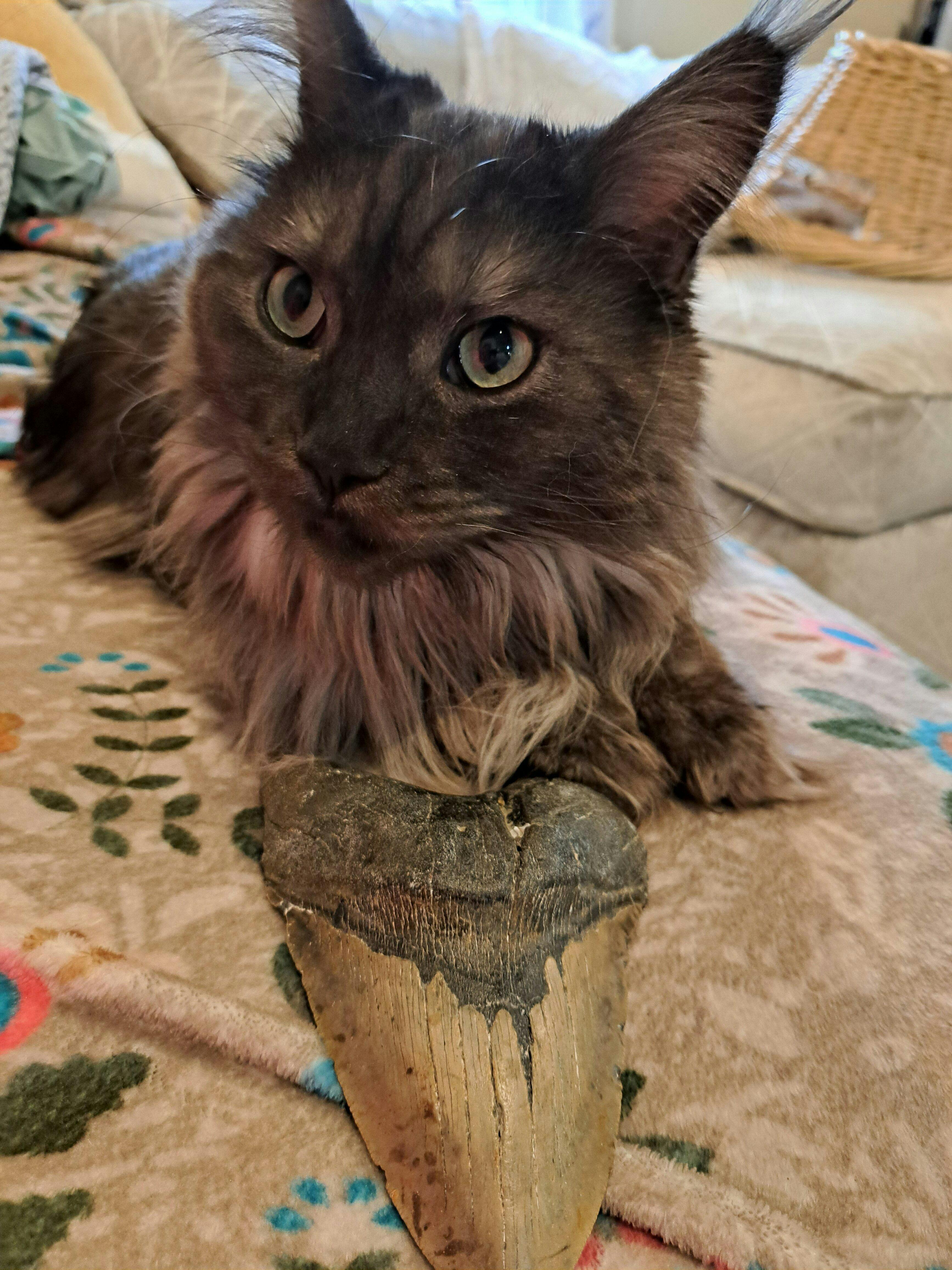
In a sense, fossils are Earth’s autobiography. And by collecting them, we’re not just holding rocks, we’re holding pages of that story. For most, including myself, it's so cool to have something like that in their home.
🪶 2. They Keep Science Accessible to Everyone
In a world where science can sometimes feel distant or complex, fossil collecting remains one of the most hands-on forms of discovery available to anyone.
You don’t need a lab or a degree, just curiosity and patience. Every collector, from a child finding their first shark tooth to a diver unearthing a huge Megalodon tooth from a river or ocean, contributes to our understanding of the natural world.
Many groundbreaking finds, including new species, have been made by amateur collectors. Paleontology has always relied on passionate individuals who venture outdoors, make observations, and share their discoveries.
One groundbreaking discovery was when the Gibson family found the remains of an ancient, 15-million-year-old shark on October 21st, 2014. You can read more about it below:
Maryland Family Found First Snaggletooth Shark Skeleton Fossil
⚒️ 3. Fossil Collecting Preserves the Past for the Future
Each fossil collected responsibly and cared for properly becomes a guardian of history. Without preservation, erosion, development, and natural decay would eventually destroy these pieces of history forever. Collectors play an essential role in safeguarding fossils that might otherwise be lost. Similar to what's going on in countries that currently have a ban on collecting and exporting fossils, such as Peru, Chile, Cuba, and many more.
When documented, labeled, and shared, privately collected fossils:
- Preserve specimens for education and public display.
- Contribute to regional data on species distribution.
- Inspire future scientists, artists, and educators.
Through ethical collecting, individuals and organizations together form a very valuable connection, carrying fossils from obscurity to appreciation. Your display case is, in many ways, a miniature museum that you can have in your home.
💎 4. Fossils Inspire Wonder and Connection
There’s something cool about holding a 10-million-year-old shark tooth or tracing the ridges of an ammonite shell that once drifted through ancient seas.
For collectors, each fossil is a moment of stillness and awe. It connects the collector not just to science, but to something profoundly human, the desire to understand where we came from. Some even connect them to a creator and are always in awe about the size or intricacies that some fossils have. An ammonite's shell is one example.
But this sense of connection is why fossils appear in art, jewelry, decor, and even mindfulness spaces. They’re symbols of endurance, evolution, and timeless beauty.
🌊 5. They Bridge Art, Science, and Nature
Fossils are where art meets science. Their geometry, symmetry, and mineralization make them as visually stunning as they are scientifically valuable.
Collectors often compare a well-preserved Megalodon tooth or iridescent ammonite to fine art, and for good reason. These fossils are nature’s masterpieces, shaped not by brush and canvas but by geology, chemistry, and millions of years of pressure and time. The enamel colors of Megalodon teeth, especially those from Bone Valley, Florida, Indonesia, or Peru, highlight just how stunning prehistoric specimens can be.
The artistic side of fossils gives them unique relevance today:
- In home decor, they bring organic texture and elegance.
- In education, they captivate visual learners and ignite curiosity.
- In design, they merge natural history with modern aesthetics.
They remind us that nature’s beauty doesn’t fade; it fossilizes.
🧠 6. Fossil Collecting Teaches Stewardship and Perspective
In learning how fossils form, how fragile sites can be, and why some are protected, collectors also learn respect. The best collectors aren’t just enthusiasts, they’re caretakers.
By practicing responsible collecting, labeling finds, and educating others, collectors become somewhat of ambassadors for conservation. In this way, fossil collecting isn’t just about the past; it’s an act of future-minded stewardship.
🧭 7. It Reminds Us That We’re Part of Earth’s Story
Ultimately, fossils remind us of our place in the grand timeline of life.
The creatures they represent, from trilobites to the Megalodon shark, lived, thrived, and vanished long before humans existed. Their rise and fall are echoes of evolution’s ongoing story, one that continues with us today.
In that sense, fossil collecting is an act of connection and humility. It tells us that we, too, are part of a world in motion, and that everything, from oceans to species, leaves its mark.
Fossils may be ancient, but their message is timeless: we are all chapters in the same story of life.
Conclusion
Fossil collecting still matters because it’s about more than just really old objects; it’s about understanding, preservation, and wonder. It’s one of the few hobbies that brings us closer to science and art, intellect and emotion, past and present.
In an increasingly digital world, fossils ground us in the physical, in something real, enduring, and profoundly meaningful.
When you collect a fossil, you’re not just gathering stones from the past. You’re preserving memory, celebrating evolution, and sharing a story billions of years in the making.
So yes, fossil collecting still matters.
Because as long as there are hands to hold them, the fossils will keep telling Earth’s story.
Written by: Brandon Zulli, owner of fossildriven.com
Related Reading
Want to learn more about fossil shark teeth? Check out these other posts:
- Where Are Fossil Megalodon Teeth Found?
- How to Spot Repaired or Restored Fossil Teeth
- How Fossil Shark Teeth Are Priced
Explore the fossils that we have for sale: