
What Did the Megalodon Eat? Diet, Prey, and Hunting
Share
The short answer most people give is whales. That is not wrong, but it undersells how adaptable megalodon really was. Bite marks on fossil bones prove it hunted whales, while newer chemical studies of fossil teeth show it also ate a wide range of other prey depending on where and when it lived. The picture that emerges is less of a whale specialist and more of a giant, opportunistic supercarnivore.
What Did Megalodon Eat? The Quick Answer
- Main prey for adults: Whales, especially small to medium-sized baleen whales, along with toothed whales.
- Other likely prey: Seals, sea cows, sea turtles, large fish, and other sharks.
- Young megalodons: Likely fed on fish and smaller marine animals in shallow nursery waters.
- Daily food needs: Roughly 100,000 calories per day for a large adult.
What the Fossil Record Shows
The most direct evidence of megalodon's diet is bite marks preserved on the bones of its prey. Fossil whale bones from Miocene and Pliocene deposits around the world carry deep, serrated gouges that match the size and shape of megalodon teeth. In some cases, megalodon teeth have even been found alongside bitten whale skeletons, or with tooth fragments still lodged in the bone.
Bite-marked fossils include both baleen whales and toothed whales, and researchers have even described a fossil sperm whale tooth carrying megalodon bite marks. Whether every bite came from a hunt or from scavenging a carcass is not always clear, but together they leave no doubt that marine mammals were a major part of its diet.
A 2025 Study Expanded the Menu
In 2025, a team led by Jeremy McCormack of Goethe University Frankfurt published a study analyzing zinc isotopes in fossil shark teeth, mostly from roughly 18-million-year-old deposits in southern Germany. Zinc isotope ratios in tooth enamel shift depending on where an animal feeds in the food chain, giving scientists a chemical record of diet that goes beyond bite marks.
Megalodon and its close relatives sat at the top of the food chain, as expected. But the data also showed megalodon was not limited to top-level prey. It fed on marine mammals and large fish, and also on prey from lower in the food chain when that was what was available. Teeth from one German locality showed more lower-level feeding than teeth from another, pointing to regional differences or changes in prey over time. The researchers described megalodon as "an ecologically versatile generalist."
That flexibility helps explain how megalodon thrived in oceans around the world for roughly 20 million years. It also adds a twist to the extinction story: an animal that adaptable still disappeared, which suggests the pressures at the end of its reign were severe. Our article on why the megalodon went extinct covers those pressures, including competition with early great white sharks.
How Did Megalodon Hunt?
Megalodon's hunting style likely depended on the size of its prey. Bite marks on some fossil whales are concentrated on the flippers, rib cage, and tail region, which has led researchers to suggest megalodon may have attacked these areas to disable large prey, making escape difficult before delivering more serious bites. Some fossil whale bones show deep punctures and fractured ribs consistent with powerful attacks.
The bite itself was enormous. A 2008 study using computer models estimated a large megalodon's bite force at roughly 108,000 to 182,000 newtons, among the strongest of any animal known. With serrated teeth built to slice through skin, blubber, and bone, it could take huge chunks out of large prey.
For smaller prey, megalodon was probably an ambush predator, using its size and burst speed to close distance quickly. A 2022 study estimated that a 52-foot megalodon would have needed about 98,000 calories per day, around 20 times what an adult great white needs. An animal with that kind of appetite could not afford to be a picky eater.
Did Young Megalodons Eat Differently?
Almost certainly. Young megalodons appear to have grown up in warm, shallow nursery areas, such as a well-studied site in Panama where juvenile teeth are found in concentration. Newborns were already about 12 to 13 feet long, but that is still small next to an adult, and they likely fed on fish and smaller marine animals.
As they grew, their diet shifted toward larger prey. This kind of change with age is common in large modern sharks, and it makes sense: a 12-foot juvenile chasing the same whales as a 50-foot adult would be at a serious disadvantage. Our article on megalodon size covers how big these sharks were at birth and as adults.
How Megalodon Teeth Were Built for This Diet
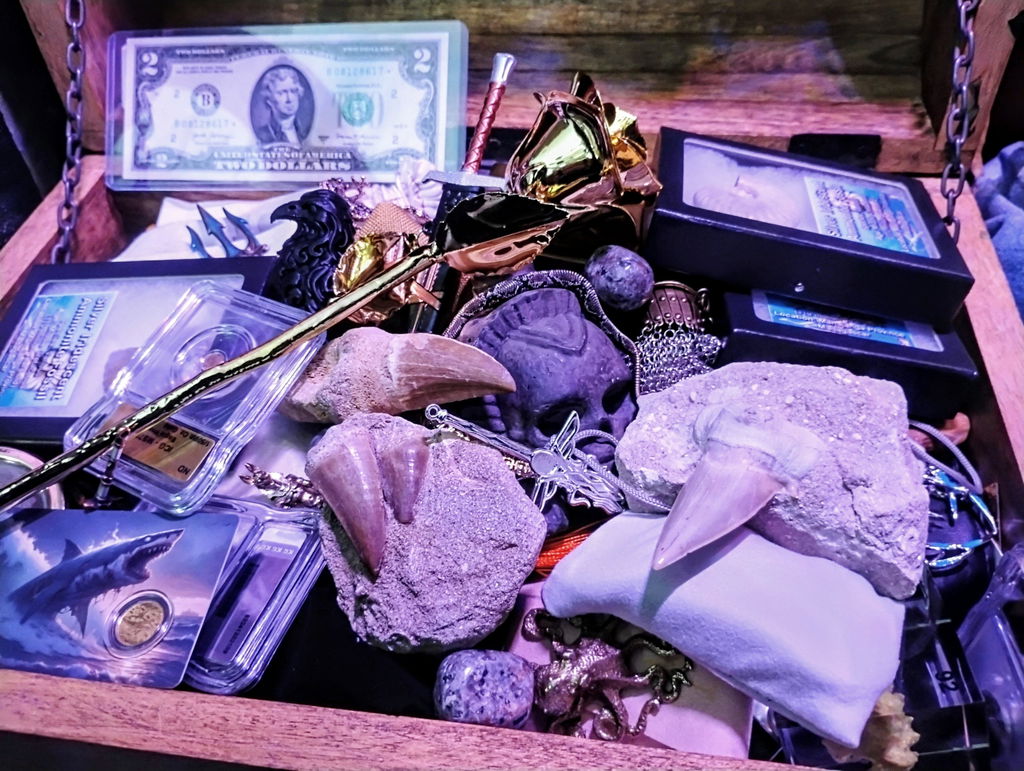
Every feature collectors look for in a megalodon tooth is tied to how it fed. The fine serrations worked like a steak knife, slicing through flesh with each side-to-side shake of the head. The broad, thick crown could handle the force of biting into bone. The wide root anchored each tooth firmly in the jaw. And because sharks replace teeth constantly, megalodon shed thousands over its life, which is why so many survive as fossils today.
Some teeth even show damage from feeding. Chipped tips and worn serrations are often the result of biting into bone, and collectors call this feeding damage. Our article on what wear patterns on a fossil shark tooth tell you explains how to read it.
Frequently Asked Questions
What was megalodon's main food? Whales, especially small to medium-sized baleen whales. But it also ate a variety of other marine animals depending on what was available.
Did megalodon eat great white sharks? There is no direct fossil evidence of that, though megalodon likely ate other sharks in general. Early great whites were more of a competitor for the same prey.
How much did megalodon eat? A 2022 study estimated around 98,000 calories per day for a large adult. It may have survived long stretches between big meals, much like modern large sharks.
How strong was megalodon's bite? Computer models estimate roughly 108,000 to 182,000 newtons for a large adult, among the most powerful bites known.
Own a Megalodon Tooth
The tool behind the bite. Every megalodon tooth at Fossil Driven is a genuine fossil, individually photographed, clearly graded, and backed by our authenticity guarantee and 30-day return policy.
Written by: Brandon Zulli - Owner of Fossil Driven