
About the Megalodon Shark: Diet, Size, Bite Force, Evolution & More
Megalodon (Otodus megalodon) was one of the largest and most powerful sharks to ever live, roaming Earth’s oceans between roughly 15 and 3 million years ago during the Miocene and Pliocene epochs. As an apex predator of the Cenozoic Era, Megalodon dominated ancient seas before ultimately going extinct due to oceanic cooling, sea level changes, and a decline in available prey.
Megalodon means "big tooth." They are also referred to as the "megatooth" sharks. Megalodon adults were basically a giant version of a great white shark. While very little skeletal material has ever been found, fossil Megalodon teeth, along with bite marks preserved on whale bones, provide scientists and collectors with an extraordinary record of this prehistoric giant’s size, behavior, and evolution.
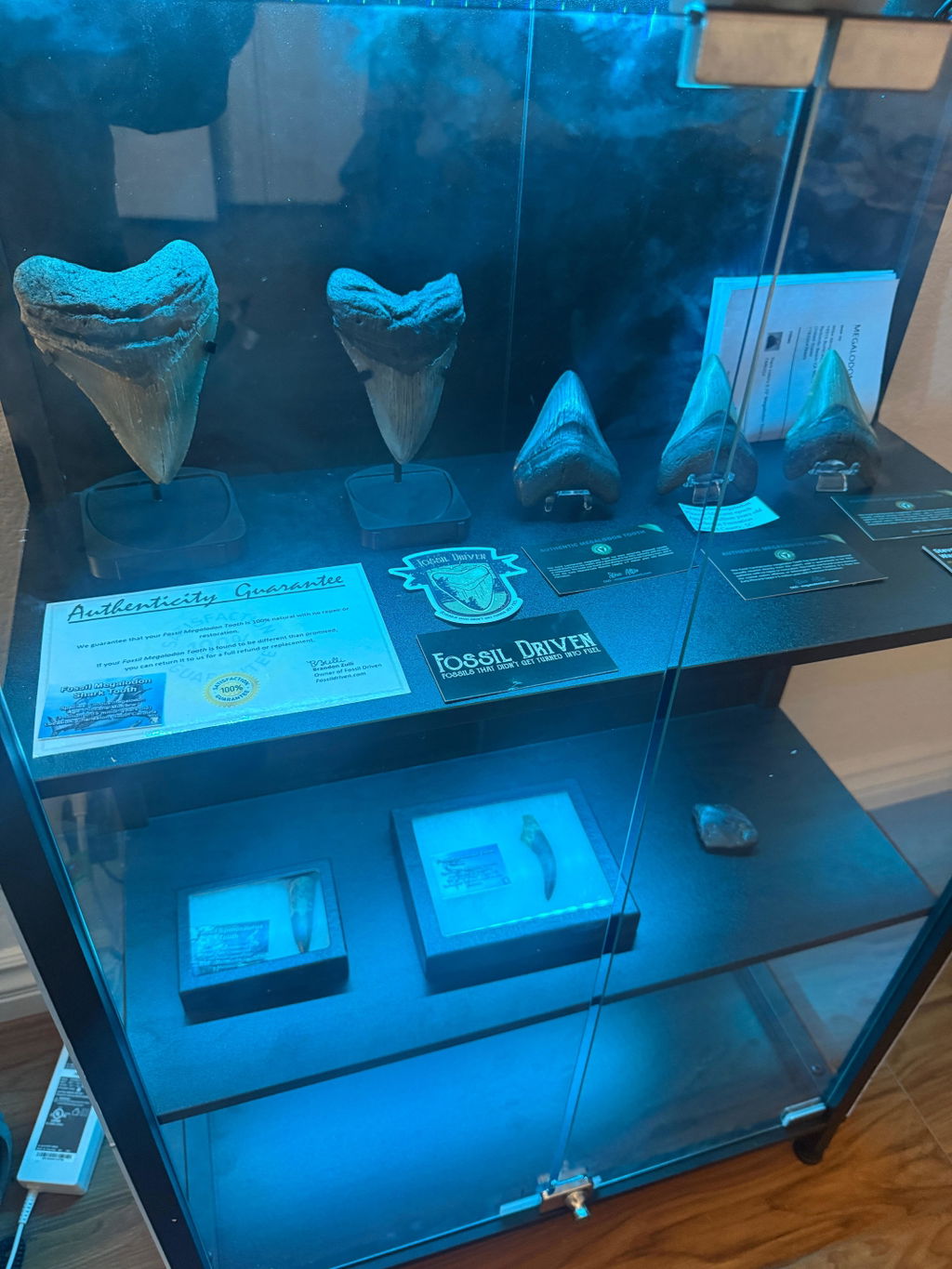
Because Megalodon teeth are the most common and well-preserved remains of this species, they’ve become one of the most sought-after marine fossils in the world. You can explore a range of authentic fossil Megalodon teeth for sale to see how size, color, and preservation vary between specimens.
Size
Since this megatooth shark was one of the top predators of its time, how big did it get? Some of the largest fossil Megalodon teeth ever discovered exceed 7 inches in slant height, though teeth of this size are exceptionally rare. The most common slant length is between 3 and 5 inches. With that said, it is very difficult to say how big the megalodon shark actually got.
In the past, lengths of up to 100 feet (30.48 Meters) have been speculated. Today, this length has been drastically reduced. With the help of jaw reconstruction from associated teeth, paleontologists have calculated some possible size estimates. Some of these estimates gave the Megalodon a maximum length of around 52 feet (16.5 Meters), while other estimates were a bit lower, around 42 feet (12.8 Meters). Reports of Megalodon skeletons suggesting lengths over 70 feet exist, but these claims have not been scientifically verified. The estimated weight of this animal is around a whopping 48 tons!

Diet
With an animal getting to the size that the megalodon did, it leaves a very good question. What did this massive megalodon shark eat? Fossil evidence suggests that this shark mainly preyed upon larger prey such as whales, dugongs, and other large creatures that inhabited the oceans during the megalodon’s reign. How do we know that these sharks fed on these animals? Pieces of bone are found by fossil hunters daily, and there are times when these bones will show some sort of predatory markings on them. Many of these bite-marked whale bones are found alongside fossil Megalodon teeth, further reinforcing the role this shark played as a specialized hunter of large marine mammals.
Bite Strength
Researchers estimate Megalodon’s bite force ranged between 24,000 and 40,000 pounds, making it one of the most powerful bite forces ever recorded in a vertebrate. That's enough bite force to crush a car with ease.
Here are a few bite force estimates from other predatory species to compare:
- Great White Shark - 4,100 psi
- Tyrannosaurus Rex - 12,800 psi
- Dunkleostus - 1,200 - psi
Megalodon Evolution
For years, researchers and other scientists were convinced that the modern-day great white shark evolved from the megalodon shark, and were from the same family. Over time, that theory has changed. Today, the accepted theory is that the megalodon shark evolved from Otodus obliquus. Below is a picture of the whole evolutionary chain, starting from Otodus obliquus and ending with Otodus megalodon (often historically referred to as Carcharocles megalodon). Find out more here.
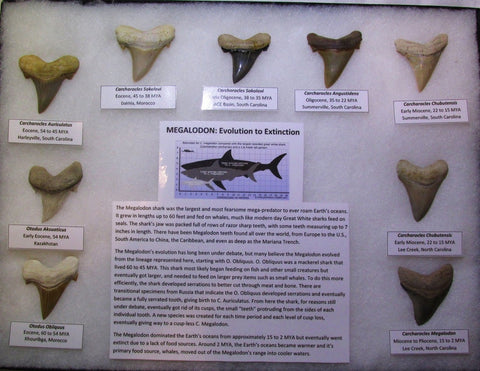
Photo Credit: Kendall Borchers
Frequently asked questions
How big was the megalodon shark really? Current scientific estimates place adult megalodon between roughly 42 and 60 feet in length, with some recent research suggesting potentially longer but more slender body proportions than previously thought. Reports of 100-foot specimens have never been scientifically verified. Tooth size is the primary tool for estimating body length, using the rough rule of 10 feet per inch of slant height.
What did megalodon eat? Fossil evidence, including bite-marked whale bones found alongside megalodon teeth, confirms that this shark primarily preyed on large marine mammals — whales, dugongs, and other sizeable ocean creatures. Its bite force estimates of up to 40,000 pounds made it uniquely capable of taking on prey of this scale.
Is the megalodon shark still alive? No. Megalodon went extinct approximately 3 million years ago, likely due to oceanic cooling, shifting sea levels, and a decline in the large marine mammals it depended on for food. The ocean has been extensively mapped and explored — there is no credible scientific evidence of surviving megalodon.
How is megalodon related to the great white shark? The two are not directly related as once believed. Modern scientific consensus places megalodon in the genus Otodus, evolving from Otodus obliquus through a series of transitional species including Otodus auriculatus, Otodus angustidens, and Otodus chubutensis. The great white shark evolved along a completely separate lineage.
Why are megalodon teeth so much more common than other fossil shark remains? Sharks have cartilaginous skeletons rather than bone, so their bodies rarely fossilize. Teeth, however, are made of dense enamel-coated dentin that preserves extremely well in sediment over millions of years. Megalodon shed thousands of teeth over a lifetime, making teeth by far the most commonly recovered remains.
Own a piece of megalodon history
Fossil megalodon teeth are the most direct physical connection to one of the largest and most powerful predators to ever exist. Each one is genuine, millions of years old, and completely unique.
👉 Browse our authentic Megalodon Teeth collection — hand-selected and backed by our authenticity guarantee.
Written by: Brandon Zulli, owner of fossildriven.com