
Are Megalodon Teeth Real? Everything You Need to Know
Hold a real megalodon tooth in your hand, and the first thing you notice is the size. These fossils are enormous, large enough to fill your palm, and that scale is exactly why so many people assume they must be replicas or movie props. That reaction makes sense. But the truth is far more interesting.
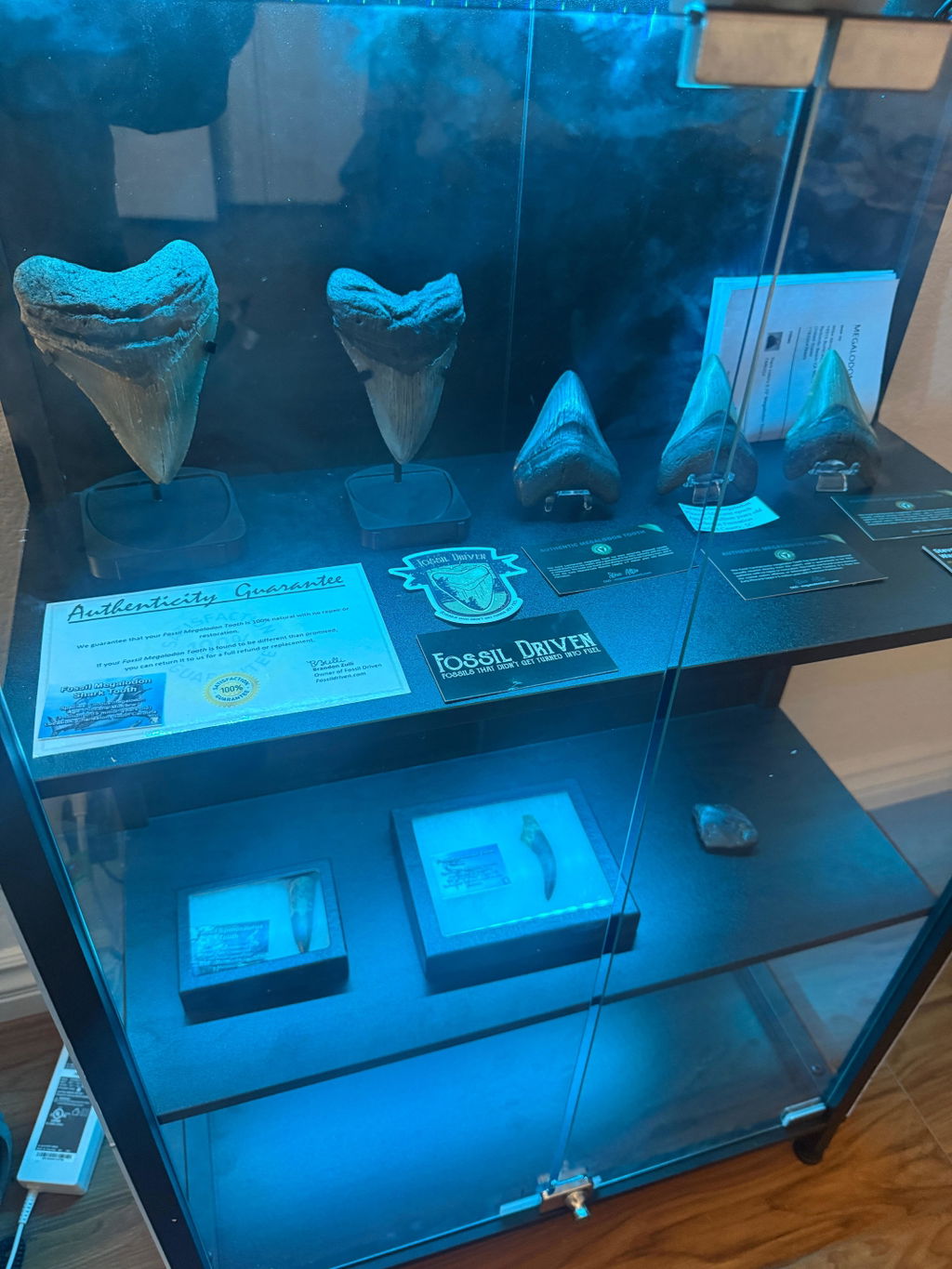
Yes, megalodon teeth are absolutely real. They are fossilized teeth from Otodus megalodon, the largest shark known to have ever lived. Millions of these teeth have been recovered from fossil deposits around the world, making them one of the most popular and accessible large vertebrate fossils available to collectors today.
The better question is not whether they are genuine; it is how to recognize an authentic specimen, understand its value, and avoid buying something misrepresented or poorly restored. That is what this guide covers.
Are Megalodon Teeth Really Real?
Absolutely. Megalodon lived approximately 23 to 3.6 million years ago during the Miocene and Pliocene epochs. The shark itself has been extinct for millions of years, but its teeth survived because shark enamel is one of the hardest biological materials found in nature. Under the right burial conditions, these teeth fossilized rather than decomposed.
There is also a biological reason these teeth are so common compared to other prehistoric creatures. Sharks constantly replace their teeth throughout their lives. Modern great whites may shed thousands of teeth in a lifetime, and megalodon almost certainly behaved the same way. Multiply that by millions of sharks living across nearly twenty million years of ocean history, and the sheer number of fossilized teeth still being discovered today starts to make a lot more sense.
Why Are So Many Megalodon Teeth Still Found?
Most first-time collectors assume that a fossil from an animal this famous must be incredibly rare. The reality surprises a lot of people.
Megalodon existed for close to a little over twenty million years across oceans worldwide. Its populations were vast, its tooth replacement was constant, and tooth enamel fossilizes exceptionally well in marine sediments. That combination, sheer time, scale, and ideal preservation conditions, is why megalodon teeth remain one of the most commonly available large prehistoric fossils on today's collector market.
While they are not too hard to find in the wild, depending on location, of course, they are far from impossible to own.
How Big Can a Real Megalodon Tooth Get?
The largest confirmed megalodon teeth measure just over seven inches, with a handful of exceptional examples approaching 7.5 inches. Specimens of that size are extraordinarily rare and typically found in museums or advanced private collections.
For collectors, most authentic teeth available for purchase fall into these general ranges:
• 2–3 inches: Entry-level collector specimens, great for beginners and gifts
• 3–4 inches: The most common size range, solid display presence
• 4–5 inches: Strong collector demand and excellent visual impact
• 5–6 inches: Premium collector-grade territory
• 6+ inches: Rare, highly sought after, and priced accordingly
Size matters, but it is only one part of the equation. A beautifully preserved 4-inch tooth can be worth more than a heavily restored or damaged 6-inch specimen, more on that below.
What Does a Real Megalodon Tooth Look Like?
An authentic megalodon tooth has several features that set it apart from other fossil shark teeth and from replicas.
The crown is broad and triangular with naturally formed serrations running along both cutting edges. Near the base of the crown, look for a darker chevron-shaped band called the bourlette, one of the most recognizable diagnostic features of megalodon teeth. The root below is wide and robust, though its condition varies since fossil roots are more delicate than enamel and often show wear or partial damage from millions of years buried in sediment.
Color is also worth understanding. Authentic megalodon teeth come in an enormous range of shades, black, gray, tan, blue, brown, cream, orange, and nearly white, all depending on the minerals present in the burial environment. Two completely genuine teeth from different localities can look almost nothing alike. If you want to understand why, our article on why fossil megalodon teeth have different colors goes deep into the science behind it.

How Can You Tell if a Megalodon Tooth Is Authentic?
Authenticity involves more than just looking old. Experienced collectors evaluate several specific things before purchasing a tooth.
Natural serrations should be integrated into the enamel itself, not carved or artificially added. The bourlette should be visible and appropriate for the specimen. Color should be consistent throughout the tooth rather than painted on. Minor feeding wear and natural imperfections from millions of years in sediment are expected; their absence can actually be a red flag on a supposedly natural specimen. And any restoration should be honestly disclosed.
Photography matters enormously when buying online. A trustworthy seller should show both sides of the tooth, the root, the tip, and close-up images of any repaired areas. If those photos are not available, ask for them before purchasing.
Our full megalodon tooth buying guide covers the complete process of evaluating authenticity, grading preservation, and buying with confidence.
Are Fake Megalodon Teeth Common?
Outright fakes, fully manufactured replicas passed off as real fossils, are less common than many people fear. What buyers are far more likely to encounter are:
• Resin or cast replicas sold as display pieces (these are fine when marketed honestly)
• Teeth reconstructed or assembled from multiple fossil fragments
• Heavily restored specimens with rebuilt roots, enamel, or serrations
• Teeth from other prehistoric shark species misidentified as megalodon
None of these automatically makes a specimen worthless; restoration is common in fossil collecting, especially for larger teeth. The issue is when it goes undisclosed. Our article on how to identify repaired or restored megalodon teeth walks through exactly what to look for.
Authenticity Is Just the Starting Point
A lot of new collectors focus entirely on whether a tooth is genuine. Experienced buyers know that authenticity is just the entry point. Two authentic 5-inch megalodon teeth can differ in value by thousands of dollars based on factors like:
• Root preservation and completeness
• Serration quality and sharpness
• Symmetry of the crown
• Natural color and enamel condition
• Amount of restoration present
• Overall eye appeal
This is why collector-grade specimens command strong prices. For a deeper look at how these factors affect value, our guide to megalodon tooth grading and quality breaks it down in detail.
Are All Real Megalodon Teeth Expensive?
Not at all. One of the reasons megalodon teeth attract so many collectors is that they are available across a genuinely wide range of budgets.
Smaller or more worn authentic teeth make excellent first fossils and can be very affordable. Mid-sized specimens around 4 to 5 inches offer a strong balance between visual impact and price. At the top end, exceptional teeth above 5.5 inches become increasingly scarce, and prices climb sharply to match.
A lower price does not mean a tooth is fake, and a higher price does not guarantee it is worth paying. Condition, rarity, and overall quality always matter more than the number on the tag. Our breakdown of megalodon tooth sizes and what they reveal can help you figure out the right size for your budget and goals.
Common Myths About Real Megalodon Teeth
Myth: Megalodon teeth are replicas made for tourists.
Reality: Authentic fossil teeth are discovered every year in fossil-bearing deposits around the world. They are genuine prehistoric fossils, not souvenirs.
Myth: Every megalodon tooth is worth thousands of dollars.
Reality: Value depends on size, preservation, rarity, restoration, and overall appeal. Entry-level teeth can be very affordable.
Myth: Bigger is always better.
Reality: A beautifully preserved 4-inch tooth often outperforms a heavily restored 6-inch specimen in both desirability and long-term value.
Myth: Every real megalodon tooth is black.
Reality: Fossil colors vary widely depending on mineralization, burial environment, and locality. Authentic teeth come in dozens of natural shades.
Buying with Confidence
When someone asks whether megalodon teeth are real, they are usually asking something deeper: can I trust what I am buying?
That answer depends almost entirely on the seller. Look for dealers who specialize in fossils, provide detailed individual descriptions, clearly disclose any restoration, and photograph the exact specimen you will receive. Authenticity guarantees, transparent grading, and a genuine fossil identification experience are worth more than saving a few dollars through an anonymous marketplace listing.
Ready to see what is available? Browse our collection of authentic megalodon teeth for sale. Every specimen is individually reviewed, clearly described, and backed by our authenticity guarantee.
Written by: Brandon Zulli, Owner of Fossil Driven