
Comparing Megalodon Tooth Sizes: What a 2″ vs. 6″ Meg Tooth Tells You
Megalodon teeth come in all shapes and sizes. From small, juvenile teeth between an inch or two, or in some rare cases, under an inch, to huge, hand-sized giants that can exceed five, six, or even seven inches. To a new collector, that difference might just look like scale. But to seasoned collectors and perhaps some paleontologists, all Megalodon teeth, no matter the size, tell an incredible story about the shark’s growth, feeding behavior, and the environment it lived in.
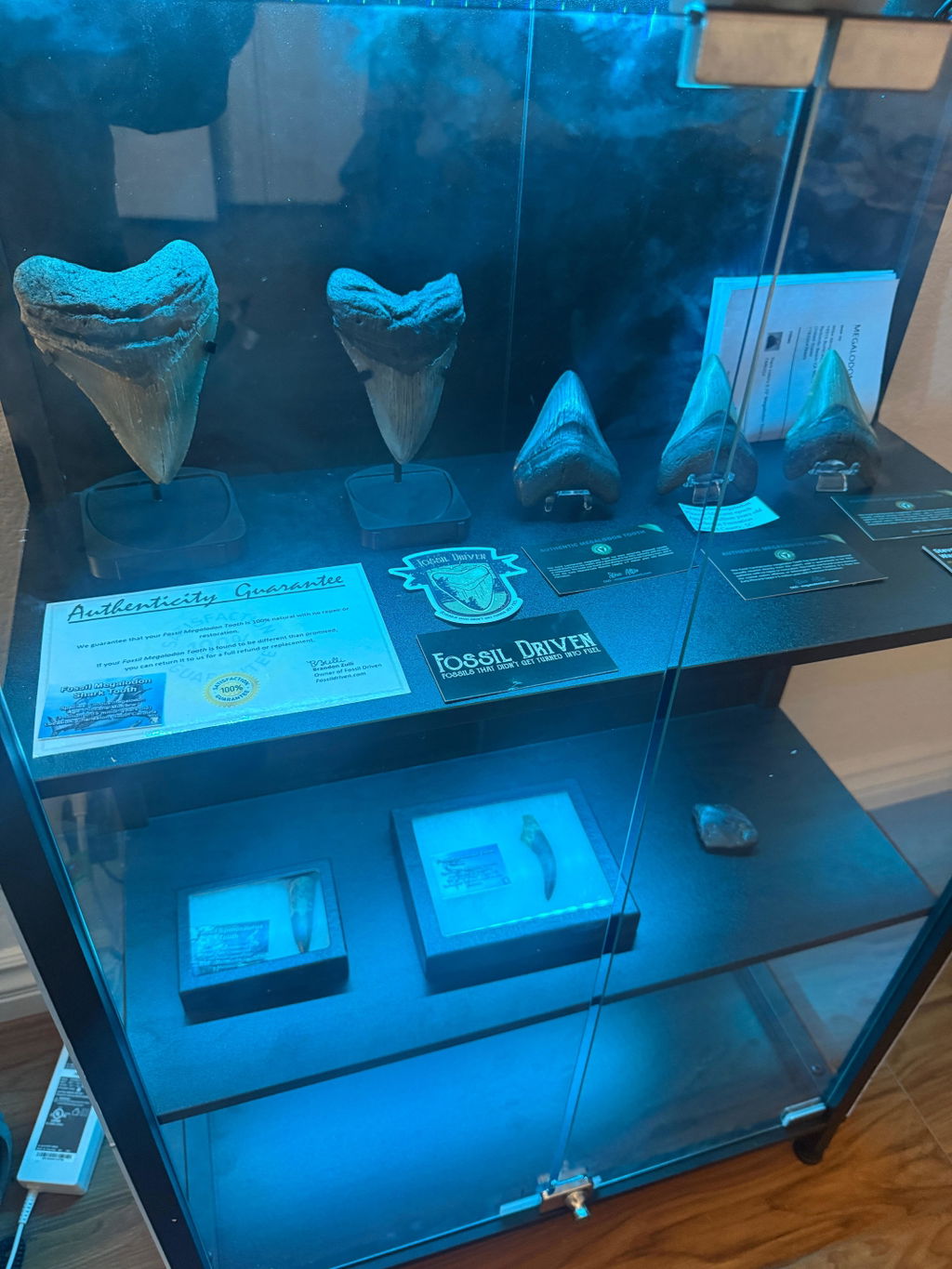
For collectors interested in owning a real example, exploring a range of sizes is one of the best ways to understand these differences. You can browse our collection of authentic Megalodon teeth for sale to see how size, condition, and preservation vary.
So, What Does a Megalodon's Tooth Size Really Mean?
The size of a Megalodon tooth directly correlates to the size of the shark it came from. Paleontologists estimate that for every inch of the slant height of a tooth (the diagonal distance from the tip of the crown to the corner of the longest root lobe), the Megalodon measured about 10 feet in body length. Of course, some are saying that this isn’t an accurate way to judge a shark’s body length, especially with new research showing that the Megalodon shark may have been more like lemon sharks. Longer teeth that don't quite represent its actual body length. Regardless, it’s what scientists have been using for decades, and it's what most collectors still go by to this very day. But what does this measurement style mean? Let me break it down for you.
A 2-inch megalodon tooth typically represents a juvenile shark that may have measured around 20 feet in length. While that sounds small compared to a fully grown Megalodon, it is roughly the size of an adult Great White Shark. These smaller teeth are popular among collectors because they are more affordable, require less display space, and often showcase excellent preservation.
A 4-inch megalodon tooth is generally associated with a subadult shark that was still growing into its role as an apex predator. Sharks represented by teeth of this size may have reached approximately 40 feet in length, making them comparable to the size of a modern school bus. For many collectors, 4-inch teeth offer an ideal balance between size, display appeal, and affordability, making them one of the most popular categories of fossil megalodon teeth for sale.
A 6-inch megalodon tooth represents one of the largest sharks to ever swim Earth's oceans. Teeth of this size are typically associated with mature adult animals that may have exceeded 60 feet in length according to traditional estimates. Because relatively few megalodon teeth reach six inches or larger, these specimens are often considered trophy pieces within the fossil-collecting community and can command significant premiums when preserved in collector-grade condition.

The photo above shows the size comparison of a Megalodon tooth from a juvenile to a 60-foot apex predator. Photo Credit: Fossil Driven
Megalodon teeth were adapted for powerful shearing and cutting, built to bite through the thick bones of whales and other large marine mammals. Larger teeth not only reflect the shark’s maturity but also how efficiently it could feed. Every Megalodon tooth is equipped with sharp serrations. This helped the animal cut through thick blubber and flesh better than any steak knife that you have in your kitchen.

The photo above shows a great example of how sharp Megalodon teeth can get. This specimen specifically is from Indonesia. Photo Credit: Fossil Driven
💡 Fossil Driven Fact: The largest verified Megalodon tooth ever found measures 7.48 inches, discovered in Peru, and specimens over 6 inches make up less than 1% of all Megalodon teeth recovered worldwide. Hence, the hefty price tag that most teeth of this size get. Especially if they are high quality, which are even more rare.
Want to learn more about the megalodon shark? Check out our megalodon shark facts blog!
How Tooth Size Reveals Feeding Habits
Megalodon’s jaws were lined with 276 teeth arranged in five rows, and not every Megalodon tooth served the same purpose. The position of a tooth in the jaw determined both its shape and size. Here’s what those differences tell us:

The front, or anterior, teeth were typically larger and more symmetrical, making them ideal for gripping and puncturing prey. These are often the teeth that collectors picture when they imagine a classic fossil megalodon tooth because of their broad crowns and impressive size.

Lateral teeth were positioned farther along the jaw and were designed to assist with slicing and cutting. These teeth often display a slightly angled appearance and can vary significantly in shape depending on their exact location. Because of their position, some lateral teeth may appear smaller than expected, even though they belonged to a very large shark.

Posterior teeth, located toward the rear of the jaw, were generally smaller and more compact. Their primary role was helping guide food deeper into the mouth after the initial bite. This is why size alone cannot always determine the overall size of the shark. A small posterior tooth from a large adult megalodon may be similar in size to an anterior tooth from a younger individual. Understanding jaw position is one of the most important factors when evaluating megalodon teeth and estimating their original owner.
So, when you compare a 2-inch Megalodon tooth to a 6-incher, the difference might not always mean a smaller shark; it might just come from a different jaw position. That’s why context is everything when identifying and measuring Megalodon teeth. A 3-inch lateral may have been from a 35 to 40-foot Megalodon shark. While a tiny posterior like the one above may have been from a juvenile and not a newborn. See what I mean?
📏 Collector Tip: Always measure the slant height, the diagonal distance from the tip of the crown to the corner of the longest root lobe. That’s the industry standard for determining official Megalodon tooth size.

Photo Credit: Fossil Driven
Why Bigger Isn’t Always Better (But It’s Definitely Rarer)
In the world of fossil collecting, size matters, but so do condition, color, and preservation quality. You can talk to a variety of collectors, and each will have a different style in how they like to collect fossil Megalodon teeth. Some, like the @sharkodontist on Instagram, may enjoy the smaller juvenile Megalodon teeth for the purpose of saving space. While others love the giant, pristine teeth due to their rarity. Some may even like worn teeth because they tell a story. There's honestly a Megalodon tooth for everyone out there.
As collectors gain experience, they often discover that size is only one factor influencing value. A well-preserved 3-inch megalodon tooth with strong serrations, vibrant coloration, and minimal restoration can easily be more desirable than a heavily worn 5-inch specimen. Preservation quality, locality, root condition, enamel integrity, and overall appearance frequently play a larger role in pricing than size alone.
That said, rarity does increase significantly as tooth size grows. Megalodon teeth in the 2- to 3-inch range are relatively common and make excellent choices for new collectors looking to begin a collection without a substantial investment. Teeth measuring between 3.5 and 4.5 inches are often considered the sweet spot for many collectors because they provide impressive display appeal while remaining relatively attainable.
Once a tooth exceeds the 5-inch mark, scarcity becomes much more noticeable. Collector-quality specimens above five inches represent only a small percentage of all megalodon teeth recovered. Teeth measuring six inches or larger are exceptionally rare, particularly when they retain complete roots, sharp serrations, and attractive natural coloration. These large specimens are often considered centerpiece fossils and frequently become the highlight of a serious megalodon tooth collection.
💎 Fossil Driven Tip: Don’t underestimate smaller Megalodon teeth in top condition. As I said before, a well-preserved 3-inch Bone Valley tooth with strong colors and enamel contrast can sometimes surpass larger, but weathered river and ocean finds in value. Again, to learn more about how a Megalodon tooth is priced, visit our How are fossil Megalodon teeth priced, blog.
Geological Clues Hidden in Tooth Size
The size and appearance of a megalodon tooth are often influenced by the geological environment where it was preserved. Florida's Peace River is known for producing a large number of juvenile and mid-sized megalodon teeth, leading many collectors and researchers to suggest that portions of the region may have functioned as nursery habitats for younger sharks. Teeth from this area commonly display darker phosphate-rich coloration and excellent preservation.
Bone Valley, Florida is famous for producing some of the most colorful fossil megalodon teeth in the world. Collectors frequently seek Bone Valley specimens because of their striking blue, white, green, orange, and multicolored patterns. While many Bone Valley teeth are smaller than specimens recovered elsewhere, their rarity and coloration often make them highly desirable among experienced collectors.
The rivers and offshore deposits of South Carolina and Georgia have produced countless large adult megalodon teeth with exceptional serration preservation and enamel quality. These localities are particularly popular among serious collectors seeking larger display specimens. Internationally, Indonesia has earned a reputation for producing some of the largest megalodon teeth ever discovered, including massive specimens exceeding six inches in length with unique mineral staining and coloration rarely seen in North American fossils.
Understanding locality information helps collectors appreciate why two megalodon teeth of identical size may differ dramatically in value, appearance, and collectibility. The geological history behind a specimen is often just as important as its measurements.
🌊 Collector Insight: Larger Megalodon teeth typically come from deeper offshore sediments, like off the coast of Wilmington, North Carolina, while smaller, better-preserved teeth often come from phosphate mines or riverbeds where gentle erosion exposes them.
Learn more about where you can find fossil Megalodon teeth.
Frequently asked questions
Does a bigger megalodon tooth always mean a bigger shark? Not necessarily. Jaw position matters just as much as size. A small posterior tooth from a massive adult megalodon can be similar in size to an anterior tooth from a juvenile. Slant height is a useful estimate, but tooth position provides crucial context.
What is slant height and why does it matter? Slant height is the diagonal measurement from the tip of the crown to the corner of the longest root lobe. It's the industry standard for sizing megalodon teeth because it accounts for the natural shape of the tooth more accurately than a straight vertical measurement.
Which megalodon tooth size is best for a beginner collector? Teeth in the 3- to 4.5-inch range are considered the sweet spot for most beginners — large enough to be impressive, widely available enough to compare multiple specimens, and affordable enough to allow for careful selection.
Why are 6-inch megalodon teeth so expensive? Teeth over 6 inches represent less than 1% of all megalodon teeth recovered worldwide. When you combine that rarity with collector-grade preservation — sharp serrations, complete root, strong enamel — the supply of truly outstanding large specimens is extremely limited, which drives premiums significantly.
What does tooth locality tell a collector? Locality reveals where and how a tooth fossilized, which directly affects its color, mineralization, and preservation characteristics. A Bone Valley tooth and a South Carolina river tooth of the same size can look dramatically different and appeal to entirely different collectors, making locality one of the most important details in any listing.
Wrapping Up
Whether you’re holding a small 2-inch river find from Florida or a massive 6-inch museum-grade specimen from Indonesia, each Megalodon tooth connects you directly to a time when 60-foot sharks ruled Earth’s oceans. Tooth size tells a story of age, power, and evolution, but preservation, color, and provenance tell the rest.
Find your size
Whether you're drawn to a small, colorful Bone Valley juvenile or a massive 6-inch Indonesian giant, the right megalodon tooth is the one that tells the story you want to own.
👉 Browse our full Megalodon Teeth collection, or shop by size: 2-Inch · 4-Inch · 5-Inch · 6-Inch
Written by: Brandon Zulli - Owner of Fossil Driven