
Are Fossil Megalodon Teeth Radioactive?
It is a question that occasionally surprises new collectors and even seasoned fossil hunters: are fossil Megalodon teeth radioactive?
Because these massive prehistoric shark teeth are millions of years old and are often found in phosphate-rich sediments, riverbeds, and marine deposits, some collectors have heard rumors that they may contain trace uranium. If you own a real Megalodon tooth or are considering purchasing fossil Megalodon teeth for sale, it is completely reasonable to wonder whether they pose any health risk.
The reassuring answer is no. Fossil Megalodon teeth are safe to own, display, and handle. However, the scientific explanation behind this question is far more interesting than a simple yes or no.
What Does “Radioactive” Actually Mean?
Radioactivity occurs when unstable atoms naturally break down and release energy over time. Certain elements found in the Earth’s crust, such as uranium, thorium, and potassium-40, are mildly radioactive. These elements exist naturally in soil, rocks, groundwater, and even within the human body.
When someone asks whether a Megalodon shark tooth fossil is radioactive, what they are really asking is whether fossilization causes dangerous levels of these elements to accumulate inside the tooth. To understand that, it helps to look at how a fossil Megalodon tooth forms in the first place.

How Fossilization Affects a Megalodon Tooth
A Megalodon tooth originally belonged to Otodus megalodon, the largest predatory shark to ever live. After the shark shed the tooth millions of years ago, it settled into sediment on the ocean floor or within coastal deposits. Over time, layers of sediment buried the tooth, and groundwater rich in dissolved minerals slowly moved through its microscopic pores.
During this process, known as fossilization or mineral replacement, the original organic material is gradually replaced by minerals while preserving the tooth’s internal structure. Because fossil shark teeth are naturally porous, small amounts of minerals from the surrounding environment can enter and become part of the fossil.
Many real Megalodon teeth are found in phosphate deposits. Phosphate rock can naturally contain trace amounts of uranium because uranium bonds chemically with phosphate minerals. Over millions of years, extremely small quantities of these trace elements can become incorporated into fossilized material.
This is where confusion sometimes begins.
Yes, a fossil Megalodon tooth may technically contain measurable trace radioactivity if tested with highly sensitive scientific equipment. However, the levels are extraordinarily low and remain within natural background radiation levels that are present everywhere in our environment.

Natural Background Radiation and Everyday Exposure
Radiation is not something unusual or rare. It is a normal part of life on Earth. You are exposed to natural background radiation every day from soil, rocks, building materials, and even cosmic radiation from space. Air travel exposes you to more radiation than standing next to a fossil shark tooth. Medical imaging procedures such as X-rays or CT scans involve radiation levels that are thousands of times greater than anything found in fossil Megalodon teeth.
Even certain foods contain naturally occurring radioactive isotopes. Bananas, for example, contain potassium-40. Granite countertops often produce higher readings on a Geiger counter than most fossil shark teeth.
The trace amounts that may exist within a Megalodon shark tooth fossil are negligible and pose no health risk during normal collecting, display, or handling.
Phosphate Deposits and Megalodon Teeth
Because many authentic Megalodon teeth are discovered in phosphate-rich regions such as Florida’s Bone Valley deposits or offshore marine ledges, it is understandable why questions arise. Phosphate sediments naturally contain trace uranium. When a fossil forms in that environment, it may preserve minute traces of those elements.
However, fossilization does not create radioactivity. It simply preserves a tooth within a mineral environment that already contains naturally occurring trace isotopes. The concentration inside a single fossil is extremely small and comparable to the radiation levels found in ordinary soil or river rocks.
If you are curious about the types of environments where these fossils are found, you can learn more about where Megalodon teeth are typically found around the world.
Can a Geiger Counter Detect a Fossil Megalodon Tooth?
In rare cases, a very sensitive Geiger counter placed directly against certain phosphate fossils may register a slight increase above background levels. This does not mean the fossil is unsafe. It simply reflects the presence of trace natural isotopes absorbed during fossilization.
For comparison, many common rocks and minerals produce similar or even higher readings. Radiation becomes dangerous only at high doses. The levels associated with fossil Megalodon teeth are far below any threshold of concern.
Does This Affect Megalodon Tooth Value?
Some collectors wonder whether trace radioactivity influences megalodon tooth value. In practice, it does not. When evaluating fossil Megalodon teeth, collectors focus on size, serration quality, enamel preservation, bourlette condition, and overall completeness. Color and locality may influence desirability, but trace mineral content does not reduce safety or authenticity.
If you would like to better understand how collectors determine pricing and quality, you can explore our guide explaining how fossil Megalodon teeth are priced.
Are Fossil Megalodon Teeth Safe to Display?
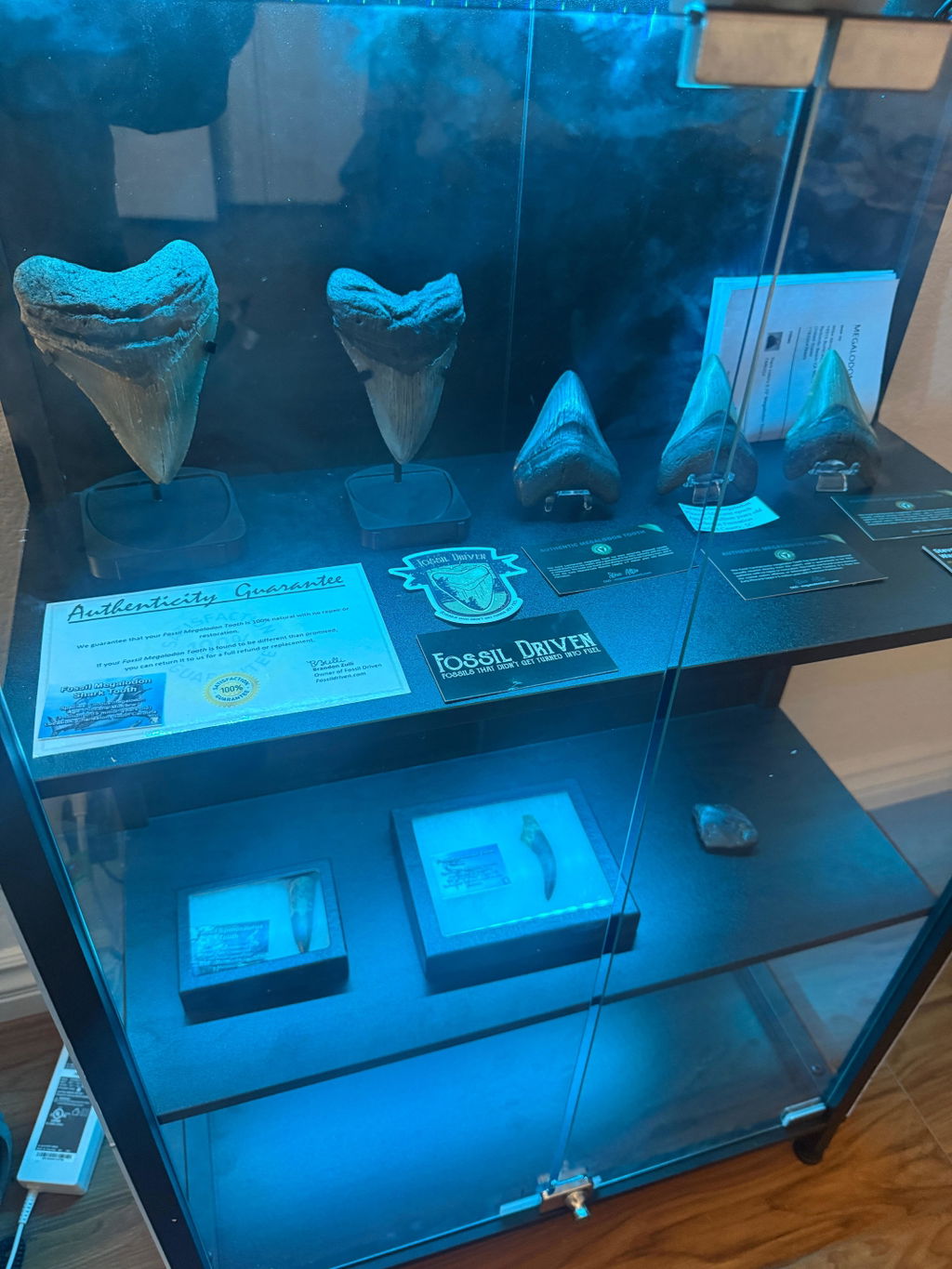
Authentic fossil Megalodon teeth are completely safe to display in your home, office, or classroom. Museums openly display megalodon shark tooth fossils without shielding or special precautions because the radiation levels are negligible. There is no need for protective storage or handling equipment.
What you are displaying is not a hazardous object, but a preserved piece of prehistoric history shaped by millions of years of geological change.
Frequently asked questions
Is it safe to hold a fossil megalodon tooth? Yes. Handling a fossil megalodon tooth poses no health risk. Any trace radioactivity is far below natural background levels you're exposed to every day from soil, rocks, and even food.
Will a fossil megalodon tooth set off a Geiger counter? In rare cases, a very sensitive Geiger counter held directly against certain phosphate-rich specimens may register a slight reading. This simply reflects trace natural isotopes absorbed during fossilization, not a safety concern.
Are all megalodon teeth equally radioactive? No. Trace radioactivity depends on the mineral environment where a tooth fossilized. Specimens from phosphate-rich deposits may show slightly higher trace levels than those from other localities, though both remain well within safe, normal background ranges.
Can I display a megalodon tooth in my home without any precautions? Yes. Museums display megalodon teeth without shielding or special handling because the radiation levels are negligible. No special storage or precautions are needed.
Why do people think megalodon teeth are radioactive in the first place? The idea likely comes from megalodon teeth often being found in phosphate deposits, which can naturally contain trace uranium. The connection to phosphate mining created some confusion, but the actual trace levels in a fossil are extremely low.
The Real Story Behind the Question
The idea that fossil shark teeth are radioactive likely stems from misunderstandings about phosphate mining and uranium deposits. While phosphate rock can contain trace radioactive elements, the concentration inside a single fossil Megalodon tooth is extremely low.
Just like the question of why fossil Megalodon teeth change color as they dry, the answer comes down to geology and chemistry rather than danger. Every real Megalodon tooth carries a geological fingerprint created by sediment type, groundwater chemistry, and mineral replacement. Owning a genuine fossil shark tooth does not expose you to harmful radiation. It simply connects you to a prehistoric ocean that existed millions of years before humans.
If you are interested in adding one to your collection, you can browse our selection of authentic fossil Megalodon teeth for sale and explore the remarkable natural variation preserved in each specimen.
Written by: Brandon Zulli, owner of fossildriven.com