
Fossil Conservation: Why Some Megalodon Sites Are Closed & How to Collect Responsibly
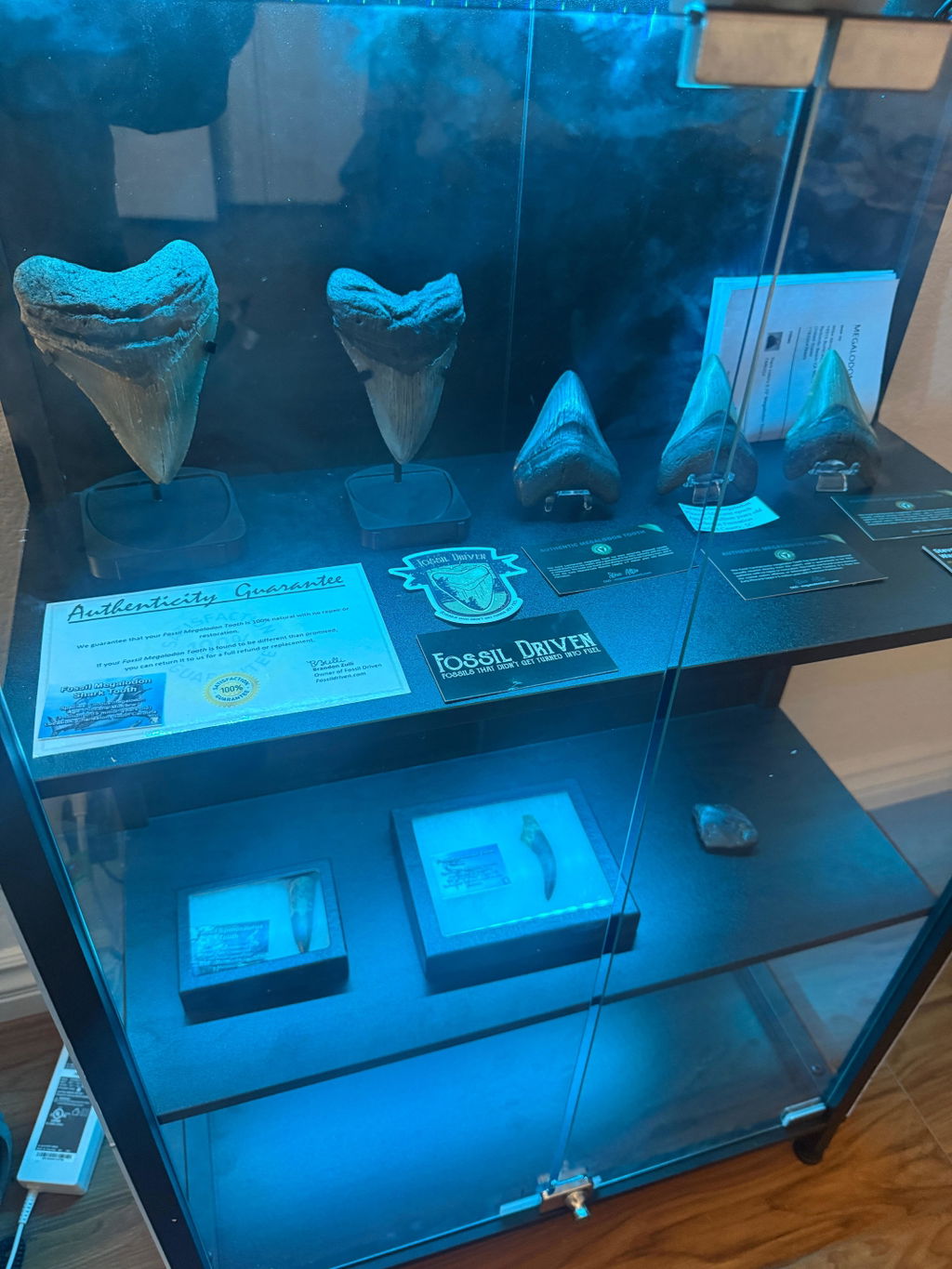
Megalodon teeth are among the most recognizable fossils on Earth. For many collectors, they represent a tangible connection to a prehistoric ocean dominated by the largest predatory shark ever known. What surprises many people entering the hobby, however, is that some of the most famous megalodon fossil-producing regions in the world are no longer accessible to collectors.
The closure or restriction of fossil sites is not random, and it is not recent. It is the result of decades of increased demand, scientific interest, and legal recognition that fossils are non-renewable natural resources and may hold a special place in a country's history. Understanding fossil conservation helps explain both the growing difficulty of finding high-quality specimens and why certain megalodon teeth command significantly higher prices than others.
Learn More: How Are Fossil Megalodon Teeth Priced?
Unlike bones, sharks are composed primarily of cartilage, which almost never fossilizes. If they do, it's normally their vertebrae that you will find. The teeth, however, are the primary record of the species. A single megalodon likely shed thousands of teeth throughout its lifetime, and for millions of years, those teeth accumulated on ancient sea floors, shallow marine shelves, and coastal estuaries. Over geological time, sediments buried and preserved them, eventually creating concentrated fossil deposits that later became known to collectors.
These deposits, however, are finite. Once disturbed, excavated, or destroyed by erosion or development, they cannot come back. This reality has led governments and landowners around the world to begin regulating fossil recovery in ways that were uncommon only a few decades ago.
Bone Valley, Central Florida

If you're interested in buying a Megalodon tooth from this location, visit our Fossil Megalodon teeth for sale page.
Peru

Peruvian megalodon teeth are widely recognized for their distinctive coloration, size, and preservation. Found in arid coastal desert deposits formed from uplifted marine sediments, these fossils often exhibit soft mineral tones created by long exposure to dry, oxidizing conditions.
Since 2002, Peru has increasingly classified fossils as protected cultural and scientific heritage. This legal framework means fossil removal, sale, and export are regulated activities. Permits are required for excavation, and unauthorized exportation is prohibited under national law. Hefty fines or even jail time can be issued if you're caught.
For many collectors, this has had a noticeable impact. Legally sourced specimens appear far less frequently than they once did, and older examples already in private hands now represent material from deposits that are effectively closed to casual collecting. Similar to Bone Valley and a few other restricted locations, prices for high-quality specimens are often extremely high due to the lack of Peruvian Megalodon teeth that hit the markets.
Chile

Similar to Peru, Chile presents a similar situation. Extensive marine sedimentary formations along portions of the Chilean coast contain fossil shark material, including megalodon. Many of these areas are now managed under environmental and heritage protection laws, particularly where scientifically significant stratigraphy is present.
Scientific permitting systems prioritize academic research over private collecting. Fossils recovered through research institutions are curated, cataloged, and preserved rather than entering commercial circulation. The result is a gradual reduction in new specimens available to private collectors.
From a market perspective, this does not eliminate megalodon teeth, but it shifts availability toward older collections and previously recovered material rather than newly discovered specimens. Hence, these teeth also command a high dollar when a specimen does come up for sale.
Cuba

Cuban marine deposits have historically produced Caribbean megalodon teeth with unique preservation characteristics. However, strict governmental control over fossil resources and export restrictions have limited international circulation. Even when specimens are discovered, legal export is difficult and uncommon. Normally, only one fossil is allowed out of the country at a time in most cases. Mass exportation of these fossils is strictly prohibited.
As a result, authentic Cuban megalodon teeth are rarely encountered in the modern collector market, and when they do appear, they typically originate from material recovered many years ago. Some may even have restoration work done to them due to how they are extracted.
How Site Closures Affect Fossil Value
Fossils occupy an unusual position in the collectibles world. Unlike gemstones or manufactured goods, their supply cannot increase. Every megalodon tooth in existence was produced millions of years ago, and each fossil locality represents a fixed geological inventory.
When a site becomes protected, inaccessible, mined out, or legally restricted, the effective supply stops. Collectors are then relying entirely on specimens already recovered. Over time, damage, loss, and permanent placement in museums or long-term private collections further reduce availability.
This is one of the reasons condition matters so much in megalodon teeth. A worn specimen may be relatively common, while a large, undamaged example with intact serrations represents a preservation event that survived millions of years and a recovery opportunity that may never occur again.
Learn more: How to Spot Restored and Repaired Megalodon Teeth.
Responsible Collecting
Modern fossil collecting exists at the intersection of science, law, and personal collecting. Ethical collecting does not prevent ownership; rather, it ensures fossils remain available while preserving scientific information and respecting local regulations. Purchasing fossils from documented, reputable sources helps ensure specimens were recovered legally and responsibly. Collectors who understand provenance also tend to preserve locality information, which can remain scientifically meaningful even in private collections.
This approach benefits both science and collectors. Fossils remain appreciated, studied, and preserved, while the hobby continues in a sustainable way rather than contributing to the destruction of irreplaceable deposits.
Wrapping Up
Megalodon teeth are not disappearing, but certain sources of them are. Regions such as Bone Valley, Peru, Chile, and Cuba demonstrate how geology, law, and conservation shape the modern fossil market. As access becomes restricted and deposits become exhausted, high-quality specimens increasingly represent material recovered years or decades earlier.
For collectors, this does not diminish the appeal of megalodon fossils. Instead, it shows their significance. Each tooth is a surviving record of a prehistoric animal and a finite geological moment. Responsible collecting recognizes that reality and preserves it for future generations.
If you're interested in buying a Megalodon tooth for your collection, visit our Fossil Megalodon teeth for sale page.
Written by: Brandon Zulli - Owner of Fossil Driven