
How Much Are Fossils Worth? The Ultimate Guide to Fossil Value
Share
Whether you're purchasing your first fossil or adding a museum-quality specimen to your collection, understanding what determines fossil value can help you buy with confidence. Many people assume fossils are priced simply by age or size, but experienced collectors know the reality is far more interesting. Authenticity, rarity, condition, species, size, provenance, restoration, and collector demand all play a role in what a fossil actually sells for.
Quick Answer
Fossil value comes down to a combination of authenticity, rarity, condition, species, size, provenance, restoration, collector demand, and overall display quality. A well-preserved fossil from a common species can easily outsell an older, rarer specimen that's been heavily restored or poorly preserved. To put a number on it: a small, average-condition Megalodon tooth might sell for $50 to $100, while a large, museum-grade specimen with sharp serrations and vivid coloration from a sought-after locality can bring several thousand dollars, even though both are the same species and roughly the same geologic age.
Understanding these factors makes it easier to recognize quality specimens, compare prices fairly, and build a collection you'll appreciate for years to come.
At a Glance: What Determines Fossil Value?
Not every fossil is valuable for the same reason. Some command premium prices because they're exceptionally rare. Others are highly sought after simply because they display beautifully or represent iconic prehistoric animals.
| Factor | Why It Matters |
|---|---|
| Authenticity | Genuine fossils always carry the greatest collector and scientific value. |
| Species | Certain fossils, like Megalodon teeth and dinosaur fossils, are consistently in high demand. |
| Rarity | Collector-grade specimens from uncommon species or localities are often worth more. |
| Condition | Better preservation usually results in higher value. |
| Size | Larger fossils often sell for more, but quality almost always outweighs size. |
| Provenance | Knowing where a fossil was discovered increases confidence and desirability. |
| Restoration | Honest disclosure and minimal restoration generally preserve value. |
| Eye Appeal | Color, symmetry, preparation quality, and presentation strongly influence collector demand. |
Collector Tip: If you're new to the hobby, focus on quality rather than simply buying the largest fossil you can afford. Experienced collectors almost always value exceptional preservation over impressive size.
What Determines Fossil Value?
Unlike precious metals or gemstones, fossils don't have a standardized pricing system. Two teeth of the same species can differ dramatically in value even if they were pulled from the same riverbed. Value is shaped by several factors working together, not any single trait.
Picture two Megalodon teeth, both five inches long. One has crisp serrations, glossy enamel, a complete root, and rich natural coloration. It's the kind of tooth that might list for $800 or more. The other has worn serrations, a repaired root, and heavy feeding wear, and realistically sells in the $150 to $250 range. Same size, same species, wildly different price, because size was never the deciding factor to begin with.
The same principle applies across nearly every type of fossil, whether you're looking at a polished ammonite, a detailed trilobite, a piece of Baltic amber containing an ancient insect, or a mammoth fossil. Collectors evaluate the entire specimen, not just one characteristic.
If you're interested in how these principles apply specifically to Megalodon teeth, our detailed pricing guide breaks down how collectors evaluate one of the world's most popular fossils.
Authenticity Is Always the First Step
Before considering rarity, size, or condition, one question must be answered: is the fossil genuine?
Authenticity forms the foundation of every fossil purchase, because no amount of rarity or beauty can compensate for a specimen that's been misidentified, heavily altered, or manufactured outright.
Fortunately, outright fakes are less common in this hobby than many beginners expect. Composite specimens, undisclosed repairs, artificial coloring, and inaccurate identifications do show up, though, especially on general online marketplaces where sellers often lack specialized knowledge. Some sellers also color-enhance teeth with dyes or oils to make them look more dramatic than they naturally are, which is worth watching for.
Reputable fossil dealers identify each specimen carefully, disclose any restoration, and provide accurate locality information whenever possible. That transparency is what lets you buy with confidence and understand exactly what's coming home with you. See our authenticity guarantee for how we handle this on every piece we sell.
Authenticity also affects future value. A documented, professionally identified fossil is generally easier to insure, display, gift, or resell than one with uncertain origins. For many collectors, peace of mind is just as valuable as the fossil itself.
Rarity Is More Complicated Than It Sounds
One of the biggest misconceptions among new collectors is that rare automatically means expensive. In reality, rarity only translates to value when collectors actively want the fossil.
Millions of Megalodon teeth have been recovered from formations around the world, from Lee Creek in North Carolina to the phosphate beds of Morocco, so the species overall isn't rare. But only a small percentage feature exceptional enamel preservation, sharp serrations, symmetrical shape, and vibrant natural coloration. Those premium examples command significantly higher prices precisely because they're hard to replace, even though the species itself is common.
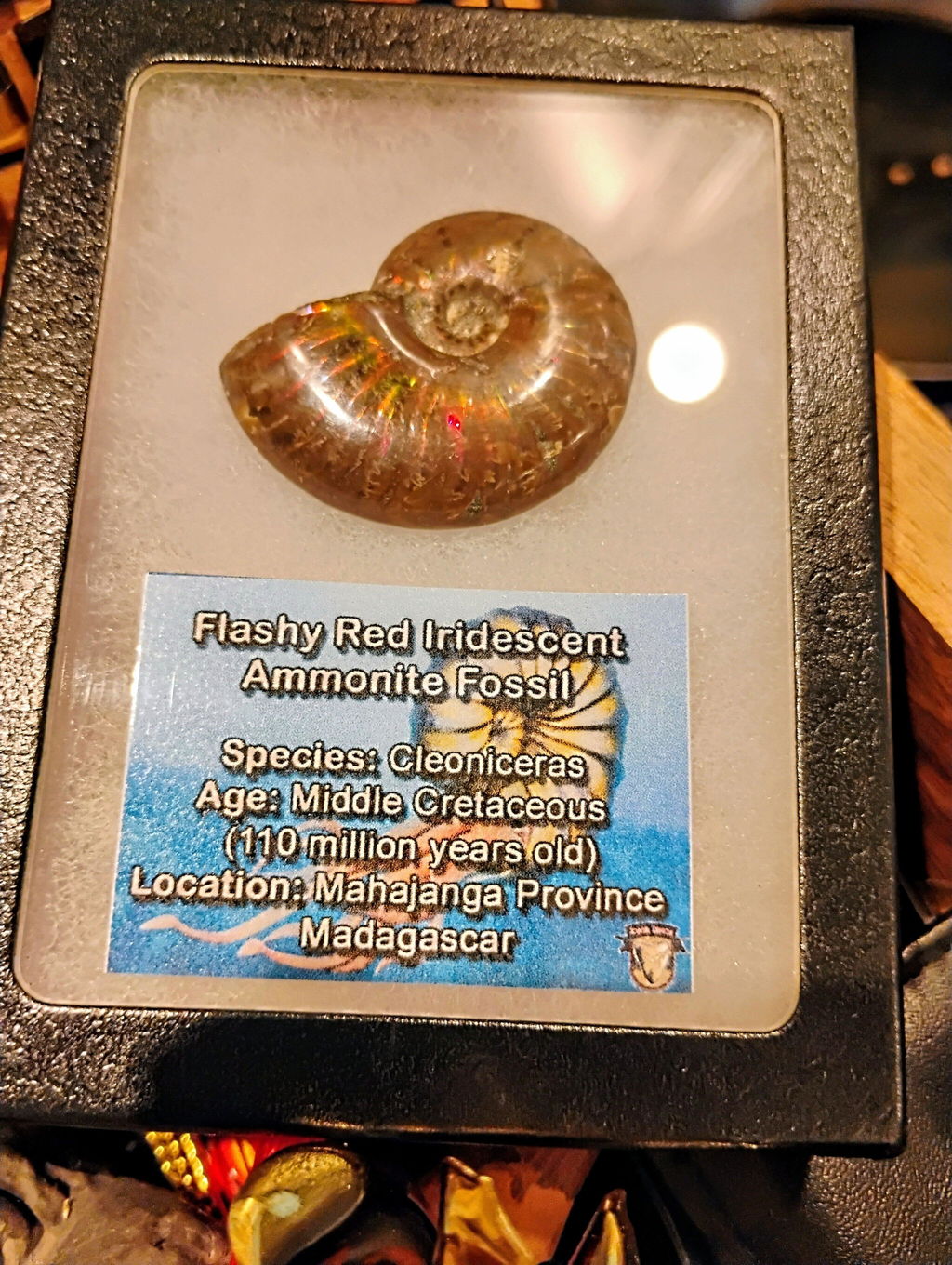
The same logic plays out elsewhere in the fossil world. A common ammonite with outstanding iridescent shell may be more desirable, and more expensive, than a larger but heavily weathered specimen. A beautifully prepared trilobite with crisp, uncrushed anatomical detail can outsell a genuinely rarer species that was poorly preserved.
Rather than asking "is this fossil rare," experienced collectors ask a more useful question: how difficult would it be to find another specimen of this quality? That question better reflects how the market actually prices fossils.
Collector Demand Shapes the Market
A fossil can be scientifically fascinating and still have modest market value if few collectors are looking for it. Demand is one of the most overlooked drivers of fossil prices.
Some fossils have become icons of prehistoric life. Megalodon teeth, Tyrannosaurus rex teeth, well-prepared trilobites, polished ammonites, and amber with insect inclusions consistently attract interest because they're visually striking and easy to display.
Demand also shifts over time. Documentaries, museum exhibits, new scientific discoveries, and social media all introduce fresh collectors to specific fossil groups, and prices tend to follow. This is one reason two equally rare fossils can carry very different price tags: value comes not just from scarcity but from how many people want to own one. The strongest prices show up when rarity and demand line up in the same specimen.
Condition Can Change a Fossil's Value Overnight
If authenticity answers "is this real," condition answers the next question: how well has this fossil survived?
Condition is often the single biggest factor separating an average specimen from one collectors actively chase. Even fossils from the same species and the same formation can vary dramatically in value depending on how they held up over millions of years.
Collectors typically evaluate condition by looking at:
- Completeness
- Surface preservation
- Structural integrity
- Natural coloration
- Overall eye appeal
For fossil shark teeth, condition often comes down to sharp serrations, intact enamel, a complete root, minimal feeding damage, and balanced proportions. Paleontologists studying shark tooth enameloid, the glossy outer layer that gives a well-preserved tooth its shine, have long used serration and enamel quality as indicators of how a tooth fossilized and how it should be handled during preparation. Trilobite collectors pay close attention to preparation quality and the survival of delicate features like eyes and spines. Ammonite collectors focus on shell detail, chamber preservation, and natural iridescence, while amber enthusiasts look for clarity and well-preserved inclusions.
A fossil doesn't have to be flawless to be valuable. Minor imperfections are expected in specimens that have survived for millions of years. What matters is how those imperfections affect the overall presentation and desirability.
Collector Insight: Experienced collectors often describe exceptional fossils as having "presence." It's hard to define, but you know it when you see it, every feature working together instead of fighting each other.
Restoration Is Part of Fossil Collecting, When It's Honest
Few topics generate more discussion among fossil collectors than restoration. Some collectors prefer completely untouched specimens. Others recognize that careful stabilization is sometimes necessary to preserve fragile fossils for future generations.
The truth sits in the middle. Professional restoration is widely accepted throughout the fossil industry when it's performed ethically and fully disclosed. Small repairs can stabilize fragile material, reinforce cracks, or reconnect pieces that would otherwise keep deteriorating. Museums conserve important fossils using the same basic principles.
Problems arise only when restoration is excessive or hidden. A fossil rebuilt with extensive filler, painted surfaces, or reconstructed sections belongs in a different value category than an equally attractive specimen that's almost entirely original. Neither is inherently bad, but buyers deserve to know exactly what they're getting, and what they're paying for.
Collector Insight: A professionally repaired fossil with full disclosure is often a much better purchase than an "untouched" specimen hiding undisclosed damage.
Provenance Adds More Than a Location
Every fossil comes from somewhere. Provenance includes where a fossil was discovered and, in some cases, how it entered the collector market.
For some specimens, provenance is just interesting background. For others, it becomes a real part of the fossil's value. Certain localities have earned worldwide reputations for exceptional preservation or unusual species. Fossils from Bone Valley in Florida, Morocco's phosphate deposits, the Kem Kem Beds, Lee Creek in North Carolina, and the Calvert Cliffs of Maryland each carry their own reputation among collectors, and locality alone can shift a price. A Bone Valley Megalodon tooth prized for its rare blue or purple enamel coloration, for instance, will often outsell a similarly sized tooth from a locality known for duller, more uniform coloration.
Knowing where a fossil originated also provides confidence that it was collected and sold responsibly, which has become increasingly important as collectors seek specimens obtained through legal, accepted commercial practices. Rather than displaying "a Megalodon tooth," you can display a Megalodon tooth recovered from South Carolina's rivers, or a polished mammoth tooth found near Venice, Florida. Those details make a collection more meaningful and give it a story worth telling.
Why Age Alone Doesn't Determine Fossil Value
One of the biggest misconceptions about fossil collecting is that older automatically means more valuable. It's an understandable assumption, but it rarely holds up.
A beautifully preserved Megalodon tooth, roughly 5 million years old, will often command a significantly higher price than a 400-million-year-old marine fossil that's heavily weathered and represents a species found commonly around the world. Age contributes to scientific significance, but it doesn't automatically set market value.
Collectors are generally paying for a combination of rarity, preservation, beauty, and display quality, not age by itself. That's why some Ice Age fossils sell for more than fossils hundreds of millions of years older.
Collector Insight: If age alone determined value, nearly every fossil from the Cambrian Period would outprice a Megalodon tooth. The market clearly shows demand and preservation matter just as much.
Scientific Value and Collector Value Aren't Always the Same
Another common misunderstanding is assuming scientific importance and commercial value move together. In practice, they're often separate ideas. A fossil can be scientifically invaluable, representing a new species or preserving information important to paleontologists, and still have little commercial value if it isn't visually compelling or is destined for a museum collection rather than the open market.
On the other hand, some of the most popular fossils among collectors are scientifically well understood but remain highly desirable because they're visually impressive and enjoyable to display. Megalodon is a good example: it's one of the most studied extinct sharks, researchers have used tooth size and shape to estimate body length for decades, and thousands of teeth have been recovered. Yet collector demand stays exceptionally strong, because these fossils represent one of the largest predators to ever live and make stunning display pieces regardless of how well-documented the species is.
The same holds for polished ammonites, amber with insect inclusions, mammoth teeth, and well-prepared trilobites. Their popularity comes from both their prehistoric story and their visual appeal, which is why some fossils command premium prices while others of equal scientific significance stay relatively affordable.
Common Myths About Fossil Value
Myth #1: Older Fossils Are Always Worth More
Age contributes to scientific importance, but it rarely determines market value by itself. A beautifully preserved five-million-year-old Megalodon tooth can be worth considerably more than a 400-million-year-old fossil that's common, damaged, or lacks collector appeal.
Myth #2: Bigger Always Means Better
A perfectly preserved 4-inch Megalodon tooth with crisp serrations and exceptional enamel is often more desirable, and more valuable, than a heavily restored 6-inch specimen. Quality wins over size in nearly every fossil category.
Myth #3: Every Restoration Ruins Value
Small, disclosed repairs that stabilize a specimen are widely accepted throughout the hobby. It's hidden restoration or extensive reconstruction that erodes collector confidence, not restoration itself.
Myth #4: Rare Automatically Means Valuable
Some fossils are genuinely rare but have limited collector demand. Megalodon teeth are relatively common overall, yet premium examples remain difficult to find and highly sought after. Real value comes from the balance between rarity and demand, not rarity alone.
How to Evaluate a Fossil Before You Buy
Whether you're spending $50 or several thousand dollars, a few simple questions can help you buy smarter:
- Is it authentic? Buy from dealers who accurately identify specimens and disclose restoration or repairs.
- How is the condition? Look past size. Check preservation, completeness, symmetry, and surface quality.
- Is restoration disclosed? Minor stabilization is often fine, but you should know exactly what work was done.
- Where was it found? A documented locality adds confidence and often adds to the fossil's story.
- Does it have strong display appeal? The fossils you'll enjoy most are the ones you'll proudly display for years.
- Would you still want it years from now? The best collections are built slowly, not through impulse buys.
Collector Insight: Most experienced collectors remember the fossils they waited for, not the ones they bought in a hurry.
Final Thoughts
So, how much are fossils worth? Every fossil is unique, and no single characteristic sets its value alone. Collectors weigh authenticity, rarity, condition, species, size, provenance, restoration, demand, and eye appeal together, and the exact mix that matters most shifts from one specimen to the next.
That's what makes fossil collecting rewarding. Some people chase the largest Megalodon teeth they can find, others prefer beautifully prepared trilobites, colorful ammonites, Ice Age mammal fossils, or insects preserved in amber. Understanding what drives value helps you make better purchasing decisions, recognize exceptional specimens, and build a collection you'll enjoy for years. Whether you're buying your first fossil or adding another centerpiece to an established collection, prioritizing quality, authenticity, and honest sourcing will always serve you better than chasing size or age alone.
Written by: Brandon Zulli, Owner of Fossil Driven
Frequently Asked Questions
Are fossils a good investment?
Not in the way stocks or real estate are. A handful of exceptional, well-documented specimens have appreciated meaningfully over time, but most fossils don't come with guaranteed returns. Buy because you want to own the piece and enjoy displaying it; treat any appreciation as a bonus, not the reason for the purchase.
Do restored fossils lose value?
Minor, disclosed restoration barely affects value and is standard practice in this hobby. Heavy reconstruction or undisclosed repairs are what actually hurt resale value and buyer trust, so ask directly what's been done before you buy.
Why are Megalodon teeth so valuable?
Because they come from one of the largest sharks that ever lived, and large, well-preserved teeth with excellent enamel, sharp serrations, and minimal restoration are genuinely uncommon relative to overall demand.
Does a fossil's age determine its value?
No. Age adds to scientific importance, but market value is driven more by rarity, preservation, authenticity, and collector demand.
What fossils are most valuable?
Exceptional dinosaur fossils, premium Megalodon teeth, marine reptiles, beautifully preserved trilobites, rare mammals, and any specimen with outstanding preservation or scientific importance tend to top the market.
Should beginners buy expensive fossils?
Not right away. Spend your first few purchases learning to judge authenticity and condition on lower-cost pieces first. Once you can spot quality confidently, a bigger purchase is a much safer bet.