
Where to Buy Real Megalodon Teeth: A Buyer's Guide
If you are trying to figure out where to buy real megalodon teeth, the first thing to know is that the market is full of lookalike listings, vague descriptions, and prices that do not always match quality. A real megalodon tooth can be an incredible display piece, a meaningful gift, or the start of a serious fossil collection, but only if you buy from a seller who knows exactly what they are offering.
That is where most buyers get stuck. The question is not just where to shop. It is who you can trust to identify the tooth correctly, disclose restoration honestly, and price the specimen according to its actual quality.
Where to buy real megalodon teeth with confidence
The best place to buy a real megalodon tooth is from a specialist fossil dealer, not a general marketplace seller. A dedicated fossil retailer is far more likely to understand the difference between a common worn specimen and a collector-grade tooth with strong serrations, intact bourlette, attractive coloration, and no restoration or repair.
That expertise matters because megalodon teeth vary wildly in quality. Two teeth can be the same size and have completely different value. One may have heavy root damage, a polished surface, a smooth blade, or restored enamel. The other may be naturally preserved, well-centered, and visually striking from every angle. If a seller does not explain those differences, you are buying blind.
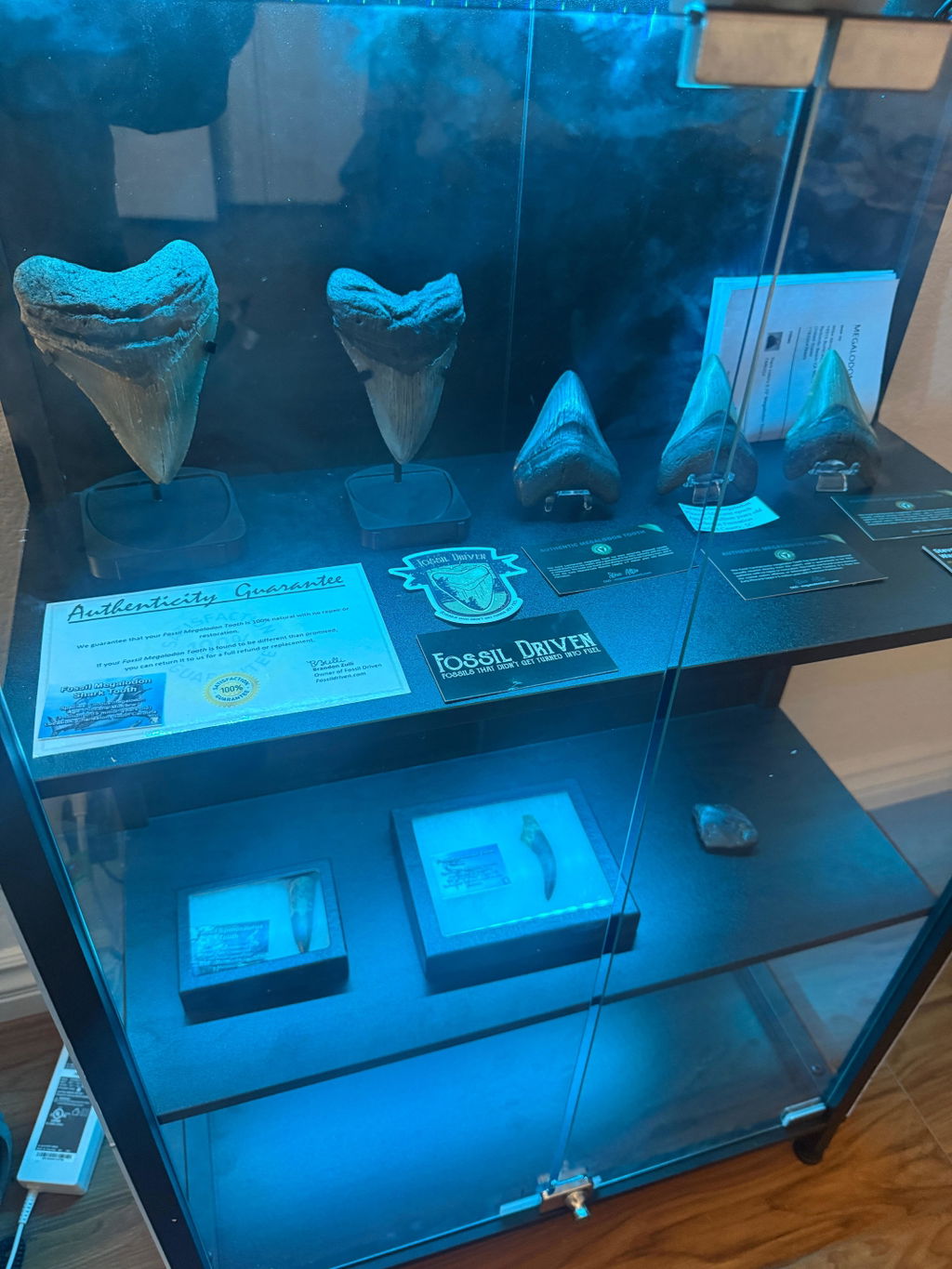
A reputable seller should make authenticity guaranteed part of the buying experience, not a vague promise buried in fine print. They should also use clear specimen photography, straightforward condition notes, and accurate sizing. In this category, details are not just extras. They are the product.
How to Identify a Trustworthy Fossil Seller
A trustworthy fossil seller usually specializes in natural history material and has a clear point of view on quality. You should be able to tell, within a few minutes of browsing, whether they actually handle fossils every day or simply resell whatever they can source.
Look closely at how they describe the condition. Good sellers talk openly about repair, restoration, root work, feeding damage, enamel quality, and serration preservation. Just about every aspect of the fossil. They do not treat those topics as negatives to hide. They treat them as normal parts of honest fossil grading.
Photos are another giveaway. Serious dealers show the exact tooth you are buying, usually from multiple angles, against a clean background. If listings rely on stock-style images, overly dramatic lighting, blurry, unclear images, or broad claims like museum quality without supporting evidence, that is a reason to slow down. We see this quite often, and usually the specimen is the exact opposite of what they claim.
Customer trust markers matter too. Reviews, repeat buyers, category depth, and a clear business identity all help. A small family business with decades of expertise in fossil identification will usually take reputation more seriously than a random seller moving inventory across unrelated categories.
The best places buyers usually look
Most buyers start in one of three places: specialty fossil websites, gem and fossil shows, or big online marketplaces. Only one of those is consistently beginner-friendly.
Specialty fossil websites are usually the safest starting point because the inventory is curated, the category language is more precise, and the seller has a reputation tied directly to authenticity. This is especially helpful if you are buying your first megalodon tooth and need clear guidance on what affects value.
Fossil shows can be excellent if you know how to inspect a specimen in person. You may find standout pieces and talk directly with dealers, but quality and disclosure standards vary table by table. If you are inexperienced, the selection can feel exciting but hard to judge.
Large marketplaces, like eBay, Etsy, and Amazon, are the most inconsistent option. Real megalodon teeth do get sold there, but so do heavily restored examples, misidentified teeth, and listings that leave out major condition issues. For experienced collectors, these platforms can occasionally offer opportunities. For most buyers, they create more risk than confidence.
How to tell if a megalodon tooth is real before you buy
Real megalodon teeth usually have a few features that trained sellers can explain clearly. The tooth should have a natural enamel surface, a distinct root structure, and the broad triangular form associated with Otodus megalodon. Serrations may be sharp or worn depending on preservation, and coloration can range from black and gray to tan, brown, or even bluish tones depending on the deposit.
But authenticity alone is not enough. Many buyers focus so much on whether a tooth is real that they forget to ask if it's all original or if it has some sort of repair or restoration. Especially if the seller doesn't already disclose it in their listing. A genuine megalodon tooth can still have repair or restoration. Which doesn't automatically make it a bad purchase, but it should affect price and expectations.
Ask whether the tooth has any repairs, fillers, glued fractures, rebuilt root sections, or color enhancement. A good seller will answer directly. If the answer feels evasive, that's a major red flag, and move on.

The example above is a Megalodon tooth that was poorly restored with an overly exaggerated, stretched root to make the tooth more valuable. In reality, this tooth would've been just over the 5-inch mark, not 6 inches.
Price Tells Part of the Story, Not the Whole Story
One of the biggest misconceptions in fossil collecting is that size alone determines value. While larger megalodon teeth generally command higher prices, experienced collectors know that preservation often matters just as much.
A 4.5-inch tooth with strong serrations, a complete root, excellent coloration, and minimal restoration can be significantly more desirable than a heavily damaged 6-inch specimen. Collectors frequently pay premiums for teeth that combine visual appeal, preservation, and rarity rather than simply maximum size.
Locality can also influence value. Megalodon teeth recovered from South Carolina rivers often display different colors and preservation characteristics than specimens from Venice, Florida, North Carolina, or Indonesia. Some collectors actively seek teeth from specific locations because of their unique appearance or collecting history.
Collector preferences vary as well. I personally know one collector whose primary focus is bourlette quality. He regularly passes on larger teeth if the bourlette lacks strong visual appeal. Other collectors focus on color, symmetry, serration preservation, or finding specimens with little to no restoration. That is part of what makes fossil collecting so interesting. The most valuable tooth is not always the largest one. It is often the specimen that best combines preservation, rarity, and eye appeal.
Why Experienced Collectors Buy Differently
As collectors gain experience, their priorities often change. Many first-time buyers focus almost entirely on size because it is the easiest characteristic to compare. Over time, however, most begin paying closer attention to details such as serration quality, root preservation, symmetry, bourlette definition, and overall display appeal.
Some advanced collectors exclusively pursue high-grade examples with minimal restoration. Others build collections around unusual colors, rare localities, or exceptional pathology specimens. There is no single right approach, but experienced collectors tend to evaluate the entire fossil rather than a single measurement.
This is one reason why buying from a specialist can be so valuable. A knowledgeable dealer can explain why two teeth of similar size may have vastly different collector appeal and help buyers choose a specimen that fits their goals, whether that is display quality, rarity, investment potential, or simply owning a fascinating piece of prehistoric history.
The Best Places to Buy Real Megalodon Teeth
Most buyers begin their search in one of four places: specialty fossil websites, fossil and gem shows, online marketplaces, or social media groups. While all four can produce authentic specimens, they do not offer the same level of consistency or buyer protection.
Specialty fossil websites are usually the best starting point for most collectors. Reputable dealers build their reputation around authenticity, accurate grading, and transparent condition reporting. Because their business depends on repeat customers and collector trust, they are typically far more detailed about restoration, locality, measurements, and overall quality than general marketplace sellers.
Fossil shows can also be excellent places to buy real megalodon teeth because you can inspect specimens in person and speak directly with dealers. Seeing a tooth firsthand often reveals details that photos cannot fully capture. However, quality standards can vary significantly from table to table, making experience especially valuable.
Large online marketplaces such as eBay, Etsy, and Amazon are the most inconsistent option. Authentic megalodon teeth are sold on these platforms every day, but so are heavily restored specimens, misidentified fossils, and listings with incomplete condition disclosures. Experienced collectors can sometimes find good opportunities there, but beginners often struggle to separate genuinely high-quality specimens from cleverly marketed ones.
Social media groups have become increasingly popular for fossil sales as well. Some contain highly respected collectors and dealers, while others have little oversight. As with any purchase, understanding who is selling the fossil is often just as important as evaluating the fossil itself.
Buying your first tooth versus buying for a collection
Where to buy real megalodon teeth also depends on what you want from the purchase. A first-time buyer often wants a real specimen with strong display value at a manageable price. In that case, a reputable online specialist with hand-selected inventory is usually the best fit because it reduces uncertainty.
A seasoned collector may be looking for something different: a large tooth with exceptional serrations, a rare color, minimal to no restoration, or investment-grade quality. That buyer may be more comfortable comparing fine details across multiple specimens and paying a premium for top-end preservation.
Gift buyers fall somewhere in the middle. They usually want confidence, presentation, and a memorable piece that feels impressive right out of the box. For them, clear photos, honest grading, and a seller who understands display appeal are especially important.
Questions worth asking before you purchase
Before buying, ask a few simple questions that reveal how the seller operates. Is the tooth authentic and correctly identified? Has it been repaired or restored in any way? Are the photos of the exact specimen you will receive? What are the dimensions, and where was it found, if known?
You do not need a long interrogation. You just need enough information to see whether the seller answers like a specialist or like someone avoiding specifics. In this market, clarity is a form of quality control.
If you are shopping with a focused retailer such as Fossil Driven, those answers are usually built into the product experience through expert curation, quality grading, and authenticity-guaranteed sourcing. That saves time and removes a lot of the hesitation new buyers feel.
Red flags that should make you walk away
A few warning signs come up again and again. The first is a listing that talks about rarity and value but says almost nothing about condition. The second is a seller who uses only one photo or avoids close-up shots of the root, bourlette, or blade edges. The third is pricing that seems unrealistically low for the claimed size and quality.
Another red flag is language that sounds confident but is not informed. If a seller cannot explain whether a tooth has restoration, does not know how megalodon teeth are typically graded, or mixes fossil terms carelessly, that is a problem. Remember, you are not just buying an object. You are buying the seller's expertise.
Frequently asked questions
What's the safest place to buy a real megalodon tooth online? Specialty fossil dealers are generally the safest option because their reputation depends on accurate grading and honest disclosure. Marketplaces like eBay, Etsy, and Amazon can have authentic teeth, but quality and disclosure standards vary widely from seller to seller.
Can I trust megalodon teeth sold on eBay or Etsy? Some sellers on these platforms are reputable, but the lack of consistent standards means buyers need to do more of their own due diligence, checking seller history, reviews, and photo quality before purchasing.
Are megalodon teeth at fossil shows better quality than online? Not necessarily better, but you can inspect the specimen in person before buying, which removes a lot of the guesswork. Quality still varies table to table, so the same due diligence applies.
What questions should I ask a seller before buying a megalodon tooth? Ask whether the tooth is authentic and accurately identified, whether it has any repair or restoration, whether the photos show the exact specimen you'll receive, and where it was found, if known. A seller who answers clearly and specifically is a good sign.
Is it worth paying more for a megalodon tooth from a specialist dealer? Often, yes. You're not just paying for the fossil, you're paying for accurate grading, honest condition reporting, and the seller's expertise in spotting issues a casual buyer might miss.
Buy with confidence
The right specimen is more than a fossil. It is a piece of prehistoric history with presence, character, and a story you can hold in your hand. Buy from people who respect that, and the tooth you choose will keep its appeal long after the transaction is over.
👉 Browse our current Megalodon Teeth collection, hand-selected and backed by our authenticity guarantee.
Written by: Brandon Zulli - Owner of Fossil Driven